
Sneezing is one of those involuntary actions that seem trivial on the surface, yet behind it lies a surprisingly complex biological mechanism. It comes out of nowhere, cannot be controlled, and for a split second involves almost the entire body.
Although we often associate sneezing with colds or allergies, it is actually a protective reflex — a way for the body to quickly remove irritating particles from the respiratory tract. Dust, pollen, bacteria, smoke, and even sudden temperature changes can trigger this reaction.
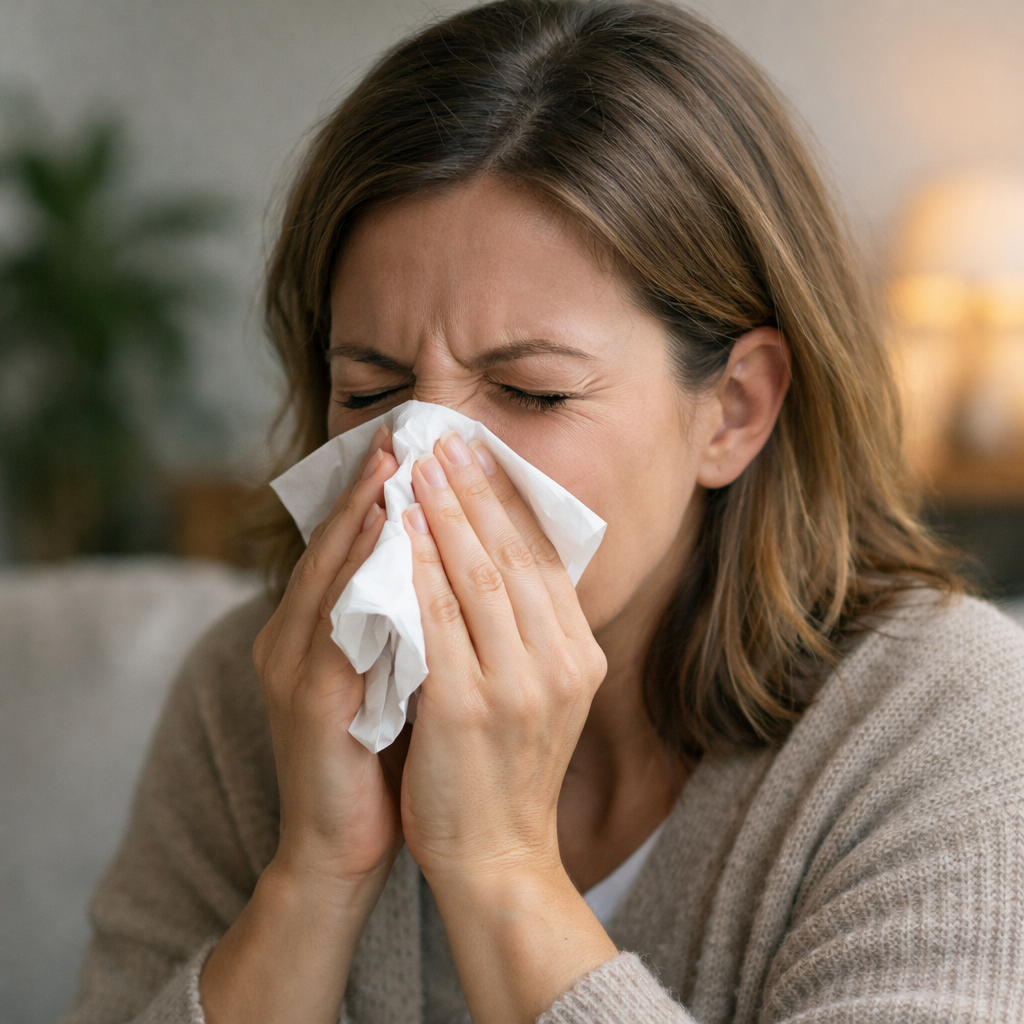
The moment the lining of the nose detects an irritant, nerve endings send a signal to the brainstem. There, a specialized sneeze center coordinates the response. In less than a second, the brain triggers a chain reaction: breathing pauses, the chest rapidly fills with air, chest and abdominal muscles contract, the eyes close reflexively, and air is expelled at high speed — sometimes exceeding 90 miles per hour.
It is one of the fastest coordinated reactions in the human body.
But sneezing doesn’t manifest the same way at every age and stage of life.
In children, sneezing tends to be more frequent. Their immune systems are still learning and reacting intensely to the environment around them. The nasal lining is more sensitive, and exposure to new viruses and bacteria often leads to repeated sneezing episodes. Many times, a child’s sneeze doesn’t signal illness — it simply reflects adaptation to the world around them.
In teenagers and young adults, sneezing most commonly appears in allergic or infectious contexts. This is the stage when the immune system reacts strongly to allergens such as pollen, dust, or pet dander. It is also the age when the photic sneeze reflex often appears — a phenomenon present in roughly a quarter of the population.
Some people sneeze when stepping from a dark space into bright sunlight. It is not a light allergy, but rather a brief neurological “cross-signal” between the nerves responsible for vision and those involved in the nasal reflex.
In adults, sneezing is typically linked to colds, allergies, or nasal irritation. But it can also occur after large meals due to stimulation of the vagus nerve, or in environments with very dry air. In some cases, even strong emotions or sudden temperature changes can trigger sneezing episodes.
At older ages, sneezing frequency may decrease slightly. The nasal lining becomes drier, and receptor sensitivity declines. Still, when sneezing occurs, the reflex remains just as powerful — sometimes even more forceful, because chest muscles must work harder to expel air.
There are also subtle differences between women and men. Some studies suggest that women may sneeze more often in allergic contexts, while men may experience sneezing more frequently due to strong irritants or respiratory infections. Hormones can influence nasal sensitivity, particularly during pregnancy.
During pregnancy, many women notice nasal congestion and frequent sneezing even without a cold. This is known as pregnancy rhinitis and is linked to increased estrogen levels and greater blood flow to mucous membranes. It is a normal and temporary condition.
Interestingly, we cannot sneeze during deep sleep. The reflex is largely suppressed while sleeping, and if irritation becomes strong enough, we typically wake up just before sneezing. We also cannot sneeze with our eyes open. The neurological reflex automatically closes the eyelids — not by choice, but by design.
A single sneeze involves the nervous, respiratory, and muscular systems simultaneously. For a brief moment, heart rhythm shifts, chest pressure rises sharply, and then everything returns to normal. That is why some people feel a quick sense of relief or even a subtle “reset” after a powerful sneeze.
Sneezing can occur even in situations where we might assume the body is fully under control — such as during singing. A professional singer carefully manages breathing, diaphragm support, and vocal stability, yet the sneeze reflex originates in the brainstem and cannot be fully suppressed by willpower.
Over the years, performers have shared in interviews and behind-the-scenes moments that they have felt the sudden urge to sneeze in the middle of live performances. Michael Bublé, for example, has spoken openly about how extremely dry stage air has triggered coughing or nasal irritation while singing, forcing him to briefly step away from the microphone and then continue with humor. In musical theater and opera, such moments are even more common: stage dust, heavy makeup, strong lighting, and intense emotions can all irritate the nasal passages and trigger involuntary reflexes, even in highly trained performers.
Most of the time, the audience doesn’t notice. Professionals discreetly turn their heads, step away for a second, and resume performing. Even for the most trained voices, sneezing remains a reminder that the body ultimately has the final say. No matter how controlled a performance may be, some reflexes are simply stronger than intention.
At its core, sneezing is a cleaning and protective mechanism. A reflex millions of years old that works perfectly without conscious control. A short, loud, unavoidable act that reveals how constantly and efficiently the body works to protect and adapt itself.
A simple gesture.
An explosive reaction.
A remarkably well-coordinated defense system.