
The Science, The Myths, and the Surprising Truth About Your Lashes
Eyelashes may seem like a small detail on your face, but they’re actually one of the most intelligent protective features of the human body.
We usually think about lashes in terms of beauty — length, curl, mascara — but biologically, they serve a much deeper purpose.
Without eyelashes, your eyes would be far more exposed to dust, light, bacteria, and dryness. And the way they’re designed? It’s not random. It’s evolutionary engineering.
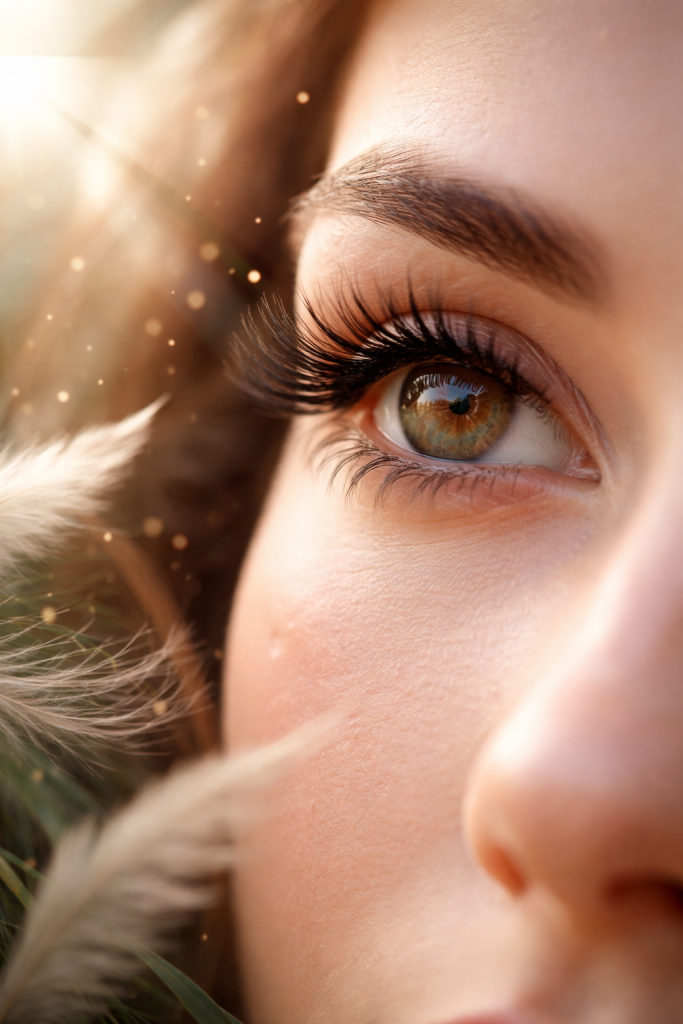
Why Do We Have Eyelashes?
Eyelashes are specialized hairs with one primary job: protecting your eyes.
They function as:
- Natural dust filters
- Light shields
- Sensory triggers for blinking
- Barriers against sweat and debris
- Regulators of tear evaporation
A study published in the Journal of the Royal Society Interface found that eyelashes reduce airflow across the eye’s surface, helping maintain moisture and decreasing particle deposition.
Even more fascinating:
The Ideal Length of Eyelashes
Research shows that the optimal lash length is about one-third the width of the eye.
That proportion:
- Maximizes protection
- Prevents excessive airflow turbulence
- Doesn’t block vision
Your body literally optimized your eyelashes.
How Many Eyelashes Do We Have?
On average:
- 90–160 lashes on the upper eyelid
- 70–80 on the lower lid
Each eyelash lives about 4 to 11 months.
The lash growth cycle includes:
- Growth phase (anagen)
- Resting phase
- Shedding phase
Losing 1–5 lashes per day is completely normal.
Why Do Some Men Have Better Lashes Than Women?
Yes, it’s real.
Many men naturally have:
- Thicker lashes
- Darker lashes
- Longer lashes
The reason? Testosterone.
This hormone influences:
- Hair thickness
- Hair density
- Pigmentation
So if you’ve ever wondered why some men have lashes that look like they’re wearing mascara — it’s biology, not beauty products.
Why Are Long Lashes Considered Attractive?
From an evolutionary psychology perspective, long lashes are associated with:
- Youth
- Health
- Fertility
- Facial expressiveness
They visually enlarge the eyes, which humans instinctively associate with vitality and emotional warmth.
It’s not a modern beauty trend — even ancient Egyptians enhanced their lashes with kohl thousands of years ago.
What Are Eyelashes Made Of?
Like scalp hair, eyelashes are made of keratin, the same protein found in:
- Hair
- Nails
- The outer layer of skin
Each lash grows from its own follicle and has an independent growth cycle.
Do Eyelashes Grow Back If You Cut Them? What About Plucking?
If you cut them:
Yes, they grow back.
The follicle remains intact.
But they will only grow to their genetically determined maximum length.
If you pluck them:
Usually they grow back within 6–12 weeks.
However, repeated aggressive plucking can damage the follicle permanently, leading to sparse areas.
This is one reason excessive lash extensions or pulling can cause thinning over time.
What Actually Helps Eyelashes Grow?
There are no overnight miracles, but real factors matter.
Nutrition
Healthy lashes require:
- Protein
- Iron
- Zinc
- Biotin (Vitamin B7)
- Omega-3 fatty acids
Deficiencies can lead to brittle or thinning lashes.
Sleep
Hair follicles regenerate during deep sleep cycles.
Gentle Care
- Avoid aggressive rubbing
- Remove makeup carefully
- Limit daily waterproof mascara
Lash Serums
Some serums contain prostaglandin analogs that can extend the growth phase of lashes.
Clinical studies show they can increase length and thickness — but possible side effects include:
- Eye irritation
- Darkening of eyelid skin
Always use cautiously.
Where Does Lash Color Come From?
Lash color comes from melanin, the pigment that determines hair and skin color.
Generally:
- Lashes are slightly darker than scalp hair
- They resemble eyebrow color
- Blonde individuals often have lighter lashes
- With age, lashes can turn gray or lighter
Common Eyelash Myths
“If you trim your lashes, they grow longer.”
False.
They grow back to their natural genetic length.
“Castor oil dramatically increases lash length.”
It may hydrate and reduce breakage, but it does not alter genetic growth potential.
“If an eyelash falls out and you make a wish, it comes true.”
A charming cultural ritual — but not backed by science.
Still, many people secretly do it.
Fascinating Lash Facts
- Lashes grow in multiple rows, not a single line
- They are among the most sensitive hairs on the body
- They trigger the blink reflex instantly
- We blink 15–20 times per minute
- Lashes can reduce particle exposure by up to 50%
Even something as small as an eyelash is precisely engineered.
Final Thoughts
Eyelashes are not just cosmetic features.
They are a sophisticated biological system designed for protection and balance.
And if someone in your life has effortlessly perfect lashes?
You can thank genetics, hormones, and evolution.
Not mascara.