
Sleep may seem simple.
You lie down, close your eyes, and a few hours later you wake up.
But inside your body, sleep is actually one of the most active and important biological processes.
While it looks like everything shuts down, the body enters a complex period of regulation, repair, and reorganization. The brain processes information, hormones rebalance, tissues recover, and several systems that maintain long-term health become especially active.
Sleep is not a single state
Sleep happens in cycles that repeat several times during the night.
Each cycle lasts about 90 minutes and includes different stages of sleep.
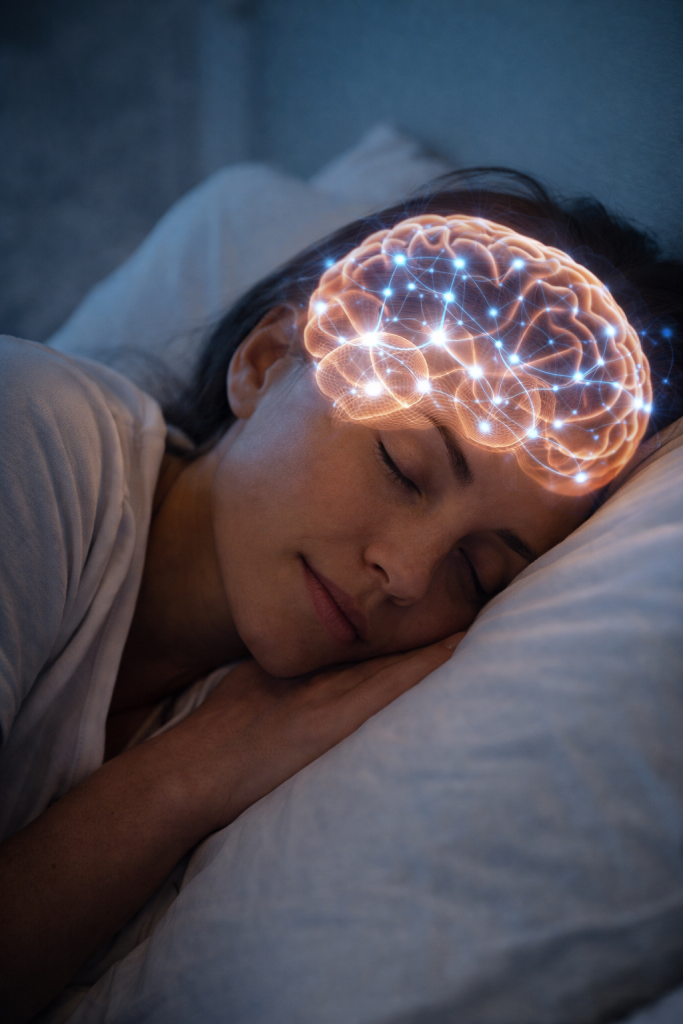
Scientists divide sleep into two main types:
NREM sleep (Non-Rapid Eye Movement)
and
REM sleep (Rapid Eye Movement).
During a typical night, the brain goes through these stages four to six times.
NREM sleep — when the body repairs itself
NREM sleep includes several stages, with the deepest one often called slow-wave sleep.
During this phase:
- heart rate slows down
- breathing becomes more regular
- blood pressure drops
- muscles relax deeply
This is also when the body releases large amounts of growth hormone, which helps repair tissues, rebuild muscles, and maintain bone strength.
Because of this, deep sleep plays an important role in physical recovery after exercise, injury, or illness.
REM sleep — when the brain becomes highly active
After about 70–90 minutes, the first REM stage begins.
During REM sleep:
- the brain becomes almost as active as when you’re awake
- most dreaming occurs
- the eyes move rapidly under the eyelids
- the body temporarily relaxes most muscles to prevent acting out dreams
REM sleep is especially important for memory consolidation and emotional processing.
During this phase, the brain reorganizes information collected during the day and strengthens important neural connections.
The brain “cleans itself” during sleep
One of the most fascinating discoveries in neuroscience over the past decade involves what scientists call the glymphatic system.
This system acts as a kind of waste-clearance mechanism for the brain.
During deep sleep, the spaces between brain cells expand, allowing cerebrospinal fluid to circulate more freely through brain tissue. This helps flush out metabolic waste products that accumulate during the day.
Among these substances is beta-amyloid, a protein linked to Alzheimer’s disease.
In other words, sleep may help the brain remove potentially harmful substances and maintain long-term neurological health.
Hormones reset overnight
Sleep also plays a major role in regulating hormones.
During the night:
- melatonin rises to regulate the body’s internal clock
- cortisol, the stress hormone, drops
- hormones that control appetite are balanced
Two key hormones involved in hunger regulation are:
- leptin, which signals fullness
- ghrelin, which stimulates appetite
When people don’t get enough sleep, these signals can become disrupted, which may increase hunger and cravings.
The immune system becomes more active
Sleep is also essential for a healthy immune system.
During sleep, the body releases molecules called cytokines, which help regulate immune responses and fight infections and inflammation.
This is one reason why people often feel sleepier when they are sick—the body is prioritizing recovery.
How much sleep people need at different ages
Sleep requirements change throughout life.
General recommendations from sleep researchers suggest:
Newborns: 14–17 hours per day
Infants: 12–15 hours
Children: 9–11 hours
Teenagers: 8–10 hours
Adults: 7–9 hours
Older adults: about 7–8 hours
Teenagers often need more sleep because their brains are still developing and undergoing major neural reorganization.
In older adults, total sleep time may decrease slightly, and sleep can become more fragmented.
Are there differences between men and women?
Some research suggests that women may sleep slightly longer than men and may have a somewhat higher biological need for sleep.
Hormonal factors and circadian rhythm differences may play a role.
At the same time, women report insomnia more frequently, while men are more likely to develop obstructive sleep apnea, a condition that disrupts breathing during sleep.
However, overall sleep needs remain broadly similar: most adults function best with around seven to nine hours of sleep per night.
Sleep is not wasted time
From the outside, sleep may look like inactivity.
From the inside, it is one of the most complex and essential processes in the human body.
Every night while you sleep, your brain reorganizes information, tissues repair themselves, hormones rebalance, and the nervous system recalibrates.
Sleep is not simply rest.
It is one of the body’s most important ways of maintaining long-term health.