
The expression “crocodile tears” is commonly used when someone pretends to feel sad or sorry, but the emotion is not genuine. We hear it in everyday conversations, in the media, and often in discussions about human behavior.
But where does this expression come from, and more importantly, do crocodiles actually cry?
The answer is surprising: crocodiles can produce real tears, but not for emotional reasons.
Do crocodiles really cry?
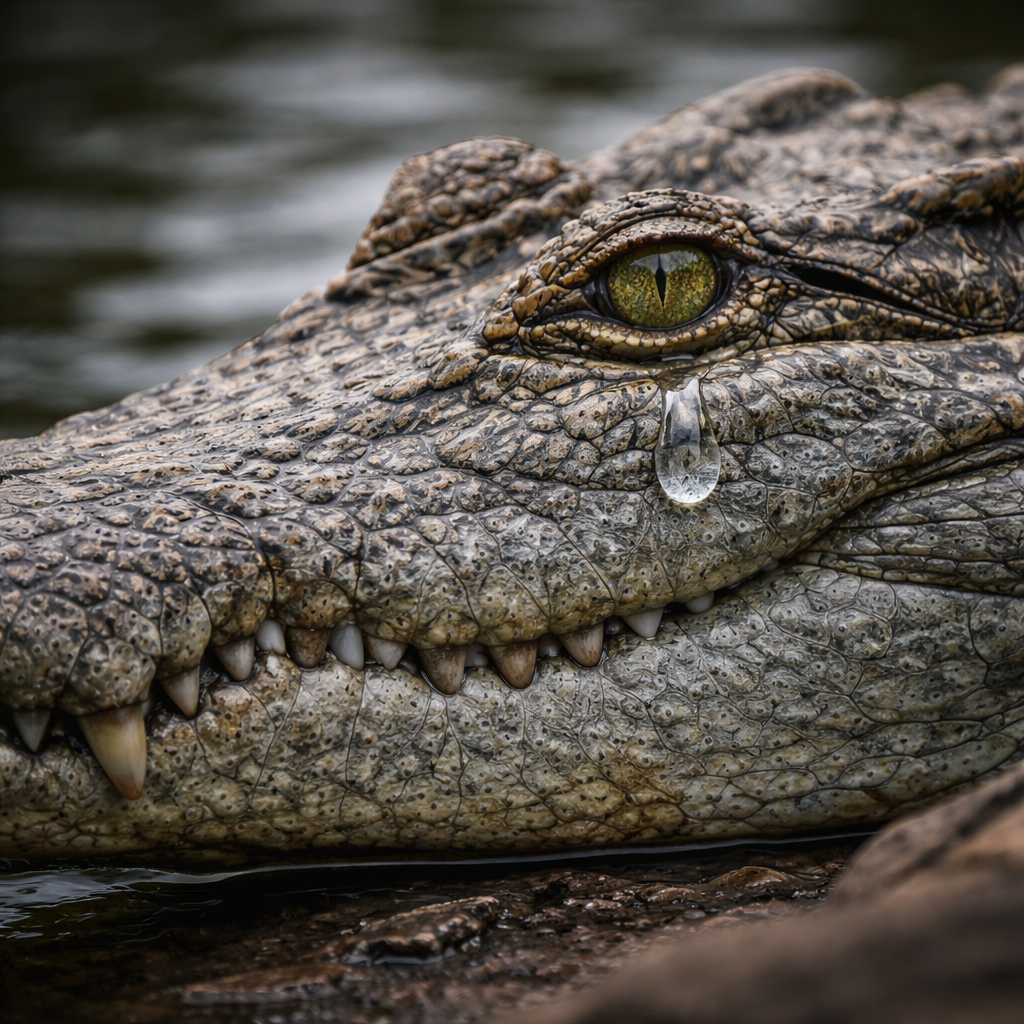
Crocodiles do produce real tears, but not because they feel sadness or regret. Like many other animals, including humans, they have tear glands that produce fluid to protect and maintain the health of their eyes.
These tears serve important biological purposes. They help keep the eyes moist, protect them from bacteria and debris, and assist in removing excess salt from the body.
Sometimes, when crocodiles are eating or when they keep their mouths open for extended periods, pressure around the tear glands can cause liquid to flow from the eyes. Researchers studying crocodilian behavior have observed this phenomenon, especially during feeding.
In other words, the tears are real, but they are not connected to emotions.
Where does the expression “crocodile tears” come from?
The expression is very old and dates back to medieval Europe. Around the 13th century, some stories and travel accounts claimed that crocodiles would cry while eating their prey.
Observers likely noticed moisture or tears near the animals’ eyes during feeding and interpreted this as the crocodile showing regret or sadness for its victim. In reality, this interpretation was more myth than science.
Over time, the image of a crocodile “crying” while consuming its prey became a metaphor for insincere sorrow or false remorse.
That is how the expression “crocodile tears” entered the language and has remained in many cultures ever since.
Other fascinating facts about crocodiles
Crocodiles are among the oldest animals still living on Earth, and their biology is remarkable.
They have existed for more than 200 million years. Their ancestors lived during the age of the dinosaurs, and their body design has proven so efficient that it has remained largely unchanged for millions of years.
They have one of the strongest bites in the animal kingdom. Some species, such as the saltwater crocodile, can exert a bite force of over 16,000 newtons, allowing them to capture and hold prey with incredible strength.
They cannot sweat. Crocodiles do not have sweat glands, so they regulate their body temperature through behavior. That is why they are often seen resting with their mouths open, which helps them cool down in a way somewhat similar to how dogs pant.
They are more attentive parents than many people realize. Although they are powerful predators, female crocodiles carefully guard their nests and protect their young. After the eggs hatch, the mother often helps the hatchlings reach the water and may gently carry them in her mouth.
They can survive long periods without food. Their metabolism is highly efficient, and a large crocodile can go months without eating, particularly during cooler periods.
Why do we still use this expression today?
Even though science now explains why crocodiles produce tears, the phrase has remained in everyday language because it perfectly describes a type of human behavior: showing regret or sadness in a way that appears insincere.
“Crocodile tears” has therefore become a lasting metaphor for fake sympathy or false remorse, and the story behind the phrase is a reminder of how easily myths can develop when natural phenomena are misunderstood.