
At first glance, koalas look like one of the calmest and most harmless animals in the world. They cling to tree branches, sleep for hours, and seem completely uninterested in everything happening around them. This image has been so widely shared that many people assume koalas are simply lazy animals.
In reality, things are much more complex.
Koalas are not lazy—they are highly specialized animals that have adapted to survive on a very unusual and challenging diet.
Their primary food source is almost entirely eucalyptus leaves. The problem is that these leaves are not only low in nutrients, but they are also toxic to most animals. They contain compounds that can be harmful to the digestive and nervous systems, which is why very few species rely on them as a main source of food.
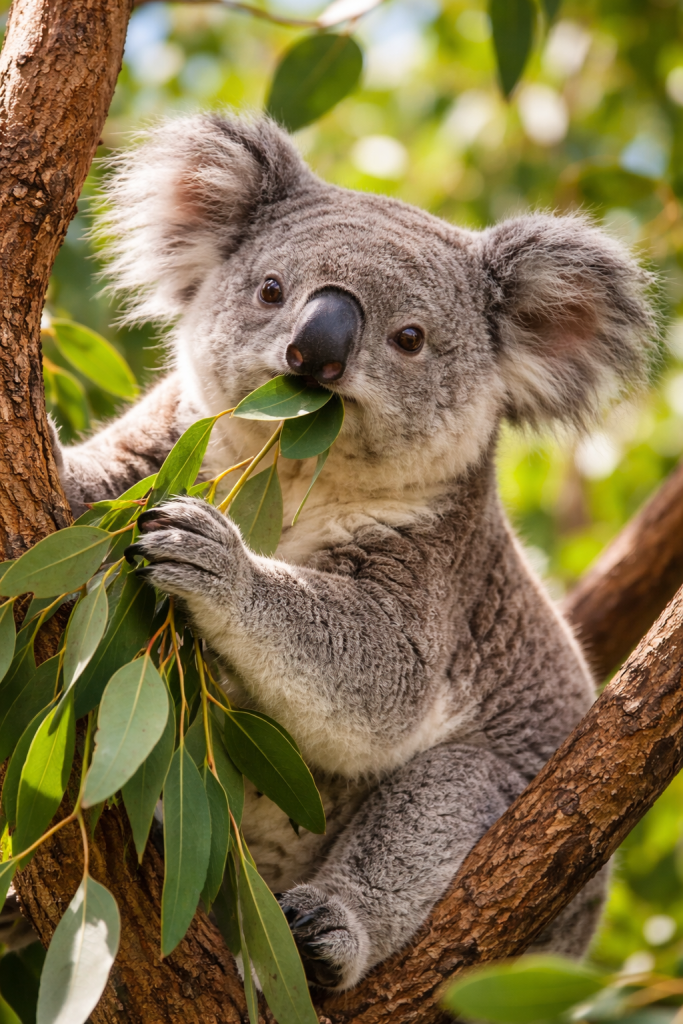
Koalas, however, have evolved to handle this.
Their bodies are equipped with a liver that can process and neutralize many of these toxins. In addition, their digestive system is specially adapted to break down eucalyptus leaves very slowly. They also rely on gut bacteria that help extract small amounts of energy from a food source that is otherwise difficult to digest.
But this adaptation comes at a cost.
Because eucalyptus leaves provide so little energy, koalas must conserve as much as possible. That’s why they sleep between 18 and 22 hours a day. This isn’t laziness—it’s a survival strategy. Their bodies simply cannot afford to waste energy.
A koala’s life follows a simple cycle: eat, digest slowly, rest, and repeat.
From the outside, this can make their behavior seem limited. Some people say koalas are not very intelligent. In reality, it’s more accurate to say they are highly specialized.
They don’t need to hunt, solve complex problems, or adapt to constantly changing environments. They live in relatively stable ecosystems where food and shelter are found in the same place.
A well-known example of this specialization is that koalas may not always recognize eucalyptus leaves as food if they are removed from their natural context. If the leaves are placed on the ground, for instance, a koala might not immediately identify them as edible. This isn’t necessarily a sign of low intelligence—it reflects how specifically adapted they are to their environment.
When it comes to humans, koalas are not aggressive animals. They generally avoid interaction and prefer to stay in trees, where they feel safe.
However, if they feel threatened, stressed, or are handled improperly, they can become defensive. They have strong claws and sharp teeth, and they may scratch or bite if they need to protect themselves.
So while they are not dangerous in a general sense, they are also not animals meant to be handled casually.
Beyond their appearance, koalas play an important role in their ecosystem. By feeding on eucalyptus leaves, they help maintain vegetation balance. Their presence can also serve as an indicator of environmental health.
If koala populations begin to decline, it often signals that something is wrong in their habitat.
And this is already happening.
Koalas are currently facing serious challenges, including habitat loss, climate change, and disease. Large-scale wildfires in Australia have had a significant impact on their populations, reducing their numbers in several regions.
Their long-term survival depends heavily on the protection of their natural environment.
In the end, koalas are not just cute animals that sleep all day. They are the result of a very specific evolutionary path—one that allows them to survive on a toxic diet in a delicate ecological balance.
They may seem simple, but in reality, they are a fascinating example of how life adapts to even the most unusual conditions.