
I don’t think this is the kind of question people easily say out loud. It usually shows up quietly, in a moment when no one is asking anything of you and you don’t have to give the “right” answer. Maybe after seeing a child, maybe after hearing a story about adoption, or maybe simply when you start imagining, for the first time, what your life would look like if you chose that path.
And then the thought appears—simple, but uncomfortable:
If I adopted a child… would I love them the same as my own?
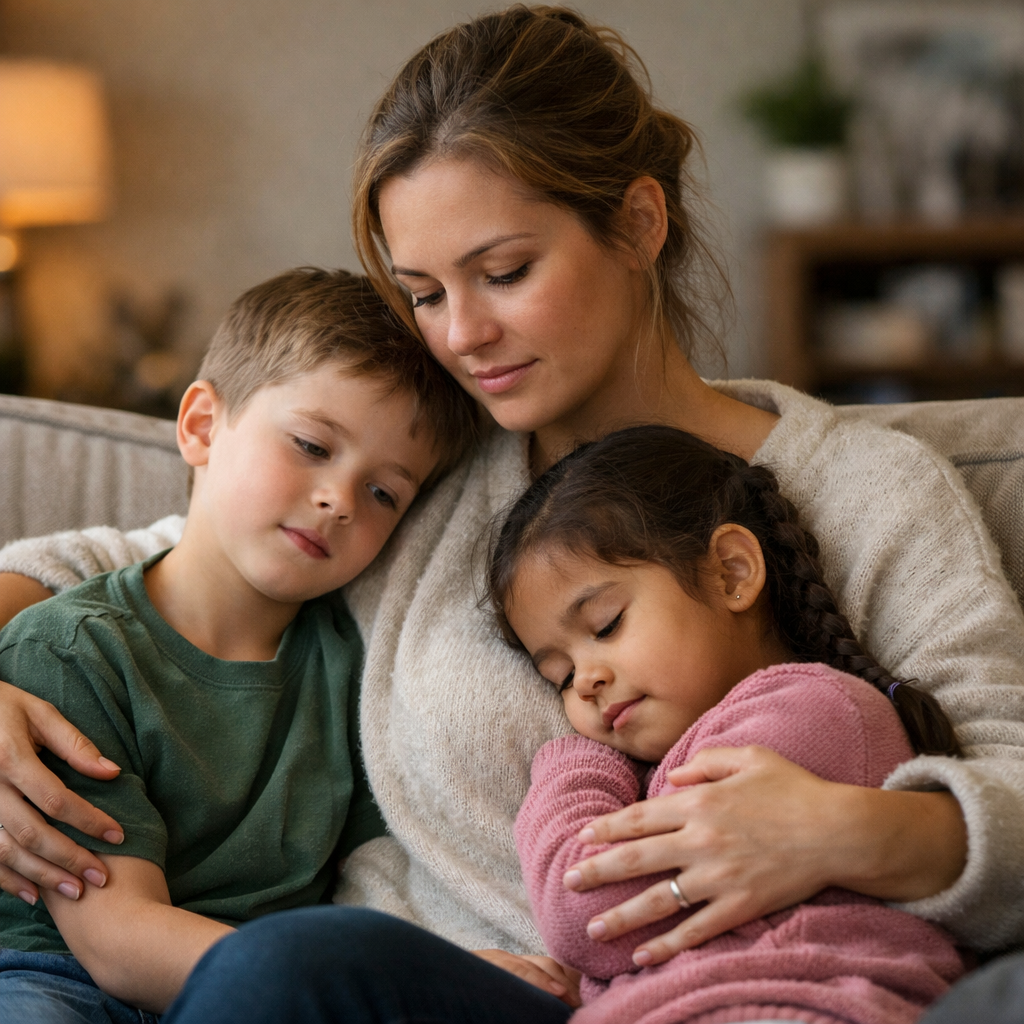
The instinct is to push the question away or quickly say “yes,” because anything else feels wrong. But if you sit with it for a moment, without rushing to close it, you begin to realize it isn’t a simple question at all. Not because people aren’t capable of love, but because love doesn’t follow a fixed pattern and doesn’t always begin in the same way.
I’ve come across many real-life experiences—stories from parents, from adoptees, from families with both biological and adopted children. And what stands out isn’t a single clear answer, but nuance.
Some parents say they knew right away. That the moment the child was placed in their arms, everything clicked, as if the child had always been part of their life. For them, there was no difference—just love.
Others describe something more complex. Not less love, but a different beginning. A strong sense of protection and responsibility was there immediately, but deeper emotional connection developed over time. And what’s important is that this doesn’t only happen in adoption. Some biological parents also need time to fully bond with their child, even though that’s talked about far less often.
This shifts the perspective a bit. Love isn’t only something you feel instantly—it’s also something that grows. Through everyday care, through showing up consistently, through shared experiences that build connection over time.
But things become more sensitive when another layer is added—when a family includes both biological and adopted children.
At that point, the question is no longer just “Can I love an adopted child?”
It becomes: “Will there be differences, even if I don’t intend them?”
Because even when parents genuinely believe they treat their children the same, subtle differences can still appear.
Not in obvious ways, but in small, almost invisible moments—who you understand more easily, who feels more familiar, who you instinctively relate to, who requires more effort to fully know. These aren’t conscious choices; they often come from shared history and natural emotional patterns.
A biological child comes with a story you’ve lived from the very beginning. An adopted child comes with a story that started before you, and the relationship grows from the present forward. That doesn’t make the bond weaker—but it can make it different.
And children don’t measure love by intention. They experience it through how it feels.
Sometimes the difference isn’t in what they receive, but in how they experience belonging—how natural or effortless it feels to be part of the family.
This becomes even more complex when siblings are involved. In families where a child is already present, dynamics don’t start from zero. One child may feel like they are entering an already established space, while another may feel they have to share attention in a new way. And when tensions arise—as they do in any family—it can be easy, even unintentionally, to see the adopted child as the one who “changed things.”
Not because it’s true, but because it’s the easiest explanation.
There are also very different experiences among adoptees themselves. Some say they never felt any difference and grew up feeling fully accepted and loved. Others say they only began to notice differences later in life—in decisions, in closeness, in the way relationships evolved over time.
Not necessarily a lack of love, but moments where something felt unequal.
And that’s the part that’s hardest to talk about.
Because we want love to be fair, equal, and consistent. But real relationships are shaped by many factors—personality, history, emotional connection—not just intention.
So the original question remains, but it becomes deeper.
It’s not just “Can I love an adopted child the same?”
It’s also “Am I willing to notice where differences might appear—and take responsibility for them?”
Because in many cases, the challenge isn’t a lack of love.
It’s a lack of awareness.
Can you love an adopted child as much as your own?
Yes—many people truly do.
But it’s not something that happens automatically just because we want it to. It’s something that grows, that requires attention, honesty, and the willingness to reflect on your own reactions.
Because in the end, a child won’t remember what you said about love.
They’ll remember how it felt to be loved by you.