
A panic attack can feel overwhelming, sudden, and deeply physical. Many people describe it as if something is seriously wrong with their body — even life-threatening.
But what’s actually happening inside your body is a powerful, built-in survival response.
Understanding it can make it a little less frightening.
A panic attack begins in the brain, specifically in an area called the amygdala, which is responsible for detecting danger.
The problem is that during a panic attack, the brain mistakenly believes you are in immediate danger — even when you are safe.
This triggers the body’s “fight or flight” response.
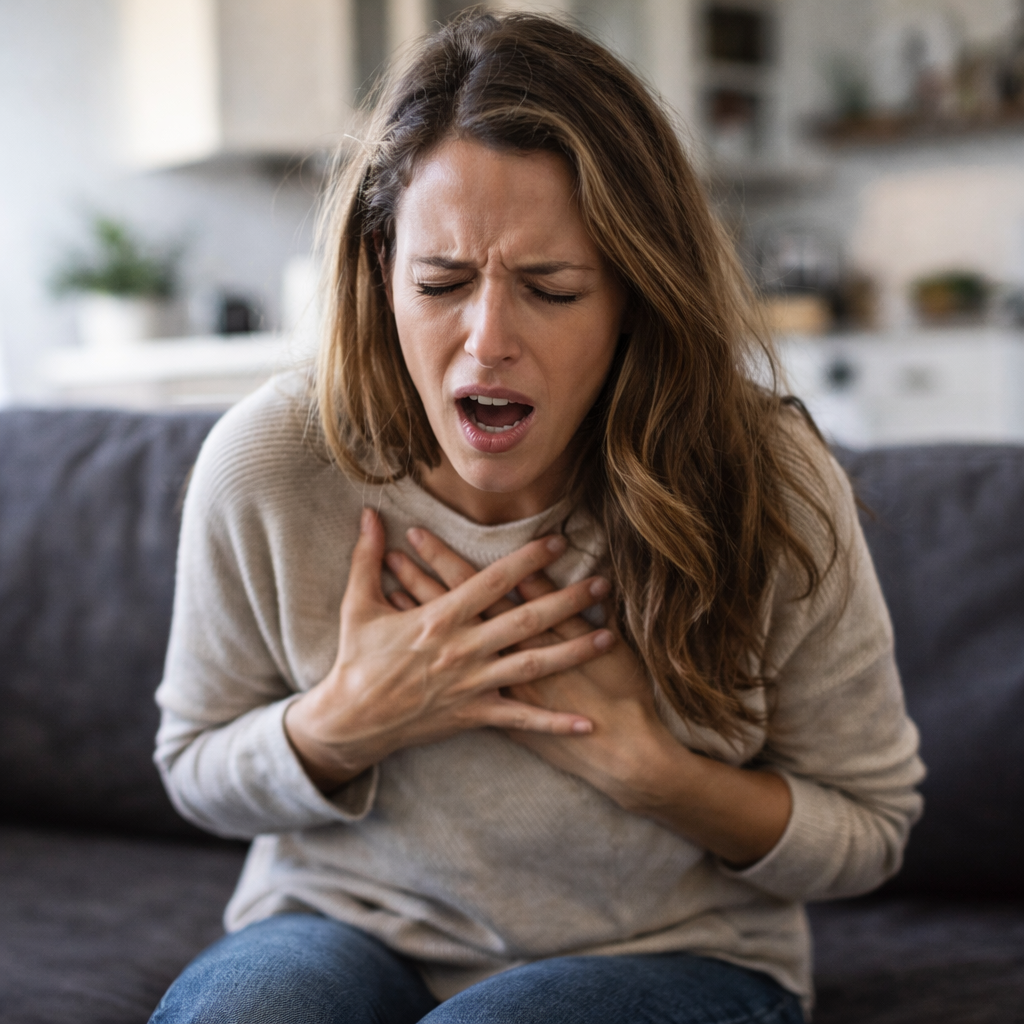
Within seconds, your nervous system releases stress hormones like adrenaline and cortisol.
Your body prepares to either fight or escape.
Your heart starts beating faster.
This is not a sign that something is wrong — it’s your body trying to pump more oxygen to your muscles in case you need to act quickly.
At the same time, your breathing becomes faster and more shallow.
This can lead to a sensation of not getting enough air, even though your oxygen levels are actually normal.
In fact, rapid breathing can lower carbon dioxide levels in the blood, which may cause dizziness, tingling in the hands, or a feeling of unreality.
Your muscles tighten.
This is your body preparing for action.
But when there is no real physical danger, that tension has nowhere to go, which can lead to chest tightness, shaking, or discomfort.
Your digestive system slows down.
The body redirects energy away from digestion and toward survival functions.
This is why some people feel nausea, stomach discomfort, or a “knot” in their abdomen.
You may also experience:
- sweating
- chills or sudden warmth
- trembling
- a feeling of losing control
- a sense of detachment from reality
All of these symptoms are real — but they are not dangerous.
One of the most important things to understand is this:
A panic attack cannot harm you.
It feels intense because your body is activating a system designed to protect you.
But in this case, the alarm is false.
Most panic attacks peak within 10 to 20 minutes.
Even if it feels like it will never stop, your body cannot sustain that level of activation for long.
Eventually, the nervous system begins to calm down on its own.
Knowing what is happening can help break the cycle of fear.
Because often, the fear of the symptoms makes them stronger.
But when you recognize them for what they are — a temporary surge of stress response — they can become more manageable.
You are not losing control.
You are not in danger.
Your body is trying to protect you — even if it’s doing it at the wrong time.
If panic attacks happen frequently or interfere with your daily life, it can be helpful to speak with a healthcare professional. Support, understanding, and the right tools can make a real difference.