
There’s a kind of reaction you only start to notice after you’ve encountered it a few times, and once you do, it becomes hard to ignore. It isn’t always openly aggressive, and it doesn’t always come from a bad place, but it shows up with surprising consistency whenever someone actually does something, especially when that “something” involves effort, responsibility, or a decision that isn’t perfect.
It’s the reaction of people who always know what you should have done.
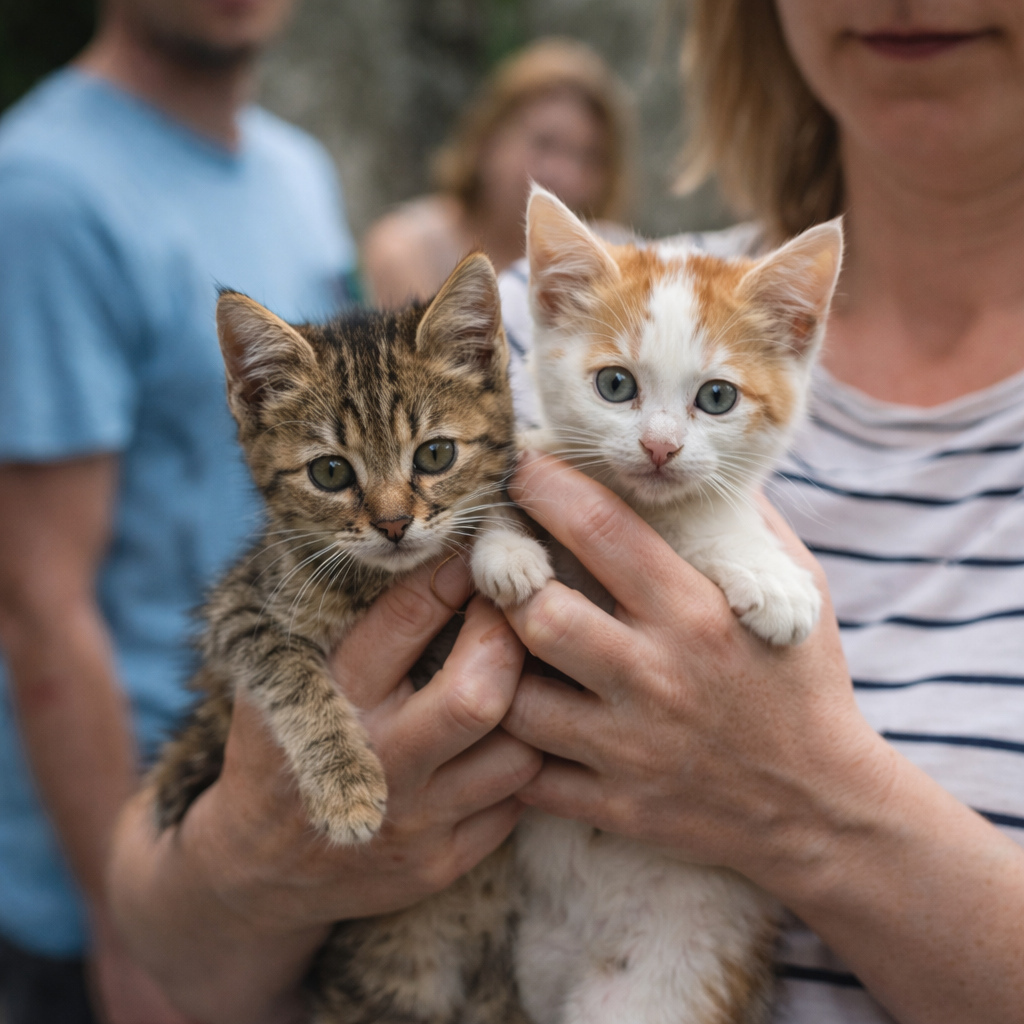
I understood it better through a situation that, on the surface, seemed simple. I rescued two kittens and, naturally, my first instinct wasn’t to keep them, but to find them safe, permanent homes with people who could properly care for them long term. In theory, that sounds like a good thing. In practice, it doesn’t take long before the comments start.
Why didn’t you keep them yourself.
How much joy they would bring you.
What it really means to love animals.
The conversation quickly turns into a list of expectations, as if there were only one “correct” choice, and somehow that choice always involves you taking on everything.
In moments like that, you’re not being told anything you don’t already know. No one is offering new information. The issue isn’t a lack of awareness, but how easily reality gets simplified from the outside, until any decision that isn’t ideal is treated as wrong.
At first, it’s easy to think it’s just your situation.
But it isn’t.
I came across a post from someone who, on the way to the airport, noticed a group of kittens near a supermarket. They took a photo, shared the location, and left a simple message for anyone who might be able to help. It didn’t take long before the reactions came in.
How could they just leave.
How could they walk away.
How is it possible to see that and not do more.
No one knew where that person was going. No one knew whether they had time, resources, or any realistic way to help in that moment. And yet the conclusions were immediate, confident, and absolute.
What stays with you, though, is something else.
All of those people had the location. They had exactly the information they would need to go and help.
And still, they didn’t go.
It is much easier to describe what a good deed should look like than to actually do it.
That gap between intention and action is rarely discussed, even though it’s very real. It involves time, effort, inconvenience, and sometimes difficult trade-offs that not everyone is willing or able to make.
The same gap becomes visible when, out of a genuine desire to help, you get more involved than you initially expected. You rescue an animal, but the responsibility doesn’t end there. You now have to find an adopter, make sure it’s a safe environment, and live with the uncertainty of whether you made the right choice. It’s not a single act. It’s a process.
And not everyone can or wants to carry that process all the way through.
That doesn’t mean they shouldn’t do anything at all.
Recently, a friend found herself in a situation that, again, only seems simple from a distance. Her apartment building is undergoing exterior renovation, and during the work, the workers discovered a pigeon’s nest with an egg inside. They carefully moved the nest onto scaffolding and continued their work.
That’s where the complicated part began.
She tried to help in the ways that were actually possible. She made sure the pigeon had access to food and water, noticed that it hadn’t abandoned the egg after the first move, and started wondering whether she should intervene further. The only direct option would have been to climb down onto the scaffolding herself, which was unsafe. Another option was to wait for the workers to return, but she didn’t know how the bird would react to being moved again.
This wasn’t a clear right-or-wrong situation. It was one of those moments where every choice carries some level of risk.
I suggested she post in a group dedicated to helping birds, hoping she would get practical advice from people with experience.
It didn’t take long before the responses appeared.
Why didn’t she take the nest into her home.
Did she even give it food and water.
Why not pause the entire building renovation for two months so the pigeon can hatch the egg and raise the chick.
At that point, the conversation was no longer about helping, but about imposing ideal scenarios from a distance.
Because it’s easy to say a construction project should stop when you’re not the one responsible for it. It’s easy to suggest bringing a wild animal into your home when you’re not the one dealing with the consequences.
And once again, the same question remains.
How many of the people giving this advice would actually do what they are asking of others?
There isn’t a simple answer, and this isn’t about judging people for not doing more. Everyone has limits, responsibilities, and circumstances that shape what they can realistically do.
The problem appears when those limits are completely ignored in others.
Because sometimes, the people who do something, even if it’s not perfect, end up being criticized more than those who do nothing at all.
And maybe that’s the part worth saying out loud more often.
Not every action has to be perfect to matter. Not every effort has to be complete to have value.
And the difference between doing something imperfectly and doing nothing at all is often much bigger than it looks from the comments.