
It looks fragile, almost defenseless.
And yet, there are frogs that can freeze completely during winter, their hearts stopping, their bodies turning rigid… only to return to life when temperatures rise.
It sounds unreal, almost like something invented. But it isn’t.
And that is only one of the many things that make frogs far more complex than most people realize.
A body designed to live between two worlds
Frogs are amphibians, which means they are built to survive both in water and on land. Their lives begin in water as tadpoles, breathing through gills, moving in a completely different way than they will later.
As they grow, their bodies transform through metamorphosis. Lungs develop, limbs appear, and they slowly transition into creatures that can leave the water behind—at least partially.
But what makes them truly unusual is something most people never think about: their skin.
Unlike humans, frogs don’t rely only on lungs to breathe. Their skin is permeable, meaning oxygen can pass directly through it. This allows them to absorb oxygen from water or moist environments, but it also makes them extremely vulnerable.
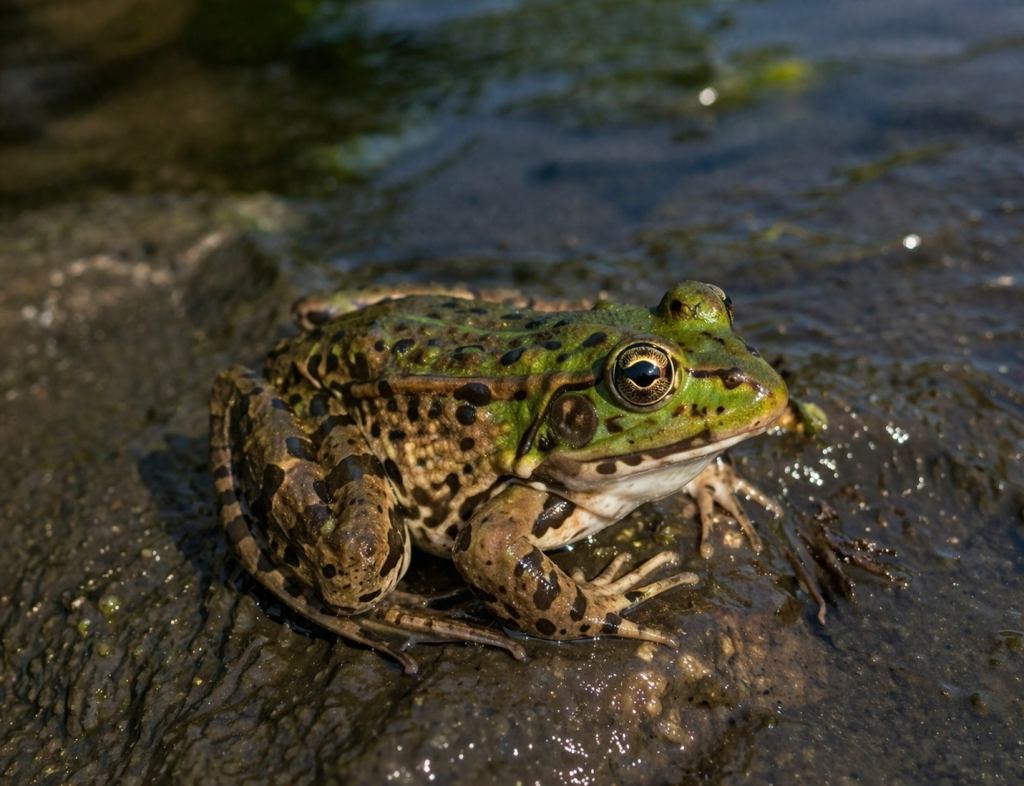
Any pollution, chemical exposure, or environmental change affects them quickly.
Because of this, frogs are often considered natural warning systems. When frog populations begin to decline, it is rarely random. It usually signals that something in the environment is changing—and not for the better.
Survival strategies that shouldn’t work… but do
Some frog species have adapted in ways that seem almost impossible.
Certain frogs, like the wood frog, can survive freezing temperatures by producing substances similar to antifreeze inside their bodies. Ice can form within their tissues, their heartbeat can stop, and yet, when spring arrives, they thaw and continue living.
Other species rely on camouflage so effective that they become nearly invisible. Their colors and textures blend perfectly with leaves, bark, or soil, making them almost impossible to detect unless they move.
There are also frogs that produce toxins through their skin. Brightly colored species, such as poison dart frogs, use color as a warning signal. In nature, vivid colors often mean one thing: stay away.
At the same time, many frogs survive not by fighting or warning, but by remaining completely still. In their case, survival often depends on not being noticed at all.
The quiet role they play in keeping ecosystems balanced
Frogs are not just passive creatures hiding near water. They are active participants in maintaining ecological balance.
They feed on insects, including mosquitoes and agricultural pests, helping control populations that would otherwise grow rapidly. In areas where frogs are present in healthy numbers, this natural control reduces the need for chemical pesticides.
But frogs are also prey.
Birds, snakes, fish, and mammals all rely on them as a food source. This places frogs in a critical position within the food chain. They connect multiple levels of the ecosystem, acting as both predator and prey at the same time.
When frog populations decline, the effects ripple outward. Insects may increase, predators may lose a food source, and the balance begins to shift in ways that are not always immediately visible.
Who eats frogs — in nature and among humans
In the wild, frogs are eaten by a wide variety of animals. Snakes are among the most common predators, often specializing in hunting amphibians. Birds such as herons feed on them near water, while fish consume tadpoles and sometimes even adult frogs. Mammals like raccoons and otters also include frogs in their diet when the opportunity arises.
Humans, too, are part of this picture.
In many cultures, frogs—especially frog legs—are considered a delicacy. They are commonly consumed in countries such as France, China, Indonesia, and parts of the United States. The meat is often described as mild, with a texture somewhere between chicken and fish, and is valued for being high in protein and low in fat.
At the same time, this demand has contributed to pressure on wild populations. Combined with habitat loss, pollution, and disease, human consumption has become one of several factors affecting frog numbers worldwide.
Why frogs matter more than they seem
Frogs are easy to overlook. They are small, quiet, and rarely interact directly with humans.
But their importance goes far beyond what we see.
They help control insect populations, support entire food chains, and provide early signals of environmental change. Their presence—or absence—can reveal more about an ecosystem than many larger, more visible animals.
And perhaps the most striking detail remains this:
An animal so sensitive that it can breathe through its own skin… has survived on Earth for over 200 million years.
Not because it is fragile.
But because it is perfectly adapted to a world that is constantly changing.