
Breathing is one of those processes your body manages without conscious effort, maintaining a balance so stable that you rarely think about it. You inhale, you exhale, and this continuous rhythm supports everything from brain function to cardiovascular stability without requiring your attention. That’s precisely why disruptions during sleep can go unnoticed, even when their effects are significant.
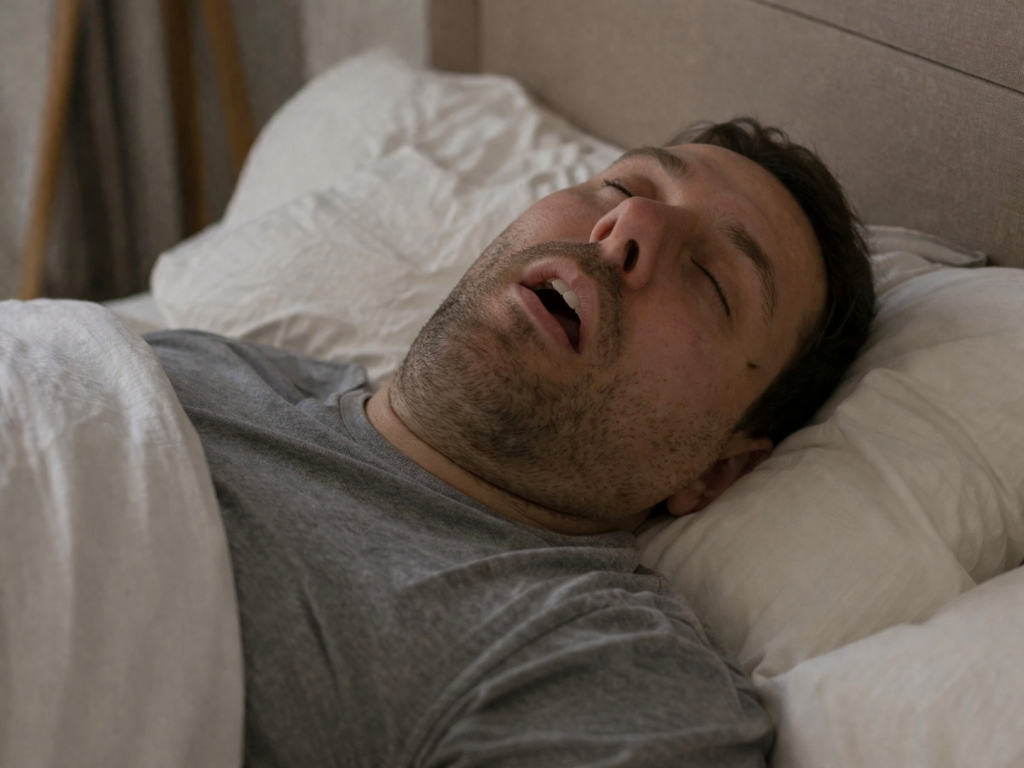
Sleep apnea is not just about snoring or restless nights. At its core, it involves repeated interruptions in breathing that occur without you being aware of them. In the most common form, known as obstructive sleep apnea, the muscles in the throat relax to the point where the airway becomes narrowed or temporarily blocked, preventing air from flowing properly. These episodes can last several seconds or longer and may occur dozens or even hundreds of times in a single night.
What happens when breathing stops
When airflow is interrupted, oxygen levels in the blood begin to drop while carbon dioxide levels rise. The body quickly detects this imbalance and activates emergency responses through the autonomic nervous system. The brain triggers brief awakenings—so short that you don’t remember them—just enough to restore muscle tone and resume breathing.
Although these awakenings are not consciously perceived, they fragment the structure of sleep and prevent the body from reaching and maintaining deep, restorative stages. As a result, the issue is not simply how long you sleep, but how effectively your body is able to recover during that time.
At the same time, each apnea episode activates the sympathetic nervous system, leading to repeated increases in heart rate and blood pressure. These responses are designed for short-term stress, not for recurring activation throughout the night. Over time, this pattern contributes to the development of hypertension and increases the risk of cardiovascular disease.
The brain is affected as well, even if the changes are subtle at first. Fluctuating oxygen levels combined with disrupted sleep can interfere with memory, attention, and emotional regulation. This helps explain why some people experience persistent fatigue, difficulty concentrating, or irritability without immediately connecting these symptoms to sleep quality.
How sleep apnea is actually diagnosed
Despite how vague the symptoms can feel, sleep apnea is not diagnosed based on impressions, but on measurable physiological data collected during sleep. The specialists involved are typically pulmonologists or physicians trained in sleep medicine, and the process begins with clinical suspicion followed by targeted investigations.
The most comprehensive method is polysomnography, a sleep study performed in a specialized laboratory where multiple body functions are monitored simultaneously. This includes brain activity, eye movements, muscle tone, heart rhythm, airflow, and blood oxygen levels. By analyzing these parameters together, doctors can identify not only the presence of apnea episodes, but also how they disrupt the overall architecture of sleep.
A key metric derived from this evaluation is the apnea-hypopnea index, which measures how many breathing interruptions occur per hour of sleep. Based on this value, the condition is classified as mild, moderate, or severe, which directly influences the approach to management.
In some cases, especially when symptoms are typical and uncomplicated, home sleep tests may be used. These monitor a more limited set of parameters, such as airflow and oxygen saturation, but can still provide enough information for diagnosis in many situations.
Why it differs from person to person
Sleep apnea does not affect everyone in the same way, and differences appear both in how frequently it occurs and how it manifests. Among adults, it is more commonly diagnosed in men, although this gap narrows after menopause, when hormonal changes influence airway stability in women.
In children, the mechanism is often different, frequently linked to enlarged tonsils or adenoids. Instead of daytime sleepiness, signs may include restlessness, difficulty concentrating, or behavior that resembles hyperactivity, which can make the condition harder to recognize.
As people age, sleep apnea becomes more common, but also easier to overlook, as symptoms are often attributed to aging or other health conditions. In reality, age-related changes in muscle tone and airway structure can increase the likelihood of breathing interruptions during sleep.
The role of lifestyle: diet and smoking
Lifestyle factors play an important role, even if they are not direct causes. Diet, for example, does not trigger sleep apnea on its own, but it strongly influences body weight, which is one of the most significant risk factors. Fat deposits around the neck can reduce the diameter of the airway, making it more prone to collapse during sleep.
Heavy meals late in the evening may also worsen symptoms indirectly by increasing abdominal pressure and promoting acid reflux, which can irritate the airway and contribute to instability.
Smoking adds another layer of risk by directly affecting the respiratory tract. The irritants in cigarette smoke cause chronic inflammation, increase mucus production, and can narrow the airways further. In the context of sleep apnea, this means more frequent breathing interruptions and a reduced ability of the body to respond effectively to drops in oxygen levels.
Why it often goes unnoticed
One of the most challenging aspects of sleep apnea is that it happens without direct awareness. In many cases, the first signs come from someone else who notices pauses in breathing or an unusual pattern of snoring, while the affected person only experiences the consequences without understanding the cause.
At its core, sleep apnea is not just a breathing issue, but a repeated disruption of internal balance, where the body is forced to constantly react to oxygen deprivation and fragmented sleep. And perhaps the most important aspect is not how severe each individual episode is, but how often it happens.
Because when something essential is interrupted over and over again, even small disruptions can turn into a long-term strain on the entire body.