
Some stories begin in a way that feels almost harmless—laughter, peer pressure, the quiet assumption that “everyone does it”—and end in a reality no one truly imagines. Not because people don’t know alcohol can be dangerous, but because the real danger doesn’t look the way you expect. It doesn’t come with a clear warning. There’s no moment when your body tells you, “this is the point of no return.”
The case of Danny Santulli changed that perception for many. In 2021, during a fraternity hazing event, he was forced to consume large amounts of alcohol in a very short time, including through a device designed to speed up intake. This wasn’t casual drinking—it was far beyond what the human body can safely process.
His blood alcohol concentration reached around 0.486%, a level at which the body can no longer function normally. At that point, alcohol is no longer just something that “makes you tipsy.” It becomes a powerful depressant of the central nervous system. Breathing slows, reflexes shut down, and the brain begins to lose its oxygen supply.
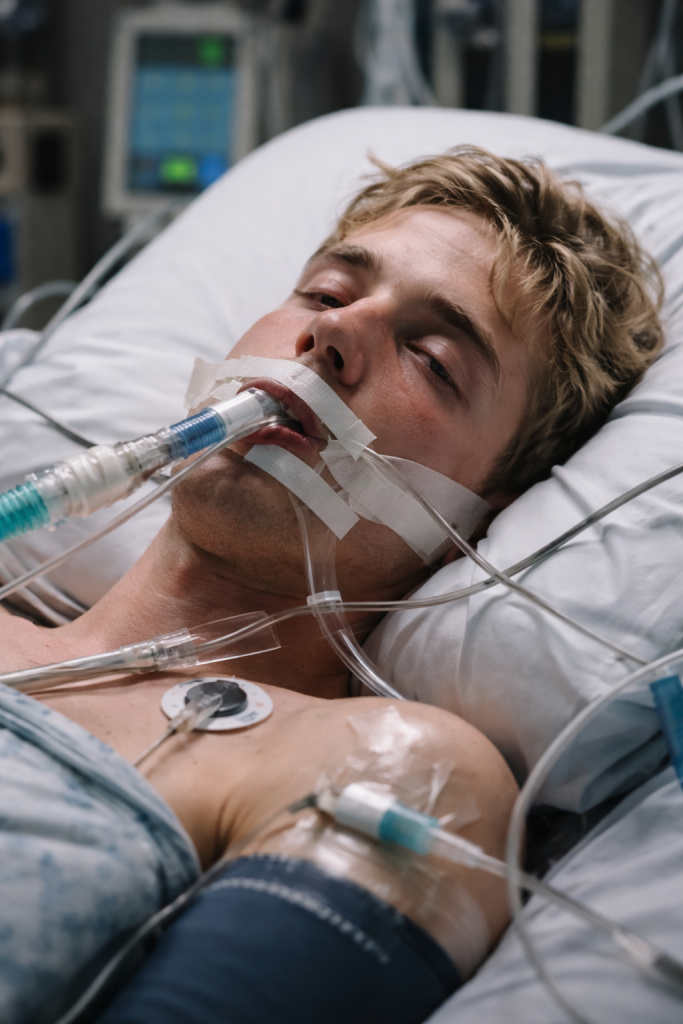
What followed wasn’t a temporary blackout. The lack of oxygen caused severe, irreversible brain damage. Today, Danny requires constant care and cannot speak or move independently. His case is an extreme example—but the biological process behind it starts much earlier and is far more common than most people realize.
How the Body Handles Alcohol—and Where the Limit Is
Your body is capable of processing alcohol, but only up to a point. The liver breaks it down using specific enzymes, and on average, it can handle about one standard drink per hour. Anything beyond that remains in your bloodstream and begins to affect your brain directly.
That’s why the real issue isn’t just how much you drink, but how fast. Two drinks spaced out over time may be manageable. The same amount consumed quickly—especially on an empty stomach—can have a very different impact.
As alcohol levels rise, the effects unfold in stages, but they’re not always obvious to the person experiencing them. At first, there’s a sense of relaxation because alcohol suppresses the parts of the brain responsible for control and inhibition. Then coordination starts to decline, reaction time slows, and judgment becomes impaired—ironically, right when it matters most.
When It Becomes Dangerous
There is a point where this is no longer “being drunk,” but a medical emergency.
Breathing can become slow or irregular. The gag reflex may disappear, increasing the risk of choking. Heart rhythm can become unstable, and body temperature may drop.
The most critical effect is on the brain. If breathing is suppressed enough, oxygen levels fall. Within minutes, brain cells begin to die. This is the threshold where damage can become permanent.
Why Some People React Much More Strongly
Not everyone processes alcohol the same way. There are genetic differences in the enzymes responsible for breaking it down, particularly those involved in clearing toxic byproducts.
For some individuals, even small amounts of alcohol can trigger intense reactions—nausea, rapid heartbeat, dizziness, and a strong feeling of illness. In these cases, the body cannot efficiently eliminate toxic compounds, and they build up quickly.
There are well-documented situations where otherwise healthy people experience severe reactions after minimal alcohol intake. It’s not the norm, but it’s far from rare.
Context Matters More Than You Think
The most dangerous situations aren’t usually casual drinking. They tend to involve rapid intake, social pressure, or loss of control—drinking games, hazing rituals, strong alcohol consumed quickly, or drinking on an empty stomach.
In these scenarios, blood alcohol levels rise sharply, leaving the body no time to adapt. It’s this rapid spike that often turns a “normal” situation into a medical crisis.
An Invisible but Very Real Limit
What makes alcohol particularly dangerous is not just the amount, but the fact that each person’s limit is different—and invisible in the moment. There’s no clear signal that tells you when you’re approaching it. And by the time your judgment is affected, you’re already less capable of making safe decisions.
Cases like Danny Santulli’s are not just extreme outliers. They are amplified versions of the same biological process that begins much earlier.
In the end, the real question isn’t whether alcohol can become dangerous. It’s how quickly it can get there under the wrong conditions—and the answer is often: much faster than people expect.