
There’s a very short moment, almost instinctive, when you look at a food and something inside you says, “this doesn’t seem right.” You haven’t checked the ingredients, you haven’t read anything about it, you haven’t even smelled it yet. You just look—and you already know you don’t trust it.
Tempeh creates exactly that kind of reaction.
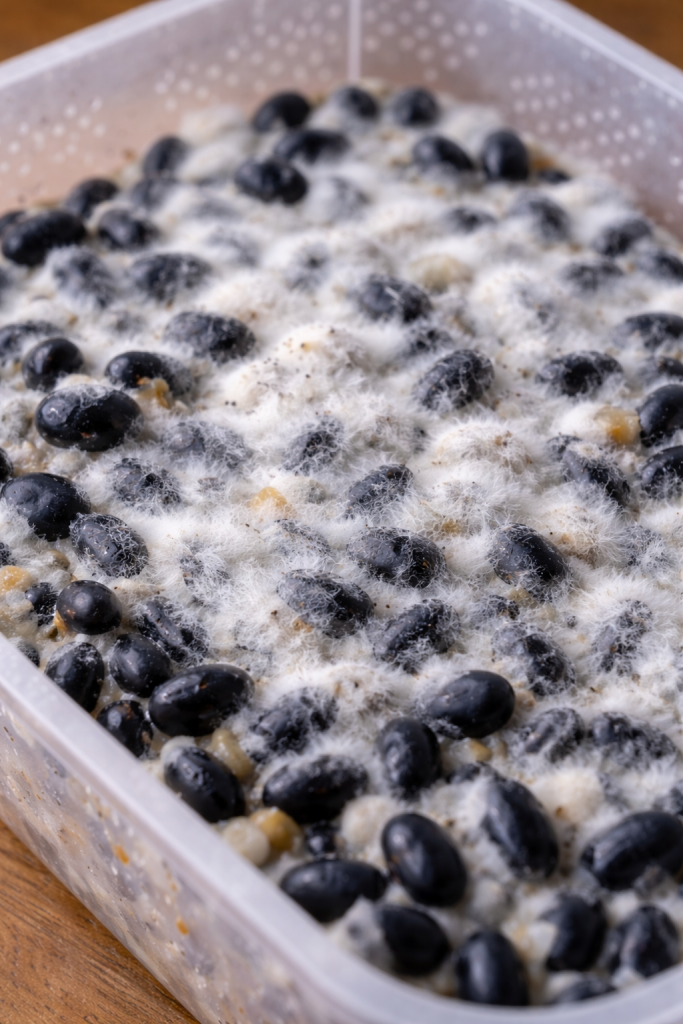
For someone seeing it for the first time, it doesn’t resemble anything familiar from what we usually consider “safe” or “normal” food. Whole beans pressed together, held by a white, slightly fuzzy layer, sometimes dotted with darker spots, lacking that clean, uniform look we’ve been conditioned to associate with quality. It’s not obviously spoiled, but it doesn’t feel reassuring either. It’s the kind of food that makes you hesitate for a second—and that second is often enough to reject it entirely.
And yet, for millions of people, this isn’t strange at all. It’s everyday food.
What Tempeh Actually Is—and Why It Looks Like That
Tempeh is a traditional food from Indonesia, made by fermenting soybeans with the help of a specific type of fungus from the Rhizopus family. This isn’t random spoilage or something that “went wrong.” It’s a controlled, intentional process.
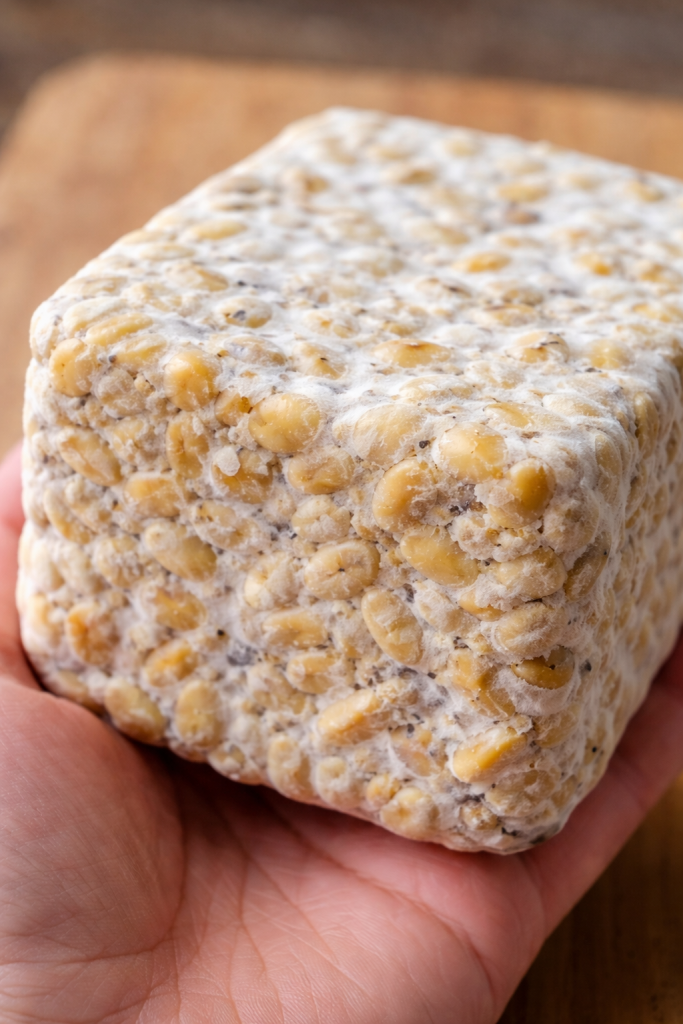
During fermentation, the fungus forms a delicate network called mycelium, which wraps around the beans and binds them into a firm, compact block. That white layer—often the very thing that makes people uneasy—is actually the sign that the process worked properly. Without it, tempeh simply wouldn’t exist.
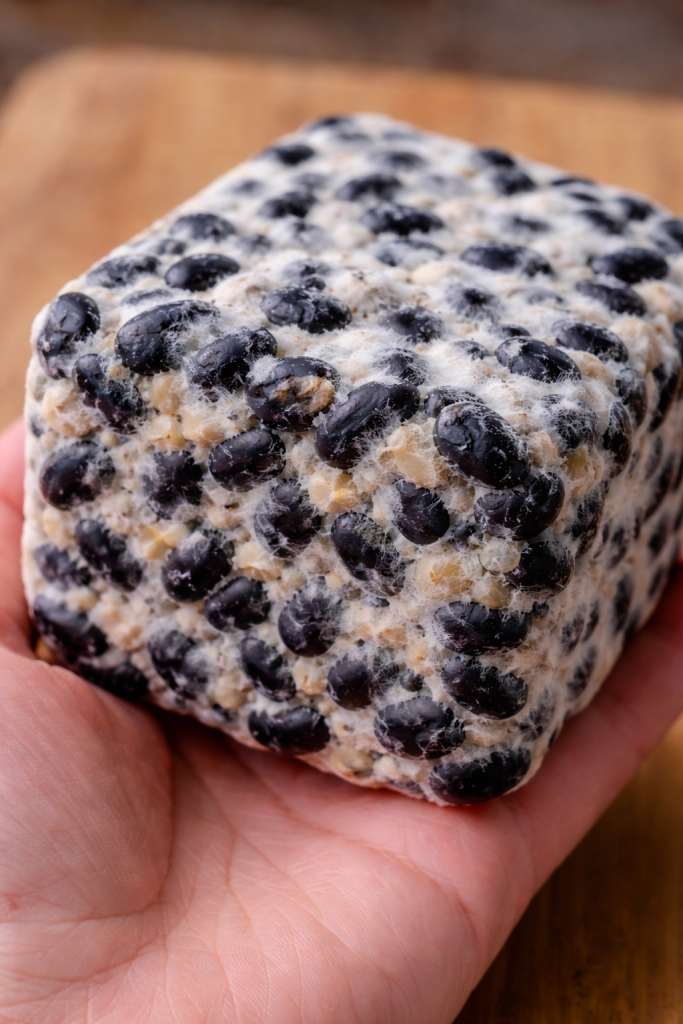
What’s interesting is that this isn’t unusual in the world of food. Many things we eat rely on microorganisms to become what they are. The difference is that in most cases, we don’t see them—or we don’t think about them that way. With tempeh, everything is visible, and that changes how we perceive it.
The Instinct That Protects Us… and Sometimes Misleads Us
That initial hesitation isn’t random. It’s part of a built-in survival mechanism. Over time, humans learned to avoid foods that showed signs of spoilage—unpleasant smells, unusual textures, visible mold—because those often meant danger.
The problem is that this instinct doesn’t distinguish between harmful decay and controlled fermentation. To your brain, visual cues alone can trigger rejection, even when the food is perfectly safe.
That’s why something like tempeh can feel “wrong” at first glance. Not because it is dangerous, but because it doesn’t fit the patterns we’ve learned to trust.
Beyond Appearance: What the Nutritional Reality Shows
If you move past that first impression, tempeh turns out to be a remarkably balanced food. It’s a source of complete protein, meaning it provides all the essential amino acids your body needs—something relatively uncommon in plant-based foods.
The fermentation process also improves digestibility by breaking down compounds in soy that can otherwise be harder to process. At the same time, it can enhance the absorption of important minerals like iron and zinc. Add to that fiber, B vitamins, and mostly unsaturated fats, and you’re looking at a food with a solid nutritional profile.
Research on soy-based foods generally points toward benefits for heart health, particularly in relation to cholesterol levels. For most people, moderate consumption is considered safe, with the main exception being those with soy allergies.
As with any food, preparation matters. When cooked simply—grilled, baked, or lightly pan-fried—tempeh keeps its nutritional value. When heavily processed or drowned in sauces, those benefits can quickly fade.
Why Homemade Versions Don’t Always Look “Right”
Many people first encounter tempeh through homemade attempts, sometimes using beans other than soy. While the basic process remains the same, the results can vary quite a bit.
Soybeans have the ideal structure and composition for fermentation, while other legumes can lead to a less uniform, less compact product. Temperature plays a crucial role as well. The optimal range, around 82–86°F (28–30°C), allows the mycelium to develop evenly. If it’s too cold or too humid, the fermentation may not progress properly, and the final result can look uneven or incomplete.
This is where confusion often appears. People tend to associate an imperfect look with something unsafe, even though that’s not always the case. Still, there’s a clear difference between well-made tempeh and a batch that simply didn’t turn out as expected—and appearance plays a big role in how we judge it.
Maybe It’s Not Just About Tempeh
In the end, tempeh becomes more than just a food. It’s a small test of how much we trust what we see.
We’re used to choosing what feels familiar, what looks clean, predictable, and easy to understand. Anything outside that pattern can feel questionable, even when there’s no real reason for concern.
So the question isn’t just whether you would eat tempeh.
It’s how often you rely on your first impression—and how often you’re willing to challenge it.