
There are very few foods in the world that can truly be described as “almost impossible to spoil,” and honey is one of them. Under the right conditions, it can last for years, even decades, without becoming unsafe for adult consumption. And yet, the same food is strictly not recommended for babies under one year old. The contrast seems surprising at first, but the explanation sits at the intersection of chemistry, microbiology, and human development.
Why honey doesn’t expire in the usual sense
Honey’s stability is not accidental. From a chemical standpoint, it creates an environment where most microorganisms simply cannot survive. It contains very little water, which limits microbial growth, and it is highly concentrated in sugars, creating osmotic pressure that effectively dehydrates bacteria and prevents them from multiplying.
At the same time, honey is naturally acidic, and this acidity further inhibits microbial activity. During the process of turning nectar into honey, bees introduce enzymes that contribute to the formation of compounds with antibacterial properties, including small amounts of hydrogen peroxide.
All of these factors work together. As a result, when honey is stored properly — in a sealed container and protected from moisture — it does not spoil the way other foods do. It may crystallize or change texture over time, but it does not become toxic for healthy adults.
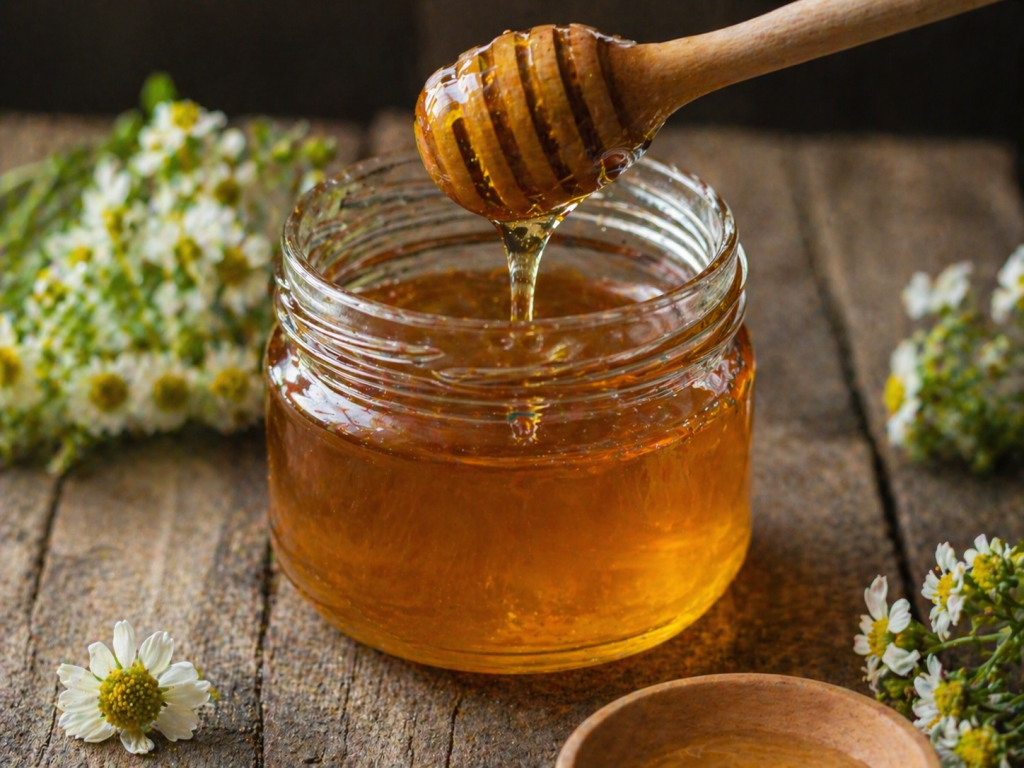
The paradox: a “perfect” food that becomes off-limits
Despite these properties, there is one group for whom honey is not recommended at all: infants under 12 months old. The reason has nothing to do with sugar content or general digestion, but with something invisible and often overlooked.
Honey can contain spores of a bacterium called Clostridium botulinum. These spores are naturally present in the environment, especially in soil and dust, and can make their way into honey without affecting its quality or appearance.
For most people, these spores are harmless. For babies, however, the situation is very different.
What happens inside a baby’s body
In infants, the digestive system is still developing. The gut microbiome, which in adults acts as a protective barrier against harmful bacteria, is not yet fully established. This creates a window in which bacterial spores can survive, grow, and become active.
The concern is not the spores themselves, but what they can produce. Clostridium botulinum can generate a powerful neurotoxin known as botulinum toxin, which interferes with the normal communication between nerves and muscles. In infants, this can lead to a rare but serious condition called infant botulism.
Symptoms may include muscle weakness, feeding difficulties, constipation, and in more severe cases, breathing problems. Although the condition is uncommon, it is serious enough that medical guidelines are clear and consistent worldwide.
Why the type of honey doesn’t matter
A common misconception is that only certain types of honey carry this risk. In reality, there is no meaningful difference in this regard.
Raw honey, processed honey, organic varieties, and commercially available products can all contain these spores. Standard cooking temperatures are not sufficient to reliably destroy them, which means that even honey used in baked goods or warm drinks is not considered safe for infants.
This is why the recommendation remains the same across all contexts: honey should not be introduced into a child’s diet before the age of one.
Why adults are not affected
The key difference lies in the maturity of the digestive system. In older children and adults, the gut microbiome is well-developed and helps prevent harmful bacteria from establishing themselves. The digestive environment is also more effective at neutralizing potential threats.
As a result, even if spores are ingested, they typically pass through the body without causing harm. This highlights how the same food can be completely safe for one person and potentially risky for another, depending on the stage of development.
The detail that changes how you see it
What makes this topic especially interesting is that honey does not become dangerous because it spoils. In fact, its remarkable stability is part of what makes it seem so safe. The risk comes from something invisible, something that cannot be detected by taste, smell, or appearance.
It’s a reminder that food safety is not always about the condition of the product itself, but about how it interacts with the body at a specific moment in time. Honey remains one of the most stable and fascinating natural foods, but it also shows that “safe” is not a universal concept — it depends on who is consuming it, and when.