
A summer afternoon that felt completely routine
On December 7, 2003, along the Sunshine Coast, the day had that slow, familiar rhythm of early summer. It wasn’t crowded or chaotic. Just people moving through their plans, traffic passing steadily, nothing that suggested anything out of the ordinary.
Daniel Morcombe was 13 and had a simple plan for the day. He wanted to go to a shopping center to pick up Christmas presents. It was the kind of independence that felt normal at his age. Nothing about it raised concern.
He left home expecting to take the bus.
The stop that changed everything
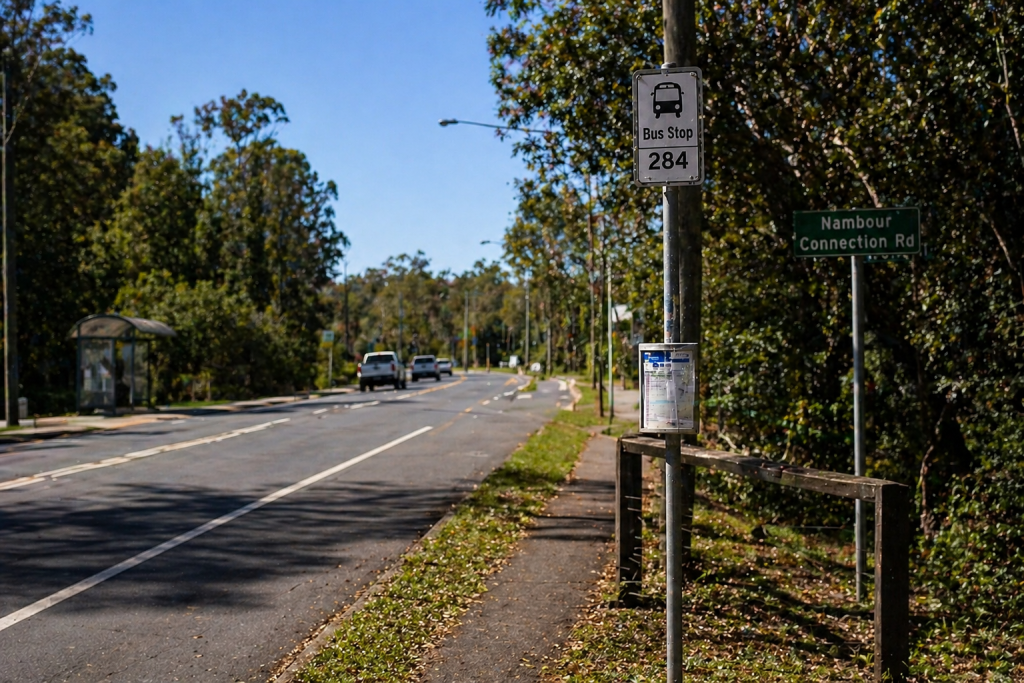
When Daniel reached the bus stop on Nambour Connection Road, things weren’t exactly as usual. The stop was closed due to roadworks, which meant he had to cross to the other side to catch the bus.
It was a small change. The kind you don’t think twice about.
Several people later recalled seeing him there. Some said he looked unsure, trying to figure out where to wait. Others mentioned he had brief interactions with someone nearby. A bus passed through the area without stopping.
After that, the timeline becomes unclear.
When time stops lining up
At first, there was no immediate panic. Buses can be missed. Plans can shift. Delays happen.
But as the hours passed, things didn’t make sense anymore.
He never arrived at the shopping center. He didn’t come back home. The longer it went on, the harder it became to explain.
What had started as a normal afternoon slowly turned into something else.
A search without direction
Police and volunteers searched the area, checking roadside spaces, nearby land, and anything that might offer a clue. Witnesses came forward, but their accounts didn’t form a complete picture.
There were fragments. Observations. Possibilities.
But nothing that clearly explained what had happened.
Days turned into months. Months turned into years.
The years that didn’t close anything
Daniel’s family refused to let the case fade into the background. They spoke publicly, kept attention on his disappearance, and continued pushing for answers even as time passed.
That persistence mattered. In many cases, public visibility is what keeps an investigation active.
Still, for a long time, there was no clear breakthrough.
When the case finally shifted
Years later, investigators took a different approach. An undercover officer built a relationship with a suspect over time, gaining trust slowly rather than forcing answers.
It wasn’t quick. It took patience.
Eventually, the suspect began to talk.
The discovery that brought answers—but not relief
In 2011, based on the information obtained, Daniel’s remains were found in a forested area.
After nearly eight years of uncertainty, there was finally confirmation.
It wasn’t the outcome his family had hoped for. But it ended the not knowing.
The trial and what followed
In 2014, the man responsible was convicted. From a legal standpoint, the case had reached its conclusion.
But for the family, closure isn’t something that comes automatically with a verdict.
What his parents chose to do next
Instead of stepping away, Daniel’s parents turned their focus toward prevention. They created the Daniel Morcombe Foundation, which works to educate children about personal safety and awareness.
Over time, Daniel’s name became part of a much larger conversation in Australia about how children are taught to recognize risk and respond to it.
What stays with people
At the beginning, there was nothing unusual. Just a bus stop, a short trip, a plan for the afternoon.
Something simple.
And then, a moment where everything stopped making sense.
Maybe that’s the part that lingers.
Not how complicated the case became later—
but how ordinary it looked at the start.