
A reaction that seems exaggerated, but isn’t random
For many people, clowns are linked to childhood, entertainment, and harmless humor. At the same time, a surprising number of individuals experience the opposite: unease, tension, or even strong anxiety when they encounter a clown.
This response is known as coulrophobia. While it isn’t always formally listed as a standalone diagnosis in manuals like the Diagnostic and Statistical Manual of Mental Disorders, it is widely discussed in psychological research as a real and measurable fear response.
What makes it particularly interesting is that it often appears even in people who have never had a direct negative experience with clowns.
What happens in the body during this reaction
From a biological perspective, the response to clowns can activate the same system involved in the “fight-or-flight” mechanism. This process is closely linked to the amygdala, a brain structure responsible for quickly evaluating potential threats.
When something feels unusual or difficult to interpret, the brain can react as if there might be danger, even if none exists.
That reaction may include:
– a faster heart rate
– muscle tension
– increased levels of stress hormones such as cortisol
– a general sense of discomfort or alertness
These responses are automatic. They don’t depend on conscious reasoning, which is why people often say, “I know it’s irrational, but I still feel it.”
Why clowns can trigger this response
One of the most common explanations is related to the concept of the “uncanny valley,” introduced by Masahiro Mori. It describes the discomfort people feel when something looks almost human, but not quite natural.
Clowns fit into this category.
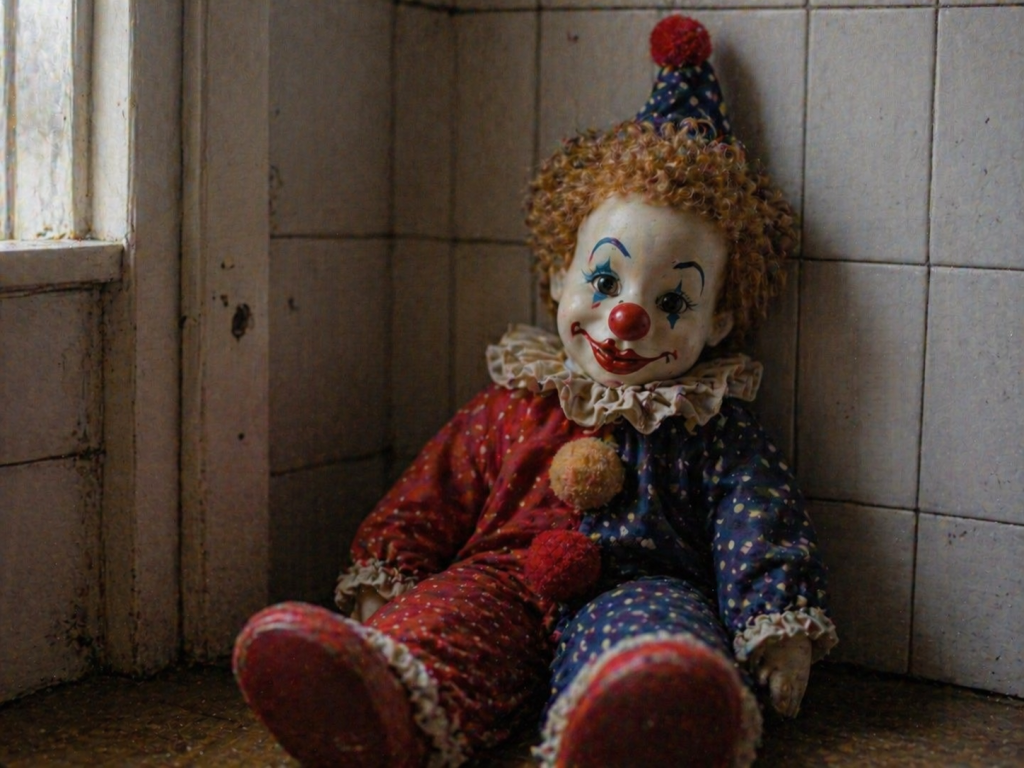
Heavy makeup, exaggerated features, fixed smiles, and bright colors distort the normal cues we rely on to read faces. Human brains are highly specialized in recognizing subtle facial expressions, and when those signals are altered or hidden, interpretation becomes uncertain.
That uncertainty alone can trigger discomfort.
The role of unpredictability
Another key factor is behavior. Clowns often act in exaggerated or unexpected ways, breaking normal social patterns. Their movements, reactions, and interactions are intentionally unconventional.
For the brain, predictability is closely tied to safety. When we can’t anticipate what someone might do next, our level of alertness increases.
In the case of clowns, that unpredictability is part of the performance—but for some people, it feels unsettling rather than entertaining.
What research has found
A study published in 2022 in Frontiers in Psychology explored why clowns are frequently perceived as unsettling. Participants identified several consistent factors:
– facial expressions that are difficult to interpret
– makeup that hides genuine emotions
– unusual or exaggerated behavior
– cultural associations that are sometimes ambiguous or negative
Interestingly, many participants reported discomfort without any specific past incident, supporting the idea that this reaction can develop without a clear trigger.
Cultural influence and changing perception
The image of the clown has shifted over time. While originally associated with humor and performance, modern culture has introduced more complex and sometimes darker interpretations.
Characters like Pennywise from It by Stephen King have reinforced the idea that something meant to be friendly can also feel threatening.
These portrayals don’t necessarily create fear on their own, but they can intensify an existing discomfort and make it easier for people to recognize and describe it.
Why children are often more affected
Children tend to react more strongly because their ability to interpret facial expressions and social cues is still developing.
A painted smile is not processed the same way as a natural one, and when something doesn’t match expectations, it can feel confusing or even alarming.
That said, the reaction doesn’t always disappear with age. For some, it remains consistent over time.
Not just “in your head”
Coulrophobia is sometimes dismissed as a curiosity, but it reflects real interactions between perception, emotion, and biology.
It’s not about clowns being dangerous. It’s about how the brain responds when something looks familiar, yet doesn’t fully behave or appear the way it should.
What this tells us about fear
In the end, the most interesting part isn’t the fear itself, but what it reveals.
The brain doesn’t react only to actual threats.
It also reacts to uncertainty.
And somewhere between what feels familiar and what feels slightly off, discomfort can appear—quietly, but very real.