
There are gestures we don’t think about. A handshake, a hug, a light touch on someone’s arm. For most people, these are natural ways of connecting. But there are situations where the same gestures don’t bring comfort at all — they trigger the exact opposite.
You may have met someone who instinctively pulls away from physical contact and couldn’t quite explain why. It’s not coldness. It’s not a lack of affection. It’s a reaction that happens before there’s time to control it.
That reaction has a name: haphephobia.
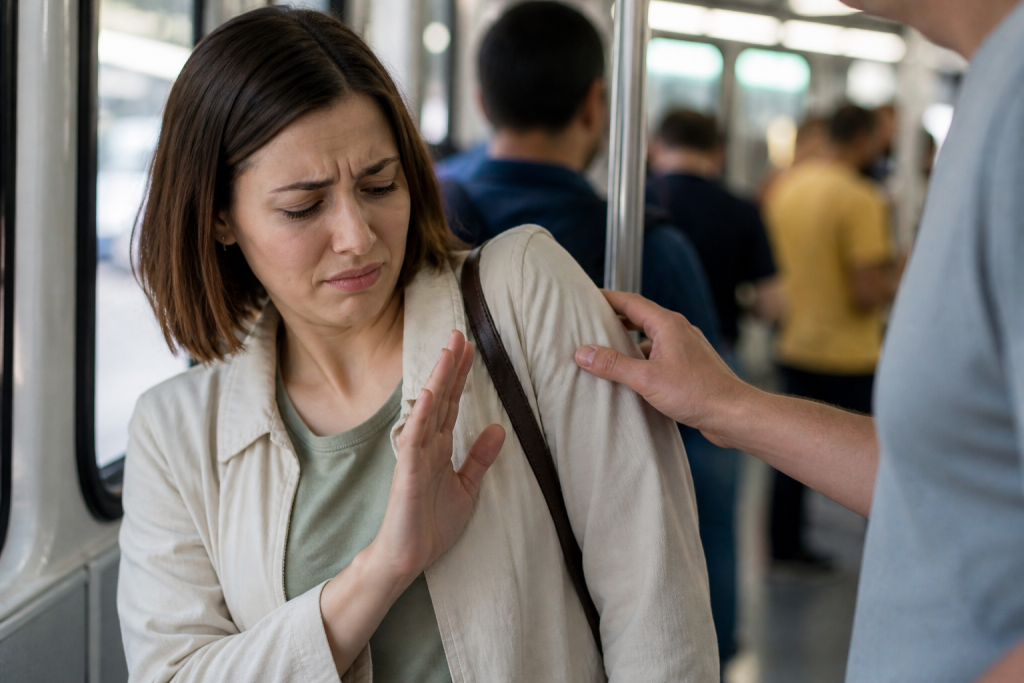
It’s not just “I don’t like being touched”
On the surface, it might look like a personal preference. Some people simply aren’t very tactile. But haphephobia goes far beyond that.
In this case, touch isn’t just uncomfortable — it’s perceived as a threat.
For some, the reaction appears mainly around strangers. For others, it can happen even with close people, where safety should exist. In more intense situations, physical contact isn’t even required. Just someone getting too close can be enough to trigger the response.
What actually happens in the body
This isn’t “just in the mind.” The body reacts in very real ways.
Heart rate rises, breathing shifts, muscles tense, and sometimes the sensation builds into something that feels very close to a panic response. It happens quickly, often before there’s time to think it through.
Biologically, it’s the same system designed to protect us from danger. The difference is that the brain interprets a harmless gesture as something threatening.
A key role is played by the amygdala, the part of the brain involved in processing fear. When it flags something as unsafe, it triggers the classic “fight or flight” response, even when there’s no real risk.
Where this reaction comes from
In some cases, the explanation is clear. Difficult or traumatic experiences can lead the brain to associate touch with danger.
But not every case has a visible cause.
Some people develop this response without a specific event behind it. It can be linked to heightened sensitivity to touch, underlying anxiety, or a strong need to control personal space.
Most often, it’s not one single reason, but a combination of factors.
How it affects everyday life
Touch is one of the simplest ways humans connect. That’s why avoiding it can create distance, even when there’s no intention to reject others.
People with haphephobia may avoid certain social situations, become more reserved, or be misunderstood by those around them. Not because they don’t want connection, but because their body reacts in a way that pushes them to protect themselves.
Over time, this can affect relationships and reduce the feeling of closeness with others.
Not an exaggeration, but a real response
One of the most important things to understand is that haphephobia isn’t a choice, and it’s not about being “too sensitive.” It’s a real way the brain processes a situation.
For most people, touch means connection. For others, it can feel like losing control or having their personal space invaded.
The difference isn’t in the gesture itself, but in how it’s interpreted.
In the end, the issue isn’t the touch — it’s the meaning the brain assigns to that moment.