
What began as a simple question posted online quickly turned into a much larger discussion about fear, perception, and the way different people can experience the exact same situation in completely different ways.
A man shared that he had been walking or jogging home at night when he noticed something unsettling. The woman ahead of him seemed to become nervous and gradually increased her pace after realizing he was behind her. Instead of reacting defensively or dismissing her reaction, he asked something unexpectedly thoughtful:
“What can I do to seem less threatening to women walking alone?”
The post spread rapidly across social media because many people felt it approached a sensitive topic from a place of empathy rather than argument. Instead of focusing on whether he personally intended harm, the man was trying to understand how his presence might feel from another person’s perspective.
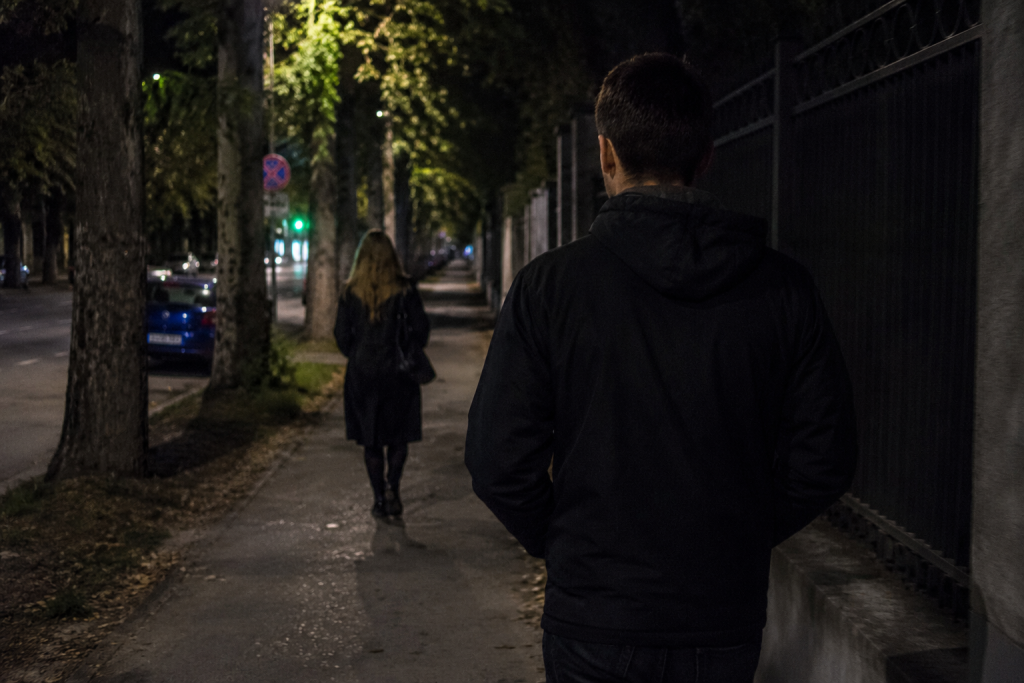
Why the same street can feel completely different to two people
For one person, a quiet walk home at night may feel ordinary and uneventful. For someone else, especially in an isolated or poorly lit area, that same walk can trigger heightened awareness and caution.
Psychologists often describe this reaction as hypervigilance, a state in which the brain becomes highly alert to possible danger. Human beings evolved to detect potential threats quickly, even before they are confirmed. From a survival standpoint, the brain tends to prefer “false alarms” over ignoring a situation that could become dangerous.
Researchers have long studied how past experiences, social conditioning, and repeated exposure to stories about crime or harassment can shape people’s perception of safety. Many women grow up learning informal safety habits almost automatically:
— checking who is walking behind them;
— avoiding certain streets at night;
— pretending to be on the phone;
— holding keys in their hand;
— sharing their location with friends or family members.
Because of this, situations that may appear neutral to one person can feel stressful to another. The online discussion that followed the man’s question revealed that many people had never fully considered how differently the same moment could be experienced depending on who is living it.
The internet responded with surprisingly practical advice
One of the reasons the discussion became so widely shared was the tone of the responses. Many women explained that their reactions were not necessarily personal accusations against the individual behind them. Instead, they described them as precautionary behaviors shaped by experience, instinct, and social reality.
People suggested small but considerate actions that could help reduce tension in situations like these:
— leaving more distance while walking behind someone at night;
— crossing the street if the other person appears uncomfortable;
— avoiding silently following directly behind someone for a long period of time;
— making movements more predictable rather than suddenly speeding up.
Some runners mentioned that they quietly announce themselves before passing someone from behind so they do not accidentally frighten them. Others said they intentionally slow down or create visible space if they notice someone becoming uneasy.
What stood out to many readers was how simple the suggestions were. The conversation was less about assigning blame and more about understanding how small gestures can influence another person’s sense of safety.
How fear and perception shape human behavior
Behavioral researchers often point out that fear does not always operate logically. The human brain constantly evaluates environments, searching for patterns and possible risks. News stories, personal experiences, social media discussions, and cultural messaging can all influence what people perceive as threatening.
Studies on risk perception show that people tend to remember emotionally intense or frightening situations more strongly than ordinary ones. This psychological tendency, sometimes called negativity bias, helps explain why stories about violence or danger can have a lasting effect on behavior even among people who have never personally experienced those events.
In recent years, discussions about public safety have become even more visible online. Social media allows millions of people to share personal experiences that previously might have remained private. As a result, conversations about everyday safety, especially for women walking alone at night, have become more common and more emotionally charged.
The discussion became bigger than the original question
As the conversation continued spreading online, many people noted that the most important part was not the list of “rules” itself. What made the post resonate was the attitude behind it.
Instead of asking:
“Why are women afraid?”
or
“Why am I being judged unfairly?”
the man asked:
“What can I do to help someone feel safer?”
That difference changed the tone of the entire discussion. Many commenters described it as a rare example of people trying to understand each other rather than immediately arguing.
In a digital environment where conversations often become polarized within minutes, the post stood out because it centered on empathy instead of confrontation.
A conversation about awareness rather than collective blame
One of the strongest themes repeated throughout the online reactions was that the discussion should not be interpreted as a claim that all men are dangerous. Most interactions between strangers are completely harmless.
At the same time, many women explained that caution is often automatic rather than deliberate. It is not necessarily a judgment about a specific person, but a protective response shaped by personal history, cultural messaging, and awareness of potential risk.
Perhaps that is why the conversation resonated so strongly with people around the world. Beneath the debate about safety, it ultimately became a broader discussion about empathy, emotional intelligence, and the willingness to see ordinary situations through someone else’s eyes.