
A trip that was supposed to mark a new beginning
In March 2014, Kris Kremers and Lisanne Froon left the Netherlands for Panama, planning to spend several weeks traveling, improving their Spanish, and volunteering with local children.
Kris was 21. Lisanne was 22.
The trip had been carefully planned. They had saved money, organized accommodations, and looked forward to a mix of adventure and meaningful work abroad.
After arriving in Panama on March 15, they eventually settled in Boquete, a mountain town known for coffee farms, hiking trails, cool weather, and dense tropical landscapes. To visitors, Boquete often feels peaceful and welcoming. But the surrounding terrain can quickly become difficult, especially beyond the more traveled paths.
Their volunteer work had not yet started, leaving them with a few free days to explore the area.
That decision led them toward a trail called El Pianista.
April 1, 2014 — the hike begins
On the morning of April 1, the two women set out for the El Pianista trail carrying a backpack, phones, a Canon camera, water, and personal belongings.
The beginning of the route does not appear particularly dangerous. Many tourists walk at least part of it. The trail climbs gradually through forested terrain toward a scenic overlook commonly referred to as the Mirador.
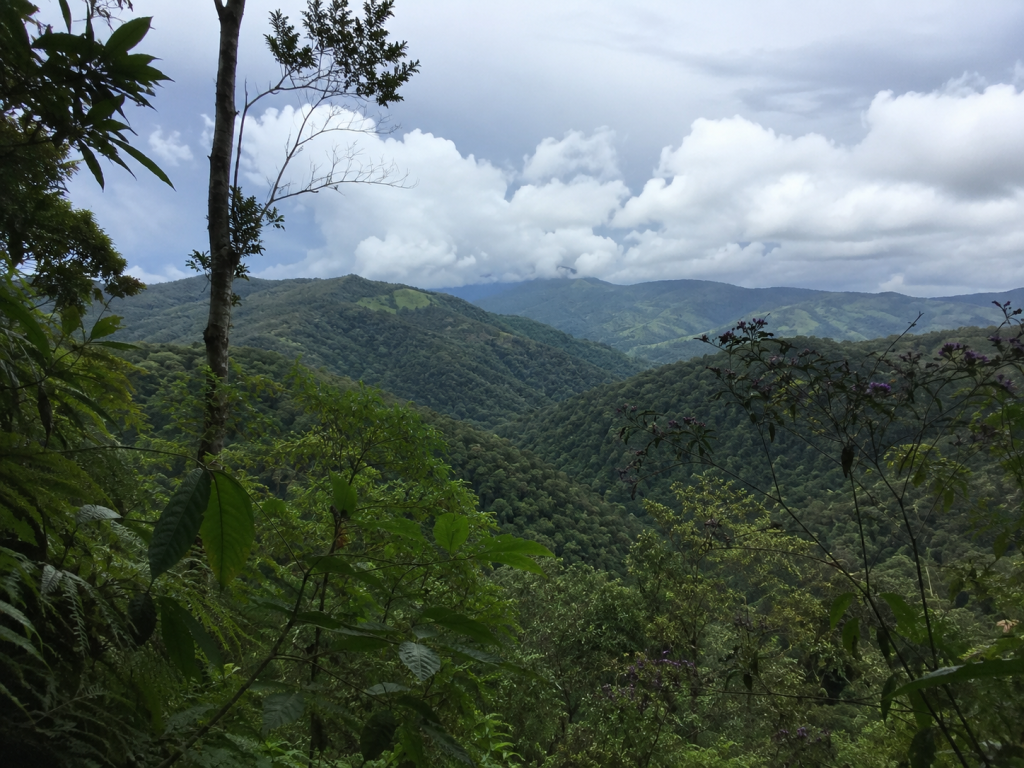
Photographs later recovered from their camera showed Kris and Lisanne reaching that viewpoint around early afternoon. In those images, everything appears normal. They are smiling, posing, and continuing the hike without visible concern.
What became critically important later was the fact that they continued beyond the Mirador.
Past that point, the terrain becomes more isolated, less clearly marked, and significantly more difficult to navigate.
The first emergency calls
That same afternoon, at approximately 4:39 p.m., the first emergency call attempt was made from Kris’s iPhone. Another attempt followed shortly afterward from Lisanne’s Samsung phone.
The calls were directed toward emergency numbers, including 112 and 911, but they failed to connect because of limited or nonexistent signal coverage in the area.
Those calls changed the meaning of the entire day.
Only a few hours after beginning what should have been a routine hike, the two women were already trying to reach emergency services.
What exactly had gone wrong remains uncertain.
They may have become lost, injured, trapped by terrain, or unable to retrace their route. But from that point onward, the situation was no longer a normal excursion.
When concern turned into a search
On April 2, the women failed to appear for a scheduled meeting with a local guide. Their absence quickly raised alarm.
As hours turned into days, search efforts intensified. Families were notified, authorities became involved, and large search operations began across the region surrounding the trail.
On April 6, relatives traveled to Panama alongside investigators and volunteers to assist with the search.
The environment complicated everything.
Tropical mountain terrain is far more dangerous than many people imagine. Dense vegetation limits visibility, steep slopes and rivers interrupt movement, heavy rain changes the landscape quickly, and phone signal disappears in many areas.
Even experienced hikers can become disoriented under those conditions.
The phones and the timeline they revealed
One of the most discussed aspects of the case is the data recovered from the women’s phones.
After the first failed emergency calls on April 1, the devices were switched on and off repeatedly over several days, apparently in an effort to conserve battery life while still checking periodically for signal.
Lisanne’s phone eventually lost power completely on April 4.
Kris’s iPhone continued to be activated intermittently until April 11.
Beginning on April 5, several attempts were made to access the iPhone without entering the correct PIN code, or without fully completing the unlock process.
The final recorded activation occurred on April 11.
After that, the phone was never used again.
These details remain deeply unsettling because they provide fragments of activity without explaining the full reality of what the women were experiencing.
The photographs taken in darkness
Another major focus of the case became a series of nighttime photographs taken on April 8.
Over the course of several hours, nearly 90 images were captured in complete darkness using the camera’s flash.
Most of the photographs do not show people clearly. Instead, they reveal rocks, vegetation, plastic bags attached to branches, uneven terrain, and partial objects difficult to identify with certainty.
One image appears to show the back of Kris’s head.
Others seem almost random.
The photographs generated enormous online speculation, but the confirmed facts are actually limited:
the camera was being used at night, in darkness, several days after the women disappeared.
Why those images were taken remains unknown.
Some investigators and survival experts have suggested possibilities such as signaling for help, creating temporary light, documenting surroundings, or attempting to navigate terrain in darkness.
But none of those explanations can be confirmed definitively.
The backpack discovery
On June 14, more than two months after the disappearance, a local woman found a backpack near a riverbank close to Alto Romero in the province of Bocas del Toro.
Inside were items that became central to the investigation:
the phones, the Canon camera, sunglasses, money, identification documents, and personal belongings.
The backpack appeared to be in relatively good condition, which immediately raised questions online.
At the same time, investigators noted that strong river currents and seasonal weather conditions in the region could transport objects considerable distances while affecting them unevenly.
The discovery of the backpack made it possible to reconstruct portions of the timeline through the devices stored inside.
Human remains and forensic findings
Following the discovery, search teams concentrated on nearby river areas and surrounding terrain.
Investigators eventually recovered partial human remains connected through DNA analysis to Kris and Lisanne, including a boot containing Lisanne’s foot and scattered bone fragments belonging to both women.
No complete reconstruction of their final days was ever achieved.
The exact cause of death could not be definitively determined.
Over time, many theories circulated online involving crime, abduction, trafficking, or outside interference. Some people remain convinced another party was involved.
However, much of that speculation goes beyond what the evidence can firmly support.
A frequently discussed explanation among investigators and analysts is that the women likely became lost or injured in extremely difficult terrain, leading to a prolonged survival situation followed by fatal exposure, falls, or accidents in the wilderness.
But even that explanation leaves major unanswered questions.
What survival science tells us about cases like this
Studies involving lost hikers and wilderness survival consistently show that people under stress often make decisions that appear irrational in hindsight.
Fear, exhaustion, dehydration, hunger, injury, and isolation can severely impair orientation and judgment.
In dense tropical environments, the danger increases rapidly:
paths become difficult to distinguish, rivers seem like escape routes, steep slopes become hidden by vegetation, and weather conditions can change suddenly.
People may continue moving when staying put would be safer, or descend toward water believing it will lead them back to civilization.
Small navigation errors can escalate into life-threatening situations very quickly.
Why the case continues to fascinate people
The disappearance of Kris Kremers and Lisanne Froon became internationally known not only because of the tragedy itself, but because so much digital evidence survived.
There are photographs.
There are emergency call logs.
There are phone records.
There are timestamps.
All of those fragments create the feeling that the full story should be recoverable.
And yet, even with all that information, the final picture remains incomplete.
A mystery built from fragments
Today, the case remains one of the most discussed modern disappearances in the world of true crime.
Not because nothing is known…
but because so many pieces are known without fully explaining what happened between the beginning of the hike and the final attempts to use the phones.
We know when they left.
We know they reached the Mirador.
We know they continued farther into isolated terrain.
We know emergency calls began that afternoon.
We know the phones remained active for days.
We know nighttime photographs were taken.
We know personal belongings and remains were later found.
But the critical moment—the point where an ordinary hike became a survival situation—has never been fully reconstructed.
And perhaps that is why the case remains so difficult to forget.
Not only because two young women disappeared…
but because their final days seem preserved in scattered digital fragments that feel close to an answer, while never quite revealing the whole story.