
A disappearance overshadowed by history
On the morning of September 11, 2001, the world’s attention turned toward lower Manhattan as smoke poured from the towers of the World Trade Center.
Phones stopped working.
Transportation collapsed.
Thousands of people were suddenly missing.
Amid the confusion and destruction, another story quietly disappeared into the background.
A 31-year-old doctor named Sneha Anne Philip had vanished sometime before the attacks began.
For years afterward, investigators and family members struggled with a question that never received a definitive answer:
Did Sneha die during the chaos of 9/11…
or had she already disappeared before the tragedy unfolded?
That uncertainty turned her case into one of the most unusual missing person investigations connected to the aftermath of September 11.
Sneha’s life before she vanished
Sneha Philip was a physician from an Indian-American family and lived with her husband, Ron Lieberman, in an apartment near Battery Park City in lower Manhattan.
By many outward measures, she appeared successful and accomplished. She had completed medical training, lived in New York City, and was building a professional future in medicine.
But in the months leading up to her disappearance, her life had reportedly become increasingly complicated.
Public records and later reporting described professional difficulties involving disciplinary issues, workplace concerns, and personal struggles that included alcohol-related problems and emotional stress.
Those details became heavily discussed after she disappeared, although they never provided a clear explanation for what happened to her.
As in many missing person cases, background struggles created context—but not certainty.
September 10, 2001 — the last confirmed day
On September 10, Sneha attended a court-related proceeding connected to professional matters earlier in the day.
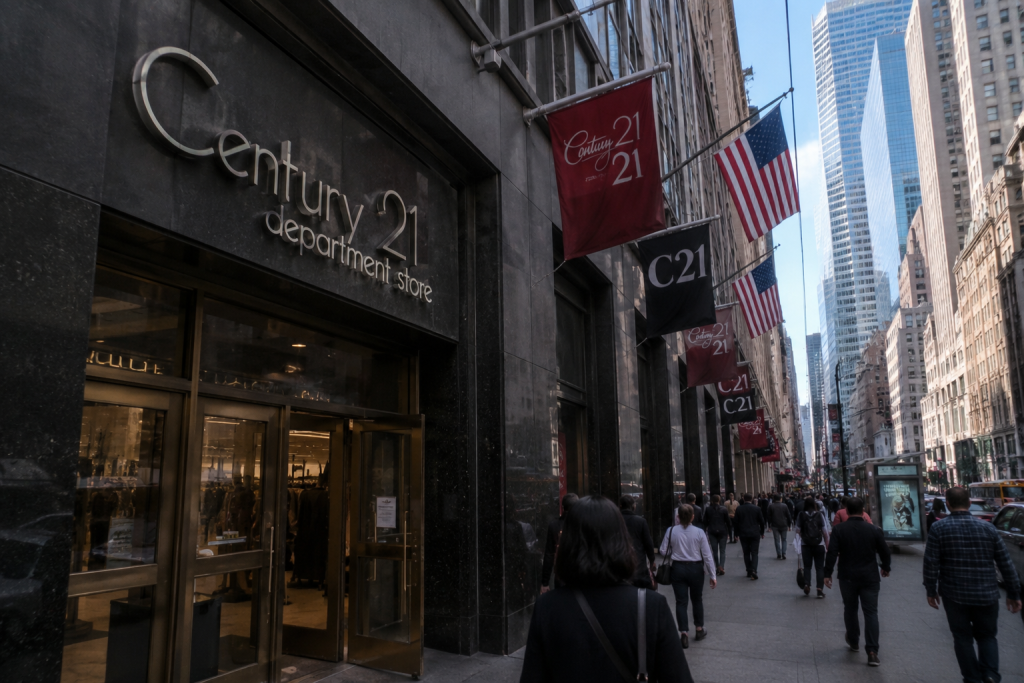
Later that afternoon, surveillance footage captured her shopping at the Century 21 department store located near the World Trade Center.
Receipts and records showed she purchased clothing, lingerie, shoes, and other items totaling roughly $550.
Those shopping bags would later become unexpectedly important.
None of the purchased items were ever recovered from her apartment.
That detail raised difficult questions investigators could never fully answer:
Did she return home that night?
Did she spend the evening somewhere else?
Was she with another person?
Or did the chaos of the following morning erase the trail completely?
After leaving the store, Sneha’s confirmed timeline becomes uncertain.
The night before the attacks
Sneha’s husband was working that evening and returned home around 11 p.m.
She was not there.
Initially, this did not immediately seem alarming. According to people who knew her, Sneha sometimes stayed out late with friends or failed to communicate exactly where she was spending the night.
But the next morning changed everything.
September 11 changes the investigation entirely
When the attacks began on September 11, the entire area around lower Manhattan descended into confusion.
Buildings were evacuated.
Communication systems failed.
Transportation shut down.
Thousands of people became impossible to contact.
Because Sneha lived so close to the World Trade Center, her inability to be reached did not initially stand out in the middle of a citywide catastrophe.
Only after days passed without any confirmed sign of her did her disappearance become a separate mystery.
That timing created an investigative nightmare.
Sneha had vanished at the exact moment when New York City was overwhelmed with missing persons reports, emergency response efforts, destroyed evidence, and mass confusion.
The theory that she died helping others
One of the most widely discussed possibilities was that Sneha returned toward the World Trade Center after the attacks began and attempted to help injured people as a doctor.
To many observers, the theory felt believable.
She had medical training.
She lived nearby.
And countless civilians and emergency workers rushed toward the disaster that morning trying to assist others.
However, there was a major problem:
there was never definitive proof placing her at the towers on the morning of September 11.
No confirmed surveillance footage showed her there.
No verified witness conclusively identified her after the evening of September 10.
No physical evidence established that she entered the disaster zone.
Even so, after years of legal disputes and public debate, a court eventually ruled in 2008 that Sneha Anne Philip should officially be recognized as a victim of the September 11 attacks.
Legally, the case reached a conclusion.
Emotionally and factually, many questions remained unresolved.
Other possibilities that were never eliminated
Over the years, alternative theories also emerged.
Some investigators and journalists questioned whether Sneha’s disappearance might have been unrelated to the attacks entirely.
Attention focused on the missing shopping bags, the uncertainty surrounding where she spent the night of September 10, and aspects of her personal life that remained unclear publicly.
Some speculated she may have encountered danger before the attacks even began.
Others wondered whether the unprecedented chaos of September 11 permanently obscured evidence connected to an entirely separate disappearance.
Without a body, a confirmed final sighting, or a complete timeline, no single explanation could fully close the case.
Trauma, memory, and investigations during disasters
From a psychological and investigative perspective, Sneha Philip’s disappearance is highly unusual because it unfolded simultaneously with a mass casualty disaster.
Most missing person cases occur within relatively stable conditions.
Here, investigators were dealing with a city in crisis.
Research into traumatic events consistently shows that memory becomes less reliable during extreme stress. Witnesses may confuse timelines, locations, faces, and sequences of events when panic and shock overwhelm normal cognitive processing.
That does not mean people intentionally provide false information.
It means the human brain struggles to process overwhelming events with perfect accuracy.
In a disaster as large as September 11, those limitations became magnified dramatically.
The missing purchases and unanswered details
One of the smallest yet most persistent mysteries involves the items Sneha purchased on September 10.
If she returned home that evening, why were the bags never found?
If she never returned, where did she go after leaving the store?
In ordinary circumstances, those questions might have become central investigative leads.
But the events of September 11 transformed nearly every detail surrounding the case into something harder to verify, harder to reconstruct, and harder to separate from the destruction unfolding across the city.
A story suspended between two realities
The disappearance of Sneha Anne Philip remains difficult to classify because it exists between two overlapping narratives.
One possibility is that she became an unrecognized victim of the September 11 attacks after rushing to help others during the emergency.
Another is that she disappeared before the attacks and that the catastrophe unintentionally erased the evidence needed to understand what happened.
Perhaps the truth lies somewhere between those possibilities.
Or perhaps it is something entirely different.
And maybe that uncertainty is what continues to make the case so haunting more than two decades later.
Not only because a woman disappeared…
but because her disappearance became permanently entangled with one of the most chaotic and devastating days in modern history.