
Most people see the word “pasteurized” almost every day without ever wondering where it actually came from. Milk cartons, juices, cheeses, cream, and countless other products carry the term, yet few realize that it is directly connected to a real person whose discoveries transformed modern science forever.
The word “pasteurization” comes from the name of French scientist Louis Pasteur, one of the most influential researchers of the nineteenth century. His work changed medicine, food safety, microbiology, and even the understanding of how diseases spread. Today, historians often place him among the founders of modern germ theory because his experiments helped prove that microscopic organisms were responsible for fermentation, spoilage, and many infectious illnesses.
Ironically, Pasteur did not begin his career as a doctor. He was originally trained as a chemist and spent years studying crystals and molecular structures. Early in his scientific life, he became fascinated by why certain substances behaved differently despite appearing chemically identical. Those studies eventually helped lay the foundation for stereochemistry, a field still important in modern chemistry and pharmaceuticals.
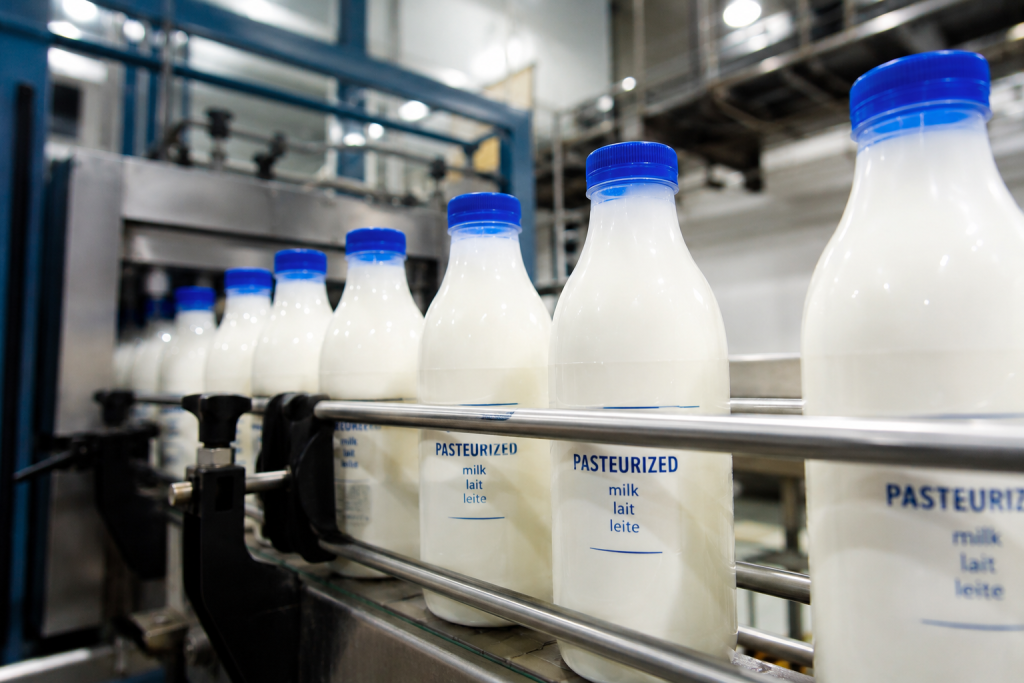
The Scientific World Before Pasteur
To understand why Pasteur became so important, it helps to understand what people believed before his discoveries.
During much of the nineteenth century, many scientists still supported the theory of “spontaneous generation.” According to this idea, tiny living organisms could simply appear from nonliving matter. Rotting food, spoiled liquids, and decay were thought to naturally produce microscopic life on their own.
At the same time, France’s wine and beer industries were struggling with massive economic losses. Entire barrels of wine could suddenly sour for no obvious reason. Brewers watched batches spoil unpredictably. Nobody fully understood why fermentation sometimes worked perfectly and sometimes failed catastrophically.
Pasteur became interested in the mystery and started examining liquids under microscopes. What he discovered would permanently change science. Different microorganisms were responsible for different outcomes. Some microbes helped fermentation occur correctly, while others ruined the product by producing unwanted acids and chemical changes.
His famous swan-neck flask experiments later demonstrated that microorganisms did not magically emerge from the air. Instead, they came from contamination by existing microbes already present in the environment. It was a major scientific turning point because it challenged ideas that had existed for centuries.
How Pasteurization Was Born
While studying wine spoilage during the 1860s, Pasteur noticed something extremely important. Harmful microorganisms could often be weakened or destroyed through carefully controlled heating.
Instead of boiling liquids aggressively, he experimented with moderate temperatures for shorter periods of time. This process reduced microbial activity while preserving much of the flavor and character of the beverage itself.
That discovery eventually became known as pasteurization.
The original purpose was not milk at all. Pasteur initially developed the process to protect wine and beer from spoilage, helping French producers avoid devastating financial losses. Only later did scientists and public health officials realize the same method could dramatically improve food safety in other products.
The process itself is relatively simple in principle. A liquid is heated to a specific temperature for a controlled amount of time and then cooled. The goal is not complete sterilization. Pasteurization does not destroy every microorganism present. Instead, it significantly reduces dangerous pathogens and spoilage organisms that can make people sick or shorten shelf life.
Modern food science eventually refined the method into several versions. Some systems use lower temperatures for longer periods, while others use very high temperatures for only a few seconds. Despite the technological evolution, the core scientific idea still traces directly back to Pasteur’s experiments from more than 150 years ago.
Why Milk Changed Everything
Although Pasteur himself focused heavily on wine and fermentation, milk eventually became the product most associated with pasteurization.
Before refrigeration became common, milk spoiled quickly and often carried dangerous bacteria. In growing industrial cities, milk traveled farther than ever before, frequently under poor sanitary conditions. Contaminated milk was linked to diseases such as tuberculosis, typhoid fever, diphtheria, brucellosis, and severe bacterial infections that especially threatened children.
In many countries, pasteurization became one of the most important public health measures ever introduced into the food supply. Infant mortality rates connected to contaminated dairy products declined dramatically after safer milk systems were adopted.
This is one reason pasteurization became such a major historical milestone. It was not merely a food-processing technique. It represented a broader scientific shift toward prevention, hygiene, and understanding invisible biological threats.
Even today, debates continue around raw milk and minimally processed foods. Some people believe unpasteurized products taste more natural or preserve certain characteristics better. Public health agencies, however, continue to warn that raw milk can carry dangerous pathogens capable of causing severe illness, especially in children, older adults, pregnant women, and people with weakened immune systems.
Pasteur’s Legacy Extended Far Beyond Food
Pasteur’s achievements were not limited to fermentation and milk safety. He also played a major role in vaccine development and infectious disease research.
One of his most famous breakthroughs involved rabies, a disease that terrified people during the nineteenth century because infection was usually fatal once symptoms appeared. Pasteur and his team developed an experimental rabies vaccine that became internationally famous after it was used on a young boy who had been bitten by a rabid dog.
The success turned Pasteur into one of the best-known scientists in the world.
His work also influenced hospital hygiene, surgical sterilization, and laboratory science. The idea that invisible microorganisms could spread disease eventually transformed medicine, changing how doctors cleaned instruments, treated infections, and protected patients.
Today, the name “Pasteur” quietly survives in ordinary supermarkets and refrigerators around the world. Every bottle labeled “pasteurized” carries a reminder of a scientist whose discoveries reshaped human health, food preservation, and modern biology itself.
Few scientific figures have become so deeply woven into everyday life that their surname evolved into a word used by millions of people daily without a second thought.