
Most people think of a burn as a simple injury. A quick touch against a hot pan, steam from boiling water, spilled oil, or even a heated metal lid can leave behind redness, pain, or a blister that seems minor at first glance. But under the surface, the body reacts with astonishing speed.
The moment skin is exposed to excessive heat, millions of cells begin responding at once. Blood vessels change, inflammatory signals are released, immune cells rush toward the damaged tissue, and the body immediately shifts into repair mode. At the same time, another critical mission begins quietly in the background: preventing bacteria from entering through the damaged skin.
Human skin is far more than a covering. It acts as one of the body’s most important defense systems. When that barrier is damaged by heat, the body treats the situation as a biological emergency.
The First Seconds After a Burn
As soon as heat touches the skin, thermal energy starts damaging cells almost instantly. The severity depends on two major factors: how hot the object is and how long the contact lasts.
Pain receptors in the skin react within moments and send rapid warning signals to the brain. That sharp burning sensation is actually protective. It forces the body to pull away before deeper damage occurs.
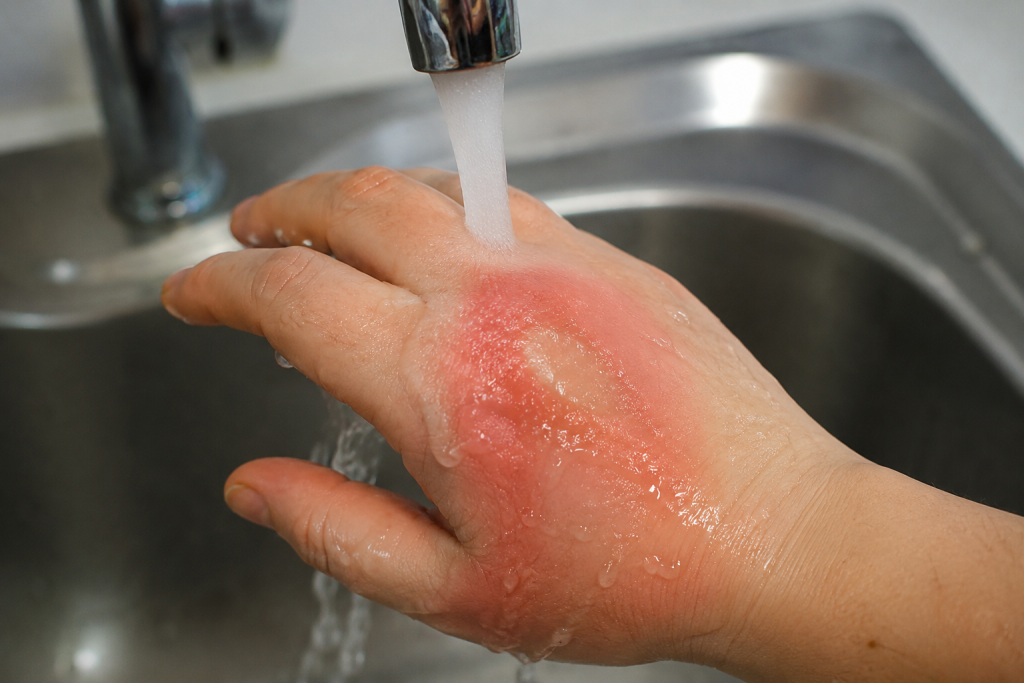
At the same time, tiny blood vessels in the area begin to widen. This is why burned skin often turns red and feels warmer than the surrounding tissue. Increased blood flow allows oxygen, nutrients, and immune cells to reach the injured area faster.
If the damage remains superficial, the body can usually repair the skin relatively quickly. When heat penetrates deeper layers, however, the injury becomes more complicated and blisters may begin to form.
Why Blisters Develop
Blisters are often associated with second-degree burns, and although many people see them as simply an unpleasant side effect, they are actually part of the body’s protective response.
After a burn, nearby blood vessels become more permeable, allowing fluid to leak between layers of skin. That trapped fluid creates the familiar raised blister.
This serves several important purposes. The blister acts like a temporary biological shield, helping protect sensitive tissue underneath from bacteria and additional friction. It also maintains moisture around the damaged skin, which is important for healing.
Inside the blister fluid are proteins, immune components, and substances involved in tissue repair. This is one reason many medical professionals recommend avoiding the intentional popping of small intact blisters whenever possible.
Once the protective layer breaks open, bacteria gain easier access to vulnerable tissue.
How the Body Tries to Prevent Infection
The moment skin integrity is disrupted, the immune system becomes highly active.
Inflammation begins almost immediately. Although inflammation is often viewed negatively, it is actually one of the body’s essential survival mechanisms. Redness, swelling, warmth, and tenderness are all signs that the immune system has been activated.
White blood cells rapidly move toward the injured tissue. Some cells attack invading microorganisms directly, while others help remove damaged tissue and cellular debris.
Meanwhile, the body starts preparing for reconstruction. Skin cells begin multiplying, collagen production increases, and repair signals spread through the injured area.
In many ways, healing a burn resembles rebuilding a damaged wall while simultaneously defending it from outside threats.
Why Burns Can Become Infected
Healthy skin is remarkably effective at keeping harmful microorganisms out of the body. But once that barrier is broken, the situation changes.
An open blister or peeled skin creates an entry point for bacteria. This is especially important in kitchens, workplaces, or environments where the skin may come into contact with raw meat, contaminated surfaces, or unwashed hands.
However, exposure alone does not automatically lead to infection. The immune system successfully prevents infection in many minor burns, particularly when the wound is kept clean and protected.
Doctors usually watch for signs such as spreading redness, pus, worsening pain after several days, unpleasant odor, fever, or red streaks extending away from the wound.
These can indicate that bacteria are beginning to overwhelm local defenses.
Why Cooling a Burn Quickly Matters
One of the most effective immediate responses to a minor burn is cooling the area with cool running water.
Research has shown that even after the heat source is removed, residual heat inside the tissue may continue damaging cells for a short period. Cooling the burn early can help limit how deeply the injury progresses.
Cool water may also reduce inflammation and ease pain.
Medical guidelines generally advise against placing ice directly on a burn because extreme cold can further injure already stressed tissue and reduce local blood flow.
The Healing Process Inside the Skin
Burn healing happens in stages, and the timeline varies depending on how deep the injury is.
During the first phase, the body focuses on controlling inflammation and cleaning damaged tissue. Later, new cells begin rebuilding the skin surface.
Fresh blood vessels form beneath the injury to support regeneration, while collagen fibers help restore strength and structure.
Even after the skin appears healed, the new tissue often remains more sensitive for some time. Sun exposure, friction, and minor trauma may irritate the area more easily during recovery.
Common Burn Myths That Still Persist
Burn injuries have been surrounded by home remedies for generations, but some traditional methods can actually make things worse.
Applying butter, toothpaste, cooking oil, or alcohol directly onto burns is not recommended in modern medical practice. Some substances trap heat inside the tissue, while others may irritate the wound or increase contamination risk.
Another common misconception is that every blister should be opened immediately. In reality, intact skin often provides valuable protection during the early healing process.
When a Burn Needs Medical Attention
Many small burns heal without serious complications, but certain situations should always be evaluated carefully.
Burns involving the face, hands, joints, genitals, chemicals, or electricity require special attention. Large burns or injuries that continue worsening over time should also be examined by a healthcare professional.
Medical care may also become necessary if infection signs appear or if healing does not progress normally.
In some cases, doctors may recommend a tetanus booster, particularly when the skin has been significantly damaged and vaccination status is uncertain.
Why Burned Skin Can Keep Hurting After It Looks Better
Many people notice that burned skin remains sensitive long after the visible wound has improved.
This happens partly because tiny nerve endings inside the skin have also been injured. As those nerves recover, sensations like tenderness, tingling, or itching may continue for days or even weeks.
That itching sensation during healing is extremely common and is linked to both nerve regeneration and inflammatory repair processes.
Even a small burn triggers an incredibly sophisticated biological response inside the human body. Beneath a simple blister, the immune system, blood vessels, skin cells, and repair mechanisms are all working together in a coordinated effort to protect the body from infection and rebuild one of its most important defensive barriers.