
Few things alarm people faster than suddenly noticing swollen skin, red patches, or intense itching appearing out of nowhere. For many parents, seeing a child wake up with puffy eyes, swollen lips, or raised marks spreading across the body immediately triggers fear of a serious allergy.
But the reality is often more complicated.
Hives and allergic reactions are closely connected, yet they are not automatically the same condition. In some situations, hives are caused by a true allergy. In many others, they appear without any clear allergic trigger at all.
From the outside, these reactions may look nearly identical. Inside the body, however, the biological processes can be surprisingly different.
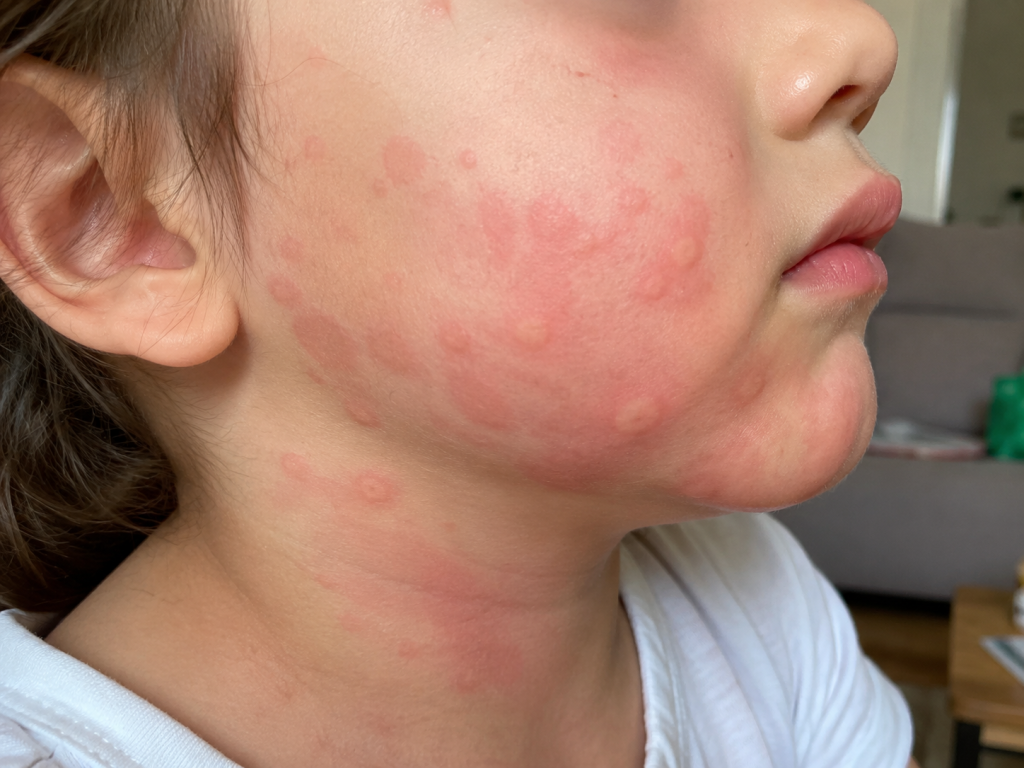
What Hives Actually Are
Hives, medically known as urticaria, are a type of inflammatory skin reaction that causes raised welts, swelling, redness, and intense itching. Some people describe the sensation as a mix of burning, stinging, and persistent irritation.
One of the strangest things about hives is how quickly they can move. A patch may disappear from one area of the body and then suddenly appear somewhere else only hours later.
This happens because of substances released by immune cells called mast cells.
When mast cells become activated, they release histamine and other inflammatory chemicals into surrounding tissue. Histamine causes blood vessels to widen and become leakier, allowing fluid to escape into the skin. That process creates the swelling, redness, and itching people recognize as hives.
Why Hives Do Not Always Mean “Allergy”
Many people use the words “hives” and “allergy” interchangeably, but doctors make an important distinction between them.
A true allergic reaction usually involves the immune system identifying a harmless substance as dangerous. Foods, medications, insect venom, pollen, or animal dander can all trigger this type of response.
Hives, however, may develop for many different reasons beyond classic allergies.
Viral infections are one of the most common triggers, especially in children. Fever, stress, exercise, heat, cold exposure, sweating, pressure on the skin, or even emotional stress can sometimes provoke outbreaks.
In fact, many childhood cases of hives occur during or shortly after common viral illnesses rather than dangerous food allergies.
Why Swelling Around the Eyes or Lips Looks So Dramatic
One of the most frightening symptoms for parents is facial swelling, particularly around the eyes or lips.
This deeper swelling is known as angioedema. It happens when fluid leaks into deeper layers of tissue beneath the skin.
The face is especially prone to this because the tissues around the eyes and lips are softer and allow fluid to accumulate more easily. As a result, even a moderate reaction can appear dramatic.
Although swelling can look alarming, appearance alone does not always indicate severity. The major concern arises when swelling affects breathing, swallowing, the tongue, or the throat.
Why the Itching Can Become Intense
Histamine affects more than blood vessels. It also stimulates nerve endings inside the skin, which explains the overwhelming urge to scratch.
Children often become restless, irritable, or unable to sleep comfortably during outbreaks because the itching can feel relentless.
Excessive scratching may further irritate the skin, making the rash appear worse than it originally was.
How Doctors Try to Tell the Difference
When evaluating hives, doctors usually focus heavily on timing and context rather than appearance alone.
They may ask whether the reaction occurred after eating a new food, taking medication, experiencing an insect sting, or developing symptoms of a viral illness.
Other symptoms also matter. Breathing difficulty, dizziness, throat tightness, vomiting, or fainting may point toward a more severe allergic reaction requiring urgent care.
At the same time, many isolated episodes of hives never lead to a clearly identifiable cause.
Why Allergy Tests Sometimes Come Back Normal
Many people expect allergy testing to provide immediate answers, but immune reactions are often more complicated than that.
Some individuals experience significant episodes of hives while standard allergy testing remains completely normal. This does not mean the symptoms were imaginary. It simply means the reaction may not have followed the pathway involved in classic allergies.
In some cases, mast cells become unusually reactive without a specific allergen being identified.
In others, hives may simply be a temporary immune response following an infection and never return again.
Why So Many People Read About Mast Cell Activation Syndrome
In recent years, increasing numbers of people online have come across information about Mast Cell Activation Syndrome, often called MCAS.
This condition involves repeated episodes where mast cells release excessive amounts of inflammatory chemicals, leading to symptoms that may affect multiple body systems.
Possible symptoms can include flushing, itching, hives, digestive problems, dizziness, rapid heartbeat, or swelling episodes.
However, experts stress that having occasional hives does not automatically suggest MCAS. The condition is considered complex, relatively uncommon, and requires careful medical evaluation alongside detailed symptom history and specialized testing.
Online discussions can sometimes make rare conditions appear far more common than they actually are, which understandably increases anxiety for many families.
Why Some Cases Completely Disappear
The immune system is highly unpredictable.
Some people experience one isolated episode of hives during childhood and never develop it again. Others may notice outbreaks recurring during periods of stress, infections, or exposure to specific triggers.
This unpredictability is one reason hives can feel so frustrating and confusing for both adults and parents.
When Medical Attention Becomes Important
Most episodes of hives are uncomfortable rather than dangerous. Still, certain warning signs should never be ignored.
Difficulty breathing, swelling of the tongue, severe dizziness, throat tightness, sudden hoarseness, or fainting require urgent medical evaluation.
Persistent or frequently recurring hives may also justify further investigation, especially if additional symptoms begin appearing over time.
For many people, the hardest part of hives is not simply the rash itself, but the uncertainty surrounding it. Skin reactions can appear dramatic within minutes, especially in children, and it is not always obvious whether the body is responding to a harmless trigger, a temporary immune reaction, or a true allergy. Beneath those red patches and swelling episodes lies an extraordinarily complex immune system that is constantly trying to protect the body, even when its reactions sometimes seem excessive.