
On an ordinary autumn morning in October 1995, a 15-year-old girl rode her bicycle through a quiet neighborhood in Eindhoven, a city in the southern Netherlands. There was nothing unusual about the day. She was expected to visit her grandmother, following a route she had likely taken many times before.
She never arrived.
What began as a missing-person investigation slowly evolved into one of the Netherlands’ most haunting unresolved murder cases. For years, the investigation appeared trapped between dead ends, deteriorating evidence, and growing frustration from a family desperate for answers.
Then, more than fifteen years later, the case took a shocking turn.
Nicole’s own stepbrother publicly claimed that he had killed her.
The confession reignited national attention, reopened the investigation, and eventually led authorities toward modern forensic testing that had not existed when the crime first occurred. In the end, investigators would discover that the confession was false — but it unintentionally pushed the case toward the breakthrough that finally exposed the real killer.
Today, the murder of Nicole van den Hurk remains widely discussed in conversations about cold cases, forensic science, DNA advancements, and the complicated psychology behind false confessions.
Who Was Nicole van den Hurk?
Nicole van den Hurk was a 15-year-old girl living in Eindhoven, a city known for its industrial roots and relatively calm residential communities during the 1990s.
People who knew her described her as quiet and somewhat reserved. Like many teenagers, she was navigating a difficult stage of adolescence, but there was nothing in her background suggesting she was involved in dangerous situations or criminal activity.
On October 1, 1995, Nicole left home on her bicycle. According to reports, she appeared calm and behaved normally before disappearing.
When she failed to arrive at her destination, concern quickly turned into panic.
The Bicycle Discovery That Changed Everything
Not long after Nicole vanished, investigators discovered her abandoned bicycle in an isolated area.
For police, this was the first major indication that she had likely not disappeared voluntarily.
Search teams began combing nearby areas, but the investigation faced major limitations that would be difficult for younger generations to imagine today. Surveillance cameras were far less common in the mid-1990s, mobile phones rarely provided useful tracking information, and forensic DNA analysis was still developing compared to modern standards.
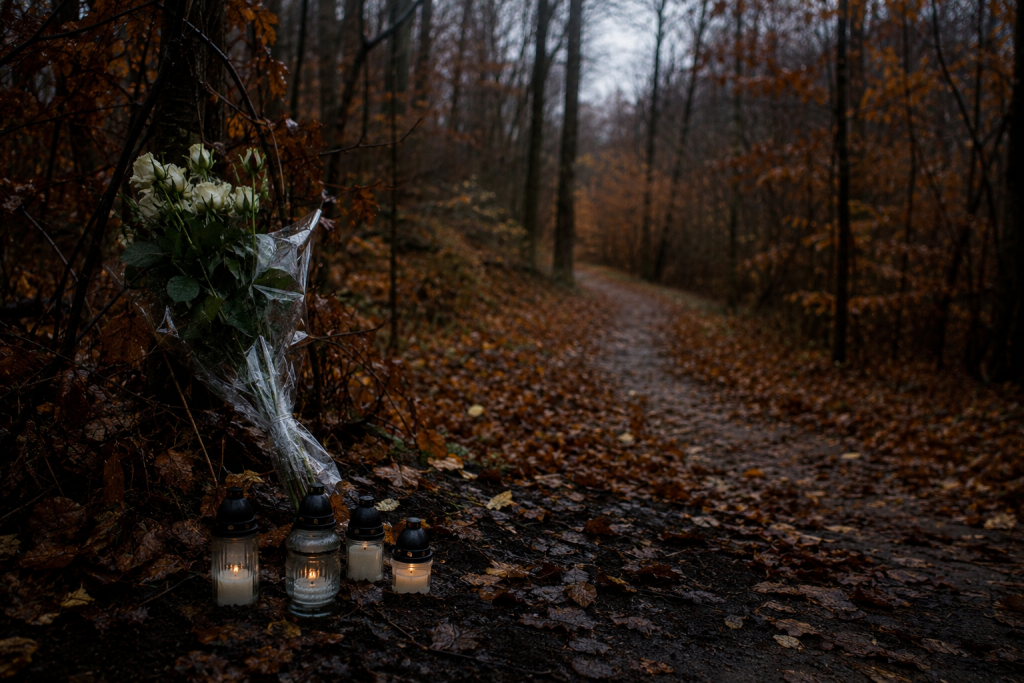
Weeks later, Nicole’s body was discovered in a wooded area near the village of Lierop.
The case immediately became a national tragedy.
Investigators concluded that the teenager had been sexually assaulted and murdered, but the amount of time her body had remained outdoors created serious forensic challenges.
Why DNA Technology Was Limited in the 1990s
Modern crime series often create the impression that DNA can solve almost any case quickly and flawlessly. In reality, forensic science was far more restricted during the 1990s.
DNA is surprisingly fragile. Exposure to moisture, bacteria, sunlight, fluctuating temperatures, and natural decomposition can severely damage genetic material. When a body remains outside for weeks, biological evidence may deteriorate to the point where analysis becomes extremely difficult.
At the time of Nicole’s murder, forensic laboratories generally required much larger biological samples to generate reliable DNA profiles. The advanced amplification methods used today either did not yet exist or were still in early stages of development.
In addition, criminal DNA databases were dramatically smaller than they are now.
As years passed without a breakthrough, the investigation gradually became what authorities classify as a “cold case” — a serious crime that remains unsolved despite ongoing investigative efforts.
Years of Unanswered Questions
Police investigated multiple leads and questioned various individuals over the years. Some suspicions focused on people connected to Nicole personally, while other theories explored the possibility of an unknown sexual predator operating in the region.
None of those paths led to a definitive answer.
For Nicole’s family, the emotional toll became increasingly heavy. Families connected to unresolved murder cases often describe a unique form of grief: not only the pain of loss, but also the psychological burden of never fully knowing what happened.
As the case faded from headlines, many feared it might never be solved.
The False Confession That Shocked the Country
In 2011, the case suddenly returned to public attention after statements made by Andy van den Hurk, Nicole’s stepbrother.
He publicly claimed responsibility for her death.
The confession shocked the Netherlands. Media coverage exploded almost immediately, and many people believed the mystery had finally been solved after more than fifteen years.
Andy van den Hurk repeated his claims both to investigators and publicly, including through social media and interviews.
However, investigators soon noticed serious inconsistencies.
Several details in his statements did not align with the known evidence, and parts of the confession appeared unreliable. Eventually, he stated that the confession had been false.
His explanation generated enormous debate.
According to his account, he wanted to pressure authorities into reopening the investigation and performing new DNA testing using modern forensic technology.
Why Experts Study False Confessions
To many people, falsely confessing to murder seems almost impossible to understand. Yet psychologists and criminologists have documented numerous real cases involving false admissions of guilt.
Some false confessions occur under intense interrogation pressure, while others are linked to trauma, emotional instability, guilt, or an overwhelming desire to force action from investigators.
Experts sometimes describe these as “instrumental confessions,” meaning the person confesses not because they committed the crime, but because they believe the confession will achieve another goal.
The Nicole van den Hurk case became one of the most discussed European examples of how a false confession can dramatically redirect a criminal investigation.
The DNA Breakthrough
Once the investigation was reopened, authorities reexamined preserved biological evidence using far more advanced forensic techniques.
By that point, DNA science had evolved enormously.
Modern laboratories could extract usable genetic profiles from tiny or heavily degraded biological samples that would have been nearly impossible to analyze during the 1990s.
Investigators ultimately recovered a male DNA profile from evidence connected to the case.
That profile eventually led authorities to Jos de G., a man with a criminal history.
He initially denied involvement.
Prosecutors later argued that the forensic evidence, combined with additional investigative findings, strongly connected him to both the sexual assault and the murder.
The Final Conviction
In 2018, nearly twenty-three years after Nicole disappeared, a Dutch court convicted Jos de G. for her rape and murder.
For Nicole’s family, the verdict brought legal closure, though it could never erase the years of uncertainty and pain.
The case also became a powerful example of how modern forensic science can revive investigations once considered impossible to solve.
Why the Case Still Matters Today
The murder of Nicole van den Hurk continues to be studied in discussions about criminal psychology, forensic genetics, and cold case investigations.
Experts often reference the case because it combines several highly unusual elements: a decades-old unsolved murder, deteriorated forensic evidence, a false public confession, and a breakthrough made possible through advances in DNA technology.
It also highlights an uncomfortable reality about criminal investigations: sometimes the truth remains hidden not because evidence never existed, but because science had not yet advanced enough to properly interpret it.
For many people, that may be the most haunting part of the entire story. The answers were likely there all along — buried inside evidence that the technology of the 1990s simply could not fully understand.