
In November 2012, the disappearance of a 13-year-old boy from Colorado slowly evolved into one of the most widely discussed family homicide cases in the United States. What initially appeared to be a missing child investigation soon turned into a years-long criminal case involving forensic anthropology, behavioral analysis, public family conflict, and a trial that would not reach a conclusion until nearly a decade later.
The boy’s name was Dylan Redwine. He had traveled to southwestern Colorado to spend Thanksgiving break with his father, as required under a custody arrangement following his parents’ divorce. Within hours, he vanished without a trace.
For investigators, the case quickly became unusually complicated. The area where Dylan disappeared was remote, heavily wooded, and difficult to search thoroughly. At the same time, growing tensions between family members were unfolding publicly in interviews and court proceedings, creating an atmosphere filled with suspicion, accusations, and unanswered questions. (koat.com)
Who Was Dylan Redwine
Dylan Redwine lived with his mother, Elaine Hatfield Hall, in Colorado Springs after his parents separated. Friends and relatives described him as an outgoing teenager who enjoyed spending time with friends and communicating online like most kids his age.
Behind the scenes, however, the family relationship had become deeply strained after the divorce. Court records and testimony presented years later suggested that the disagreements between Dylan’s parents had intensified over visitation and custody arrangements. According to statements later discussed during the investigation, Dylan reportedly did not want to make the trip to his father’s home in November 2012. (durangoherald.com)
Prosecutors would eventually argue that tension had grown between Dylan and his father, Mark Redwine, after the teenager allegedly discovered embarrassing photographs involving him. Investigators later suggested that the relationship between father and son had become emotionally uncomfortable in the months leading up to the visit. (cbsnews.com)
The Final Evening Before Dylan Disappeared
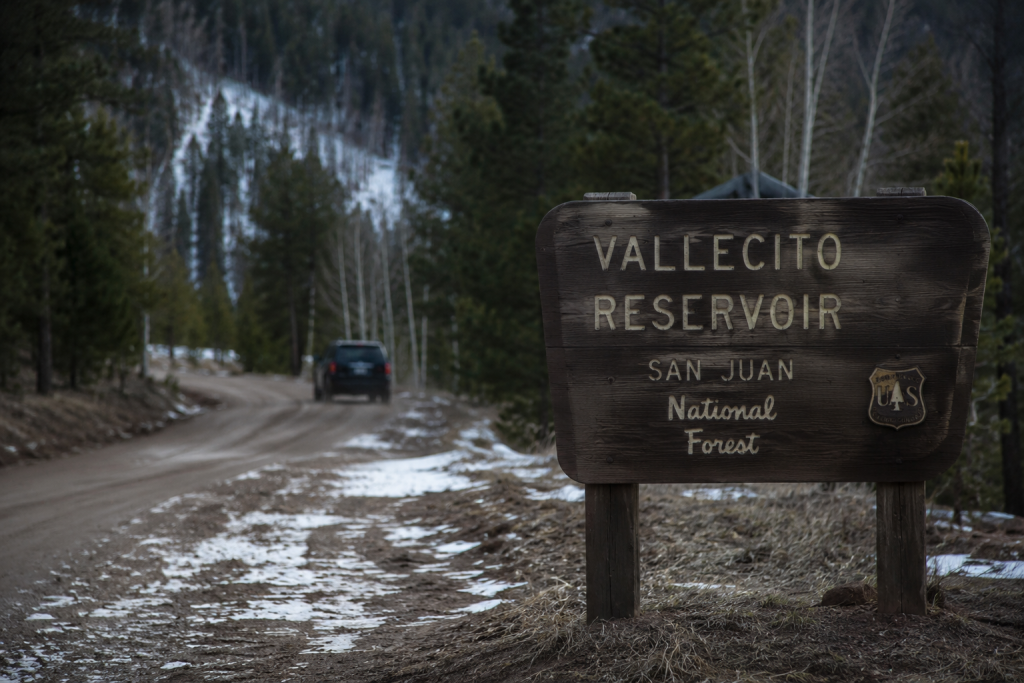
On November 18, 2012, Dylan traveled from Colorado Springs to the Vallecito Lake area near Durango, Colorado. The region is known for its forests, mountain terrain, isolated cabins, and cold late-autumn weather conditions.
That evening, surveillance cameras captured Dylan and his father shopping together at a local Walmart. Those images would later become critically important because they represented the final publicly confirmed sighting of Dylan alive. (koat.com)
Investigators later determined that Dylan exchanged text messages with friends after arriving at the house. His last known cellphone activity occurred around 9:37 p.m. that night. After that point, communication stopped entirely. (durangoherald.com)
The Morning Everything Changed
The following morning, Dylan was supposed to meet a friend around 6:30 a.m. He never arrived.
Friends attempted to contact him repeatedly but received no response. Later, Mark Redwine told investigators that he had left the home that morning to run errands and believed Dylan was still inside the house when he departed. According to his statement, Dylan was gone by the time he returned later that day. (koat.com)
Authorities were notified quickly, and search efforts began almost immediately. Investigators understood early on that the environment itself presented a major challenge. The surrounding terrain included dense woods, steep slopes, scattered rural properties, and areas that were difficult to access even for trained rescue teams.
In missing child investigations, experts often describe the first 24 to 48 hours as the most critical period for locating physical evidence and reconstructing movements. In Dylan’s case, those early hours produced very few answers.
Massive Search Operations Across the Mountains
Over the following days and weeks, hundreds of volunteers joined law enforcement officers, FBI agents, search dogs, and rescue teams in an effort to locate Dylan. Authorities used ATVs, helicopters, cadaver dogs, and sonar equipment to search both the surrounding forests and nearby bodies of water. (durangoherald.com)
Investigators later acknowledged that certain aspects of the disappearance appeared unusual from the beginning. Dylan had reportedly left behind personal belongings that most teenagers would normally take if they intended to leave voluntarily, including items needed for cold weather.
At the same time, public tension between Dylan’s parents intensified. Elaine Hatfield Hall began giving interviews expressing concern that important information was being withheld. Mark Redwine consistently denied involvement and maintained that his son may have walked away on his own. (cbsnews.com)
Psychologists who study high-conflict divorces often note that children caught between separated parents can experience significant emotional pressure, especially when relationships inside the family deteriorate over time. In many situations, teenagers attempt to avoid confrontation altogether, sometimes becoming withdrawn or anxious around one parent or the other.
The Discovery That Changed the Investigation
In June 2013, nearly seven months after Dylan vanished, investigators confirmed that human remains discovered in a wooded area belonged to him. The discovery permanently changed the direction of the case. (koat.com)
Additional remains were later recovered in nearby areas surrounding the region where his father lived. Because the remains had been exposed to outdoor conditions for an extended period, forensic analysis became extremely difficult.
Cases involving skeletal remains often require forensic anthropologists to determine whether marks on bones were caused by blunt force trauma, environmental damage, scavenging animals, or natural decomposition processes. During the trial, experts testified that Dylan’s skull showed evidence consistent with violent trauma. Prosecutors argued that he had been killed during a confrontation with his father. (gazette.com)
Why the Investigation Took Years
Although suspicion increasingly focused on Mark Redwine, prosecutors needed enough evidence to support homicide charges in court. Much of the case depended on circumstantial evidence, forensic interpretation, behavioral analysis, and inconsistencies investigators believed they had identified in statements given over time.
Authorities continued conducting searches and collecting evidence for years. In 2015, Dylan’s death was officially reclassified as a homicide, and Mark Redwine was publicly identified as a person of interest. (koat.com)
Two years later, in 2017, a grand jury indicted him on charges of second-degree murder and child abuse resulting in death. Prosecutors claimed that a confrontation inside the home escalated violently after Dylan confronted his father regarding humiliating photographs. (cbsnews.com)
The defense denied the allegations and argued that the evidence did not directly prove Mark Redwine killed his son.
The Trial and Conviction
The trial finally began in 2021, almost nine years after Dylan disappeared. Media outlets across the United States followed the proceedings closely as forensic experts, investigators, and family members testified about the evidence collected throughout the investigation.
Prosecutors focused heavily on timeline reconstruction and behavioral inconsistencies. Modern criminal investigations increasingly rely not only on physical evidence but also on digital records, movement analysis, witness behavior, and the consistency of statements over time.
Forensic experts described injuries identified on Dylan’s remains, while investigators detailed the extensive search operations and evidence gathered over nearly a decade. (gazette.com)
In July 2021, the jury found Mark Redwine guilty of second-degree murder and child abuse resulting in death. A few months later, he was sentenced to 48 years in prison. (durangoherald.com)
He has continued to maintain his innocence.
Why the Dylan Redwine Case Still Resonates Today
The Dylan Redwine case continues to be discussed in documentaries, crime analysis programs, and forensic studies because it highlights how modern investigations can reconstruct events even when direct witnesses and traditional evidence are limited.
The case also sparked broader conversations about the emotional impact of high-conflict divorces on children, the complexity of family-related homicide investigations, and the role forensic science now plays in long-term criminal cases.
For many people, the most disturbing aspect was not only the disappearance itself, but the realization that the answers took nearly a decade to emerge. During that time, Dylan’s family remained trapped between grief, public scrutiny, and a legal process that moved slowly while investigators attempted to piece together what happened inside an isolated mountain home on a cold November morning in 2012.