
On a freezing winter morning, a group of people walks toward a lake covered in patches of ice. Instead of retreating from the cold, they willingly step into the water and remain there for several minutes. To most observers, the scene looks uncomfortable, even irrational. Yet those who practice cold-water immersion often describe it as energizing, mentally refreshing, and surprisingly rewarding.
In recent years, ice baths have moved far beyond the world of elite athletes. What was once primarily a recovery technique used in professional sports has become a global wellness phenomenon. Social media is filled with videos of people plunging into icy water before sunrise, claiming it boosts resilience, improves focus, strengthens the body, and transforms the mind.
But how much of that enthusiasm is supported by scientific evidence, and how much is driven by marketing, personal anecdotes, and the appeal of doing something difficult?
The answer lies somewhere in between.
Humanity’s Relationship With Cold Long Predates Modern Wellness Culture
The idea of using cold exposure for health purposes is far from new.
Ancient civilizations recognized the effects of cold water long before modern physiology could explain them. Historical records suggest that the Greeks incorporated cold bathing into athletic routines, while the Romans included cold pools in many of their famous bath complexes. In Northern Europe, alternating between intense heat and freezing water has been part of cultural traditions for centuries.
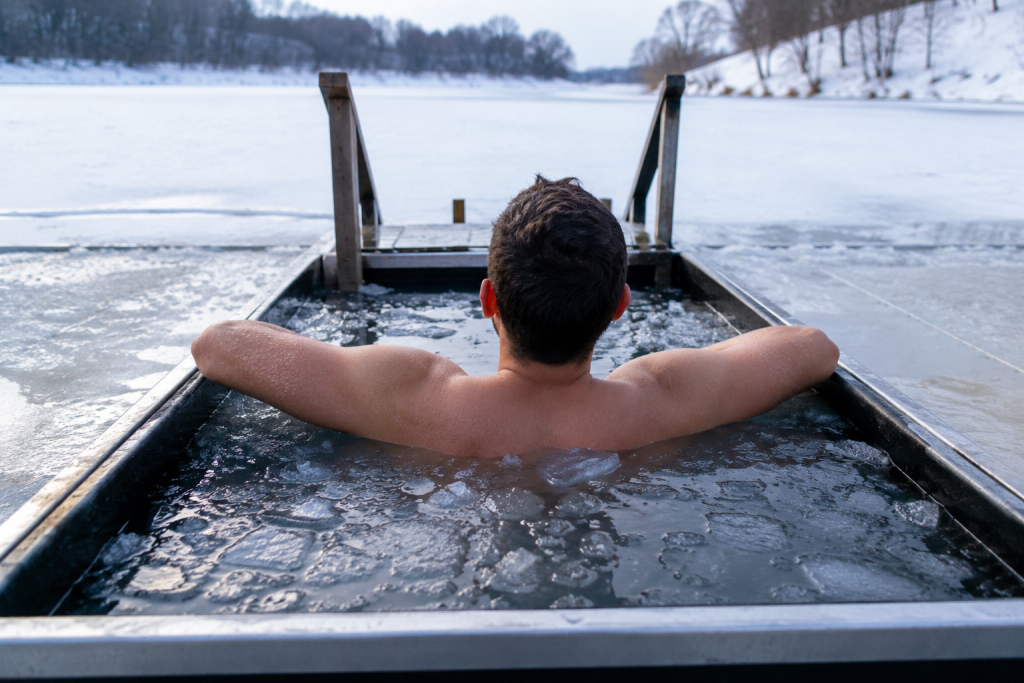
Finland provides one of the best-known examples. Winter swimming remains a popular activity there today, often combined with sauna sessions. Similar customs have existed in parts of Russia, Scandinavia, and Eastern Europe, where cold-water immersion became associated with endurance, vitality, and mental toughness.
What has changed in recent years is not the practice itself, but the scale of its popularity. Advances in social media, wearable health technology, and the growing interest in performance optimization have turned cold exposure into a worldwide trend.
What Happens to the Body During an Ice Bath?
The moment the body enters very cold water, a series of rapid physiological reactions begins.
Water removes heat from the body much faster than air, which means even relatively short exposures can have a significant effect. Within seconds, the nervous system recognizes the sudden drop in temperature as a major environmental challenge.
One of the first responses is the constriction of blood vessels near the skin. This process helps conserve heat by redirecting blood toward vital organs. At the same time, breathing becomes faster and deeper, and heart rate may increase as the body activates its emergency response systems.
This reaction, commonly referred to as the “cold shock response,” is a deeply ingrained survival mechanism. From an evolutionary perspective, falling into freezing water represented a serious threat, so the body developed powerful defenses to maximize the chances of survival.
For many people, the initial sensation is intense and uncomfortable. However, as the body adjusts, that discomfort is often followed by a feeling of alertness and heightened awareness.
Why Cold Exposure Often Feels Energizing
One reason ice baths have gained such a devoted following is the powerful sensation people experience afterward.
Many participants report feeling more awake, focused, and mentally clear following a cold plunge. Scientific research suggests that these experiences are linked to measurable physiological changes.
Exposure to cold stimulates the release of stress hormones such as adrenaline and noradrenaline. These chemicals increase alertness, sharpen attention, and prepare the body to respond to challenges.
Several studies have found substantial increases in noradrenaline levels during and after cold exposure. This surge may help explain why some individuals describe a cold plunge as more invigorating than their morning coffee.
That does not necessarily mean ice baths create lasting improvements in energy levels. Rather, they trigger a short-term biological response that temporarily heightens awareness and activation.
The Fascinating Role of Brown Fat
For decades, body fat was viewed primarily as stored energy. Modern research has revealed a far more complex picture.
Scientists now know that humans possess different types of fat tissue, including a specialized form known as brown adipose tissue, often called brown fat.
Unlike ordinary white fat, which stores calories, brown fat burns energy to generate heat. This mechanism is especially important in newborns, who rely on it to help maintain body temperature.
Researchers have discovered that adults retain small amounts of brown fat and that exposure to cold may stimulate its activity. This finding has generated significant interest because of its potential relationship to metabolism and energy expenditure.
Although cold exposure can increase calorie burning to some degree, the effect is often exaggerated online. Ice baths are not a shortcut to dramatic weight loss, and no credible evidence suggests they can replace healthy nutrition and regular physical activity.
Why Professional Athletes Use Ice Baths
The strongest scientific support for cold-water immersion comes from the field of sports recovery.
After intense exercise, muscles experience microscopic damage that triggers an inflammatory response. This process is a normal part of adaptation, but it can also contribute to soreness and temporary reductions in performance.
Cold-water immersion appears to reduce the perception of muscle soreness and may help athletes feel recovered more quickly following demanding training sessions or competitions.
This is one reason why ice baths have become common in professional football, cycling, rugby, endurance sports, and many Olympic disciplines.
However, researchers have also identified an important limitation.
Inflammation is not always harmful. In fact, it plays a crucial role in helping muscles adapt and become stronger. Some studies suggest that frequent use of ice baths immediately after strength training could blunt certain long-term training adaptations.
In practical terms, a recovery method that helps reduce soreness may not always be ideal for maximizing muscle growth.
The Connection Between Cold Exposure and Mental Resilience
Perhaps the most intriguing aspect of cold-water immersion is its potential influence on psychological well-being.
People who regularly practice cold exposure often describe improvements in mood, stress tolerance, and mental resilience. While the scientific evidence is still developing, several theories attempt to explain these observations.
One possibility involves the release of neurotransmitters associated with motivation, attention, and emotional regulation. Another relates to the psychological challenge itself.
Entering cold water requires a person to remain calm while experiencing intense physical discomfort. Learning to regulate breathing and maintain composure under stress may strengthen confidence and perceived self-control.
Many practitioners view the experience as a form of mental training rather than simply a physical exercise.
Still, researchers emphasize that cold exposure should not be considered a treatment for anxiety, depression, or other mental health conditions. More high-quality studies are needed before firm conclusions can be drawn.
The Risks Often Overlooked in Popular Discussions
The growing popularity of ice baths has sometimes created the impression that cold exposure is universally safe.
Medical experts disagree.
For healthy individuals, controlled cold-water immersion is generally well tolerated when practiced responsibly. However, there are legitimate risks that deserve attention.
The greatest danger often occurs during the first moments of exposure. Sudden immersion can trigger rapid breathing, elevated blood pressure, and significant changes in heart rhythm. In susceptible individuals, these responses may increase the risk of serious cardiovascular events.
People with heart disease, uncontrolled hypertension, arrhythmias, or a history of cardiovascular problems should seek medical advice before attempting cold-water immersion.
Hypothermia is another concern. Although most recreational ice baths are relatively short, prolonged exposure can cause body temperature to fall to dangerous levels.
The risk becomes even greater in open water environments, where panic, loss of coordination, and cold shock can contribute to drowning.
Does Cold Exposure Strengthen the Immune System?
Claims about immunity are among the most common promises associated with ice baths.
The reality is more complicated.
Some studies have identified changes in immune markers following repeated cold exposure, and a few have reported reductions in self-reported illness-related absences from work.
However, these findings do not prove that cold-water immersion prevents serious infections or significantly enhances immune function in the general population.
Scientists continue to investigate the relationship between cold exposure and immunity, but current evidence remains incomplete.
As of today, ice baths should not be viewed as a proven method for preventing disease.
Ice Baths, Cold Showers, and Cryotherapy Are Not the Same Thing
These practices are often grouped together, but they produce different physiological effects.
Cold showers typically involve shorter exposure periods and somewhat milder temperatures. Ice baths immerse a much larger portion of the body in cold water, creating faster heat loss and a stronger physiological response.
Cryotherapy chambers expose the body to extremely cold air for brief periods, often reaching temperatures far below those found in traditional ice baths.
While all three methods involve cold exposure, their effects, intensity, and risks can differ considerably.
What Science Suggests About Safe Practice
Most research involving cold-water immersion uses temperatures ranging roughly between 10°C and 15°C (50°F to 59°F), with exposure times generally limited to a few minutes.
The dramatic challenges often seen online—long sessions in near-freezing water—are not representative of typical research protocols.
More extreme exposure does not necessarily produce greater benefits, but it does increase potential risks.
Gradual adaptation, moderation, and attention to individual health status remain the most widely accepted recommendations.
The Bottom Line
Ice baths occupy a unique space where ancient traditions, modern science, athletic performance, and internet culture intersect.
Research confirms that cold exposure can influence circulation, nervous system activity, metabolism, and recovery from exercise. These effects are real and measurable. At the same time, many of the extraordinary claims surrounding ice baths extend far beyond what current evidence can support.
Cold-water immersion is neither a miracle cure nor a meaningless fad. It is a powerful physiological stimulus that affects the human body in complex ways.
For some people, it can be a useful tool for recovery, personal challenge, and controlled stress adaptation. For others, particularly those with certain medical conditions, it may carry risks that outweigh potential benefits.
As with many health trends, the most reliable conclusions are rarely found in extremes. They emerge where curiosity is balanced by evidence, and where enthusiasm is guided by an understanding of both the possibilities and the limitations of what science actually knows.