
The first few minutes after a baby is born are unforgettable. Parents are focused on their child’s first cries, tiny fingers, and first moments of life, while doctors and nurses perform several routine procedures designed to protect the newborn’s health.
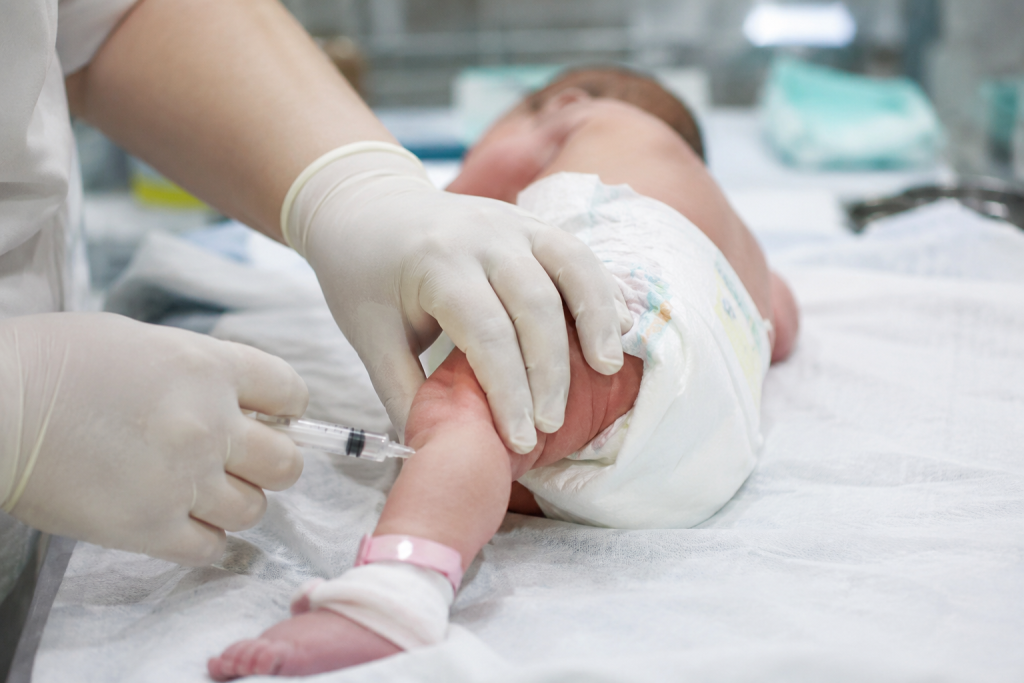
One of those procedures is a vitamin K injection.
It takes only a few seconds, yet it is one of the most frequently questioned aspects of newborn care. Many parents wonder why a healthy-looking baby would need an injection immediately after birth. Isn’t a newborn supposed to have everything needed to thrive?
The answer lies in a fascinating biological fact that surprises many people: virtually every baby enters the world with very low stores of vitamin K.
Why Is Vitamin K So Important?
Vitamin K plays a critical role in helping blood clot properly. Without it, the liver cannot activate several clotting proteins that stop bleeding when blood vessels are damaged.
For healthy adults, this usually isn’t a concern. We obtain vitamin K through foods such as leafy green vegetables, and beneficial bacteria living in our intestines also produce some of it. Over time, our bodies build and maintain adequate reserves.
Newborns, however, begin life under very different circumstances.
Why Are Babies Born With So Little Vitamin K?
The reason has nothing to do with a mother’s diet or the quality of prenatal care.
During pregnancy, only a small amount of vitamin K passes through the placenta. After birth, a baby’s digestive system is still developing, and the intestinal bacteria that eventually help produce vitamin K have not yet become established.
Even breast milk, which is considered the ideal nutrition for infants, naturally contains relatively small amounts of this vitamin.
As a result, all newborns experience a brief period during which their vitamin K levels are much lower than those of older children and adults.
A Rare Condition That Can Develop Without Warning
Doctors use the term Vitamin K Deficiency Bleeding (VKDB) to describe bleeding caused by insufficient vitamin K.
Although the condition is uncommon, it can become life-threatening if it occurs.
What makes VKDB especially dangerous is that many affected babies appear completely healthy beforehand. They feed normally, gain weight, sleep well, and show no obvious signs that anything is wrong.
Then, sometimes without warning, bleeding begins.
In some cases it may be visible, such as bleeding from the umbilical stump or blood appearing in the stool. In other situations, the bleeding happens internally and cannot be seen from the outside.
The most serious complication is bleeding inside the brain.
Medical studies have shown that intracranial hemorrhage occurs in a significant proportion of infants who develop late VKDB. Even when emergency treatment is available, brain injury can occur, and in the most severe cases the condition can be fatal.
When Is the Risk Highest?
Many people assume that any risk disappears after the first few days of life, but that isn’t always the case.
Doctors describe three forms of VKDB.
The early form develops within the first 24 hours after birth and is most often associated with certain medications taken by the mother during pregnancy.
The classic form usually appears between the second and seventh day of life and may cause bleeding from the gastrointestinal tract, nose, skin, or umbilical stump.
The late form is the one that concerns pediatric specialists the most. It typically develops between two weeks and six months of age, with most cases occurring between three and eight weeks. Babies who did not receive vitamin K at birth are at the highest risk.
How Did the Vitamin K Shot Become Standard Care?
The recommendation is not new, nor is it based on a recent trend in medicine.
Scientists first identified vitamin K in the early twentieth century while studying unexplained bleeding disorders. As researchers learned more about its role in blood clotting, hospitals began administering vitamin K routinely to newborns.
The results were remarkable.
Countries that adopted this practice saw a dramatic decline in severe bleeding caused by vitamin K deficiency.
Today, a single intramuscular dose shortly after birth remains the standard recommendation of leading medical organizations, including the World Health Organization and the American Academy of Pediatrics.
The reason is simple: a serious but preventable condition can be avoided with one brief intervention.
What About Oral Vitamin K?
Some countries also offer vitamin K by mouth.
While oral vitamin K can be effective, it requires multiple doses given according to a strict schedule. Missing doses reduces its effectiveness, and babies with certain liver or digestive disorders may not absorb the vitamin well.
Because of these limitations, the injection continues to provide the most reliable long-term protection against severe vitamin K deficiency bleeding.
Is the Injection Safe?
Like any injection, it may cause temporary discomfort or mild redness at the injection site.
More than three decades ago, one study raised concerns about a possible connection between vitamin K injections and childhood cancer. That finding prompted extensive research around the world.
Large studies involving hundreds of thousands of children have since found no evidence supporting that link. Today, medical experts agree that the benefits of preventing potentially devastating bleeding far outweigh the known risks.
The Bottom Line
Some of the most important advances in medicine are also the simplest.
The vitamin K shot does not treat an illness. Instead, it helps prevent a rare condition before it has the chance to cause irreversible harm.
Most parents rarely think about that injection again after leaving the hospital. In many ways, that is the best possible outcome.
When preventive medicine works exactly as intended, the diseases it protects against gradually fade from everyday life. The vitamin K shot is a powerful example of that success—a brief procedure performed within moments of birth that continues to protect newborns during one of the most vulnerable stages of life.