
Millions of people know Waris Dirie as the Somali woman who escaped a forced marriage, built a successful modeling career, and later became one of the world’s most recognized voices against female genital mutilation (FGM). Yet behind her extraordinary journey lies another story that often receives less attention: the family she left behind.
After leaving Somalia as a young teenager, Waris spent years trying to survive in a completely different world. During that time, she had almost no contact with her parents or siblings, and for a long period she didn’t even know whether they were still alive.
A Journey That Changed Everything
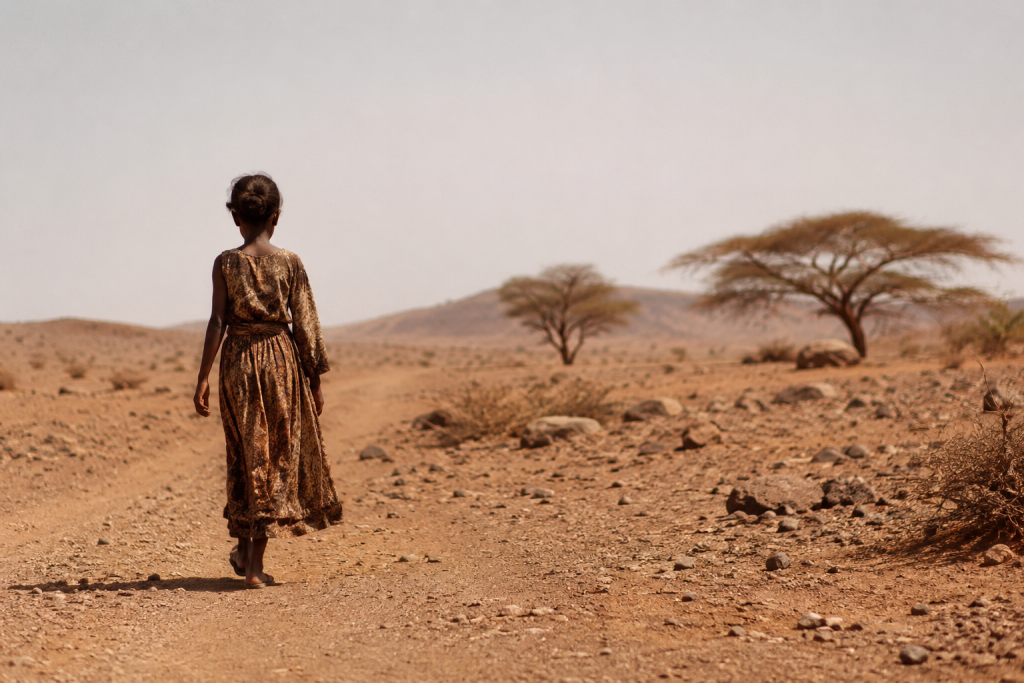
When Waris was only 13 years old, she made the life-changing decision to run away from home rather than marry a man several decades older than her.
After reaching Mogadishu, she stayed with relatives before an opportunity arose to travel to London with her uncle, who was serving as Somalia’s ambassador to the United Kingdom. Life in England was far from glamorous. She worked as a domestic helper in her uncle’s household and, after his diplomatic assignment ended, found herself alone in a foreign country.
She supported herself through a series of low-paying jobs, including cleaning work and a position at McDonald’s, while learning English and trying to build a future from scratch.
Everything changed when British photographer Terence Donovan noticed her potential. That chance encounter opened the door to an international modeling career that eventually placed her among the most recognizable faces in fashion.
Nearly Two Decades Apart
Success did not erase the pain of separation.
For almost twenty years, Waris lived without seeing her family. Communication with rural Somalia was extremely limited, and there were times when she had no idea what had become of the people she had grown up with.
After establishing herself internationally, she finally returned to Somalia to reunite with her family. The emotional visit is described in her memoir Desert Dawn, where she reflects on what it felt like to return home after so many years away.
Rebuilding the Relationship With Her Mother
Perhaps the most emotional chapter of Waris Dirie’s story is her relationship with her mother.
As a child, Waris underwent female genital mutilation, a practice that was deeply rooted in the traditions of her community. For many years, she struggled to come to terms with what had happened.
Over time, however, she came to see her mother through a broader cultural lens. Rather than viewing her solely as the person who allowed the procedure to happen, Waris recognized that her mother had also been shaped by generations of customs and social expectations.
Their relationship gradually evolved, and Waris later wrote about forgiveness, understanding, and reconciliation in her memoir Letter to My Mother.
What About Her Siblings and Grandmother?
Although Waris grew up in a large family, she has shared relatively little publicly about her brothers and sisters. After leaving Somalia, their lives followed different paths, and she has generally chosen to keep those relationships private.
There is also no public evidence that her mother, grandmother, or siblings later moved to Europe to live with her.
Some viewers of the 2009 film Desert Flower may remember scenes suggesting that her grandmother helped arrange the documents needed for her journey abroad. However, Waris’s own autobiographical accounts describe her aunt and her uncle, the Somali ambassador to the UK, as the relatives who made her move to London possible. Like many biographical films, Desert Flower simplifies certain family relationships for storytelling purposes.
More Than a Supermodel
Although Waris Dirie became an internationally successful model, she has often said that fashion was never her greatest achievement.
Instead, she chose to use her public profile to raise awareness about female genital mutilation and advocate for girls who continue to face the same practice today. Through her books, speeches, and the Desert Flower Foundation, she has transformed her own painful experience into a global campaign for change.
Her story is not only about escaping hardship. It is also about finding the strength to confront the past, reconnect with family despite painful memories, and use personal experience to help protect future generations.