
Most flight training prepares pilots for situations they hope they will never face. Engine failures, sudden weather changes, radio outages, and emergency landings are all part of the curriculum because they are known risks in aviation.
What almost no training manual can prepare someone for is the moment when the instructor sitting beside them deliberately leaves the aircraft.
That unimaginable scenario became reality on July 4, 2026, during a training flight near Córdoba, Argentina. A routine lesson aboard a small Cessna 150 turned into one of the most unusual incidents in recent aviation history after instructor Leandro Andrés Bertazzo reportedly unfastened his seatbelt, opened the cabin door, and jumped from the aircraft while it was still in flight.
The only person left at the controls was his 22-year-old student, who suddenly found herself responsible for keeping the airplane airborne and landing it safely.
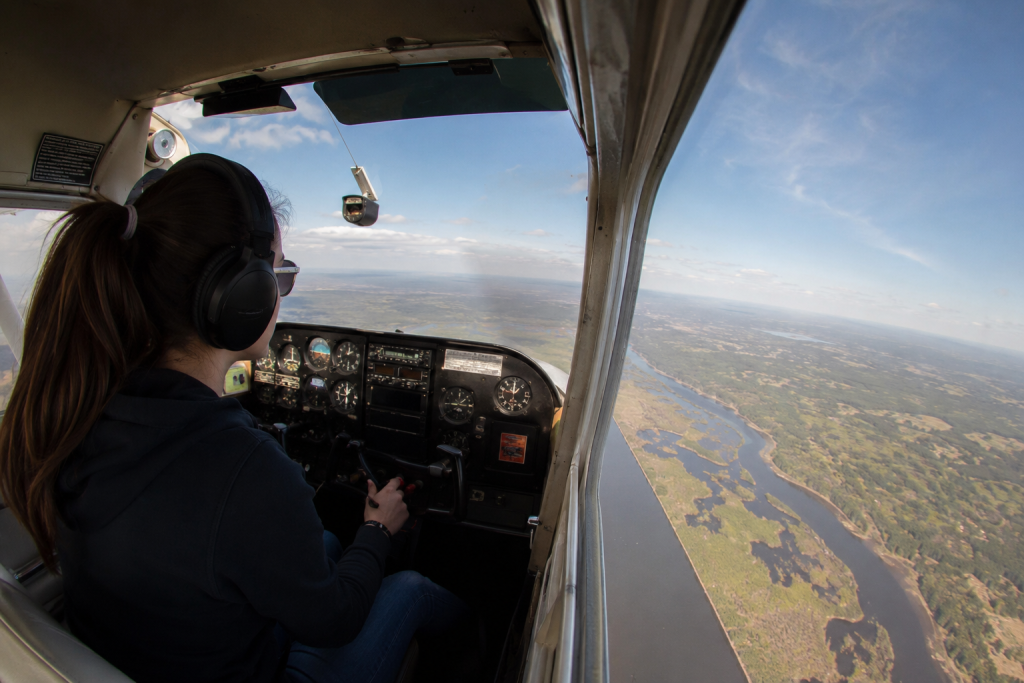
A Routine Training Flight That Took an Unthinkable Turn
The flight departed from Coronel Olmedo Airport, a facility frequently used for flight instruction in Córdoba Province.
On board were Leandro Andrés Bertazzo, a 42-year-old flight instructor with experience in commercial aviation, and Rosario, a young pilot continuing her flight training. Although many early news reports described her simply as a “student pilot,” Argentine media later clarified that she already held a Private Pilot Licence (PPL). She was therefore legally qualified to fly solo and was using the lesson to build experience under the supervision of an instructor.
Nothing about the weather, the aircraft, or the flight plan suggested that anything unusual was about to happen.
Like countless training flights conducted every day around the world, this one appeared to be entirely routine.
The Final Words Before the Incident
According to information released during the investigation, Bertazzo reportedly looked at his student and said:
“You know what to do. Keep going.”
Moments later, he removed his headset, unbuckled his safety harness, opened the aircraft door, and exited the airplane while it was flying at an altitude of roughly 250 meters (about 820 feet).
There were no reports of mechanical problems, no emergency radio calls, and no indication that the aircraft itself was in distress before the incident occurred.
Within seconds, Rosario found herself alone in the cockpit.
Why the Airplane Didn’t Immediately Crash
To people unfamiliar with aviation, it may seem surprising that the aircraft remained under control after the instructor left.
The explanation lies in both the airplane’s design and the student’s training.
The aircraft involved was a Cessna 150, one of the most widely used training airplanes ever built. Introduced in the late 1950s, the model became a standard in flight schools because of its forgiving handling characteristics and predictable flight behavior. Tens of thousands of pilots around the world completed their initial training in a Cessna 150.
Unlike high-performance aircraft, the Cessna is designed to remain relatively stable in normal flight, giving pilots valuable time to react if something unexpected happens.
The airplane also features dual flight controls, allowing either occupant to fly the aircraft independently. Once the instructor was gone, the airplane itself continued flying normally—the responsibility simply shifted entirely to the remaining pilot.
Training Took Over When Shock Could Have Taken Control
Every pilot learns a simple priority sequence during emergency training:
Aviate. Navigate. Communicate.
In other words, keep control of the aircraft first, determine where you’re going second, and only then contact someone on the radio.
Although the emotional impact of the situation must have been overwhelming, Rosario appears to have followed exactly that principle.
Rather than panicking, she maintained control of the airplane before establishing radio contact with personnel on the ground. Flight instructors and airport staff provided guidance for the return to Coronel Olmedo Airport, but they could not fly the airplane remotely.
Every turn, altitude adjustment, and landing maneuver had to be performed by the pilot in the cockpit.
After several tense minutes, she successfully landed the aircraft without injury and without significant damage to the airplane.
Opening the Door of a Small Airplane Is Very Different From Opening One on an Airliner
The incident also raised questions among people unfamiliar with general aviation.
Many wondered how it was possible for someone to open the aircraft door during flight.
Commercial airliners fly in pressurized cabins, where the pressure difference between the inside and outside of the aircraft makes opening a door during flight virtually impossible.
Small training aircraft such as the Cessna 150 operate very differently.
Because they fly at much lower altitudes and are not pressurized, the cabin door can physically be opened during flight. While doing so creates substantial wind noise and airflow inside the cockpit, the airplane remains controllable. Aircraft operating manuals even include procedures for dealing with an accidentally opened door.
What makes this case extraordinary is not the aircraft’s design, but the deliberate decision to leave it.
Who Was Leandro Andrés Bertazzo?
Bertazzo had built a career in aviation before becoming a flight instructor.
Colleagues described him as an experienced professional, and representatives of the flight school said they had not observed obvious warning signs before the tragedy.
Following the incident, Bertazzo’s father publicly stated that his son had been receiving psychiatric treatment and had been experiencing personal difficulties, information that was reportedly not widely known among coworkers.
Authorities continue to investigate the circumstances surrounding the incident, which is being treated as an apparent suicide. Investigators have not reported evidence suggesting mechanical failure or third-party involvement.
An Exceptionally Rare Event in Aviation
Pilots becoming medically incapacitated during flight is something flight schools prepare for.
There have been several well-known cases in which passengers—or pilots with limited experience—have safely landed aircraft after receiving assistance from air traffic controllers or instructors on the ground.
This case is fundamentally different.
It did not involve an engine failure, severe weather, or a sudden medical emergency.
Instead, it involved an instructor intentionally leaving an aircraft during a training flight, a scenario so unusual that few aviation professionals are ever likely to encounter anything comparable during their careers.
That rarity explains why the incident attracted international media attention and prompted discussion throughout the aviation community.
A Reminder That Aviation Safety Also Includes Mental Health
Beyond the extraordinary circumstances of the flight itself, the tragedy has renewed discussion about mental health in aviation.
Professional pilots undergo regular medical evaluations, including assessments of their fitness to fly. However, aviation experts acknowledge that psychological difficulties can emerge between scheduled examinations and may not always be visible to colleagues or family members.
For that reason, many aviation authorities and industry organizations have expanded confidential support programs designed to encourage pilots to seek help early, without fear of unnecessary stigma.
The goal is not only to protect those working in aviation but also to strengthen overall flight safety.
A Landing That Prevented an Even Greater Tragedy
Official records will remember the Córdoba incident as an apparent suicide during a training flight.
Within the aviation community, however, it is also likely to be remembered for another reason.
When an experienced instructor unexpectedly disappeared from the cockpit, the knowledge, discipline, and procedures that had been instilled during flight training enabled a young pilot to remain calm under unimaginable pressure. By applying those skills step by step, she safely returned the aircraft to the ground and prevented an already tragic event from becoming an even greater disaster.
The story is a powerful reminder that aviation is built not only on technology and engineering but also on preparation, discipline, and the ability to make clear decisions when circumstances fall far outside anything a pilot ever expects to face.