
Most people who choose lip fillers expect a quick appointment, a few days of mild swelling, and subtle cosmetic results. Modern dermal fillers, particularly those based on hyaluronic acid, are widely used around the world and are considered safe when administered by qualified medical professionals using approved products.
Yet every medical procedure carries some degree of risk.
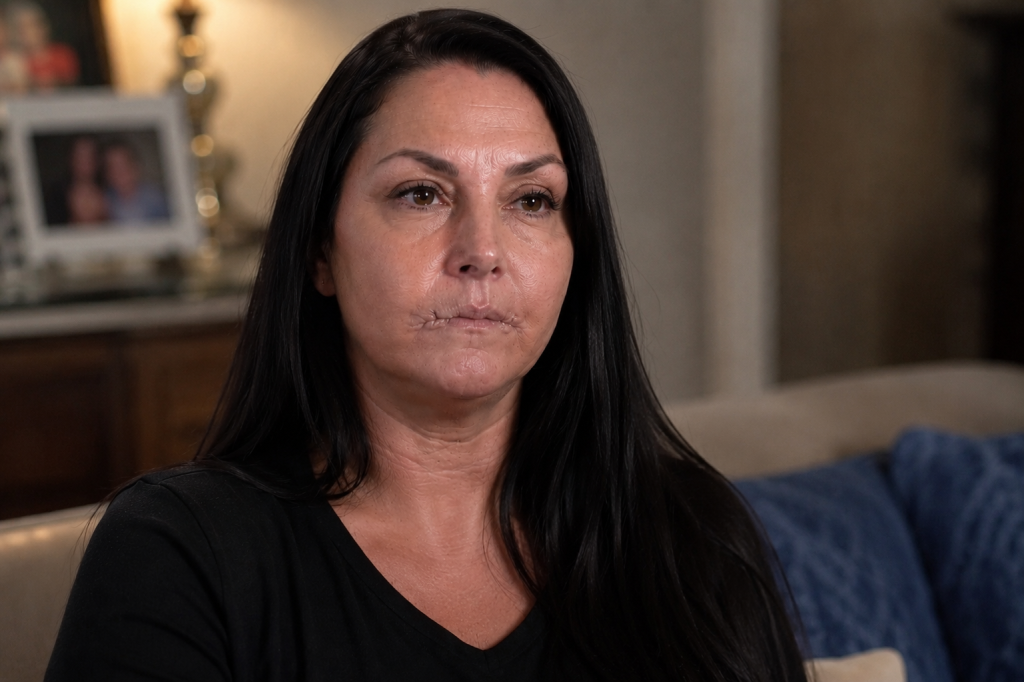
The story of Monica, whose case was featured on the television series Botched, is an extraordinary reminder of how a rare complication can change someone’s life forever. What began as a routine cosmetic enhancement eventually became a years-long struggle involving reconstructive surgery, physical recovery, and emotional healing.
Rather than being a story about beauty, it is ultimately a story about patient safety, medical advances, and resilience.
A routine cosmetic treatment with unimaginable consequences
More than twenty years ago, Monica visited a cosmetic clinic in Tijuana, Mexico, for a facial treatment. During the appointment, she was offered an additional procedure to enhance the appearance of her lips.
At the time, injectable cosmetic treatments were becoming increasingly popular. However, the field looked very different from today’s aesthetic medicine. A variety of permanent and semi-permanent fillers were available, and safety standards, product regulation, and clinical protocols were still evolving.
Monica agreed to the treatment, expecting nothing more than a modest cosmetic improvement.
During the injections, she reportedly noticed that the material appeared unusual and became concerned enough to ask that the procedure be stopped.
Initially, there was no reason to believe those few minutes would alter the course of her life.
When swelling became something far more serious
Like many cosmetic patients, Monica experienced swelling after the procedure. At first, it seemed like a typical post-treatment reaction.
Doctors treated the inflammation with corticosteroids, and the swelling temporarily improved.
But within days, the situation changed dramatically.
The swelling spread across her face, pain intensified, and it became clear that this was no ordinary recovery.
Even today, it is impossible to determine the exact cause of what happened. Medical experts have suggested several possibilities, including bacterial infection, contamination of the injected material, inadequate sterile technique, or a severe inflammatory response.
Regardless of the trigger, the damage to the surrounding tissues became extensive.
When surgeons shift from cosmetic goals to saving healthy tissue
In reconstructive medicine, there comes a point when appearance is no longer the immediate priority.
If tissue loses its blood supply or is severely damaged by infection, it may become non-viable. This process, known as tissue necrosis, leaves surgeons with a difficult decision: remove the damaged tissue to prevent further destruction.
According to Monica’s account, that is exactly what happened.
Surgeons ultimately removed a significant portion of her lips in an effort to stop the progression of the damage.
Within days, a cosmetic procedure intended to enhance her appearance had become a life-changing medical emergency.
Lips are about far more than appearance
Most people think of lips as a cosmetic feature, but anatomically they perform several essential functions.
They help create facial expressions, support speech, assist with eating and drinking, and maintain the natural seal of the mouth.
Rebuilding them is far more complicated than replacing skin alone.
Successful reconstruction requires restoring muscle, blood vessels, nerves, mucosal tissue, and external skin while preserving movement and sensation.
For Monica, the consequences extended well beyond physical appearance. She struggled to smile naturally, experienced difficulties with everyday activities, and faced the emotional impact that often accompanies visible facial injuries.
A reconstruction that lasted for years
Over the following decades, Monica underwent more than twenty reconstructive procedures.
Surgeons attempted multiple techniques, including tissue grafts, scar revisions, fat transfers, and other reconstructive methods designed to improve both function and appearance.
Progress was slow.
Extensive scar tissue and reduced blood supply made every additional surgery increasingly complex.
Unlike cosmetic surgery, reconstructive surgery often focuses on restoring function first. Even small improvements can require lengthy operations and months of recovery.
A case that challenged experienced reconstructive surgeons
Eventually, Monica sought help from plastic surgeons Dr. Paul Nassif and Dr. Terry Dubrow, whose work on complex reconstructive cases has been featured on Botched.
Their objective was not to recreate the lips exactly as they had once been.
Instead, the goal was to rebuild a functional structure that would allow Monica to smile more comfortably, speak more naturally, and regain some of the confidence she had lost.
The procedure involved using tissue from inside the mouth to reconstruct the inner lining of the lips, combined with skin grafts to restore the external contour.
Although no operation could erase decades of damage, the surgery represented an important step toward improving both appearance and quality of life.
How can filler injections cause severe complications?
Cases like Monica’s are exceptionally uncommon, but they illustrate why injectable treatments should always be considered medical procedures rather than simple beauty services.
Potential complications described in medical literature include:
- serious bacterial infections;
- severe inflammatory reactions;
- accidental blockage of a blood vessel, reducing blood flow to nearby tissue;
- tissue necrosis;
- delayed immune responses or granuloma formation.
Today, most lip enhancement procedures use hyaluronic acid fillers, which offer an important safety advantage. If a vascular complication is recognized quickly, the filler can often be dissolved with an enzyme called hyaluronidase, significantly improving the chances of preventing permanent damage.
Prompt diagnosis and immediate treatment are critical.
Modern cosmetic medicine has become significantly safer
Although stories like Monica’s receive widespread attention, they remain exceptionally rare.
Millions of dermal filler treatments are performed every year worldwide with no serious complications. The vast majority of patients experience only temporary swelling, bruising, or tenderness that resolves within days.
Advances in product quality, physician training, facial anatomy education, and emergency treatment protocols have made aesthetic medicine considerably safer than it was decades ago.
Even so, safety still depends heavily on the experience of the practitioner, the quality of the product being injected, and the ability to recognize complications without delay.
A story that extends beyond cosmetic medicine
Monica’s experience is not an argument against aesthetic procedures.
Instead, it highlights the importance of approaching cosmetic treatments with the same care and respect given to any other medical intervention.
Choosing a qualified medical professional, asking questions about the products being used, and understanding both the benefits and the potential risks remain essential parts of informed decision-making.
More than twenty years after a procedure that was expected to last only a few minutes, Monica’s journey continues to remind patients and physicians alike that even the most routine medical treatments deserve careful planning, experienced hands, and an unwavering commitment to patient safety.