
Finding a tick attached to your skin is enough to make almost anyone anxious. Within seconds, questions start racing through your mind. Was it carrying Lyme disease? How long was it attached? Should you see a doctor immediately? Could this tiny parasite cause health problems years from now?
These concerns are understandable, especially because Lyme disease is surrounded by countless myths and conflicting advice online. Some people believe every tick carries dangerous bacteria, while others assume that any unexplained joint pain must be the result of an old tick bite. Neither belief reflects what medical research actually tells us.
Understanding how ticks live, how Lyme disease is transmitted, and what modern science knows about the infection can help replace fear with informed decisions.
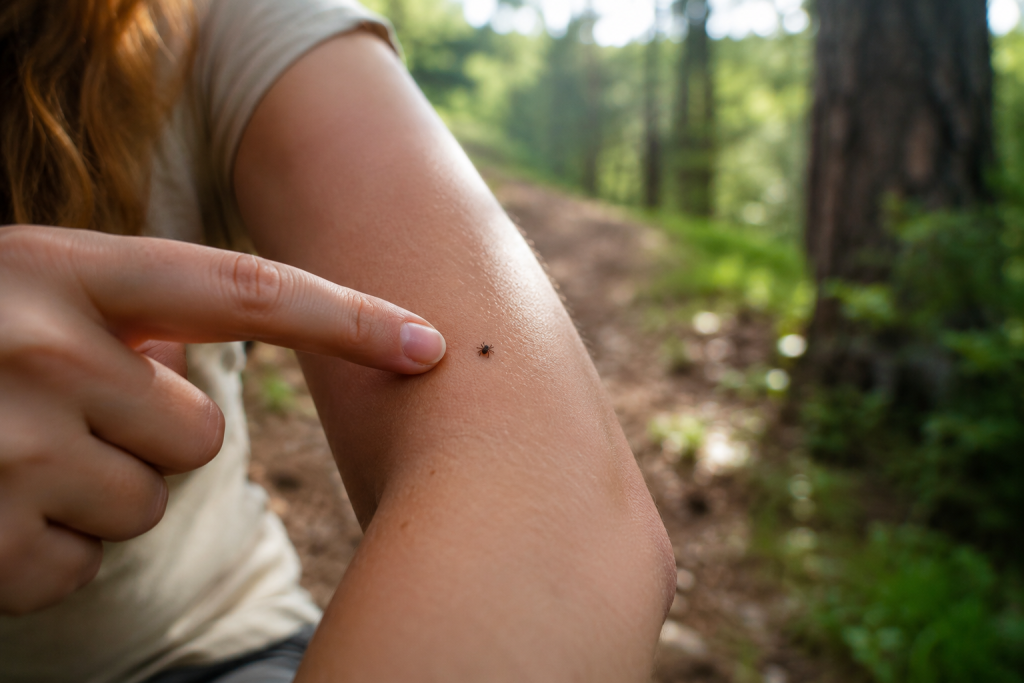
Ticks Are Not Insects
Although many people refer to ticks as insects, they actually belong to the arachnid family, making them close relatives of spiders and mites. Unlike insects, they have eight legs and survive by feeding on the blood of animals and, occasionally, humans.
Their life cycle is surprisingly complex. Depending on the species and environmental conditions, a tick may live for two or even three years, progressing through larval, nymph, and adult stages. At each stage, it requires a blood meal before it can continue developing.
Ticks do not hatch carrying Lyme disease bacteria. Instead, they usually become infected after feeding on wildlife such as rodents or certain birds that already carry Borrelia bacteria. From that point on, they may transmit the infection during future feedings.
What Causes Lyme Disease?
Despite a common misconception, Lyme disease is not caused by a virus. It is a bacterial infection caused by members of the Borrelia genus.
In North America, Borrelia burgdorferi is responsible for most cases. Across Europe, however, infections are more commonly associated with additional species, including Borrelia afzelii and Borrelia garinii. These differences help explain why the illness can present somewhat differently depending on where the infection occurred.
Because Lyme disease is bacterial, confirmed cases are treated with antibiotics rather than antiviral medications.
Every Tick Bite Does Not Lead to Lyme Disease
One of the biggest misconceptions is that every tick bite automatically results in infection.
In reality, only a portion of ticks carry Borrelia, and infection rates vary widely between countries, regions, habitats, and tick species. Even when a tick is infected, transmission is not guaranteed.
The bacteria typically live inside the tick’s digestive tract. Once the tick begins feeding, the bacteria become active and gradually migrate toward the salivary glands before they can enter the host. This process usually takes time, which is why prompt removal greatly reduces the likelihood of infection.
Research has shown that the risk generally increases after the tick has remained attached for approximately 24 to 36 hours, although uncommon exceptions have been reported.
Early Signs Can Be Easy to Miss
The most recognizable symptom of Lyme disease is erythema migrans, a slowly expanding skin rash that develops around the bite site.
Many people expect the classic “bull’s-eye” appearance shown in textbooks, but the rash is often much less distinctive. It may simply appear as a gradually enlarging red patch without a pale center.
Other early symptoms may include fatigue, fever, chills, headaches, muscle aches, swollen lymph nodes, and joint discomfort. Because these symptoms resemble those of many viral illnesses, they can easily be overlooked or mistaken for something less serious.
Can Lyme Disease Stay Silent for Decades?
This question continues to generate debate and concern.
Some individuals remember being bitten by a tick many years ago and wonder whether current health problems might be connected to that event.
Scientific evidence indicates that untreated Lyme disease can progress and cause complications, but these typically develop within months or a few years after infection rather than after decades of complete silence.
When someone develops joint pain twenty or thirty years after a tick bite without having experienced earlier symptoms, physicians generally investigate more common explanations first, including osteoarthritis, rheumatoid arthritis, or other inflammatory conditions.
How Is Lyme Disease Diagnosed?
Diagnosing Lyme disease involves much more than a single blood test.
Healthcare professionals consider a patient’s symptoms, possible tick exposure, physical examination findings, and laboratory results together before making a diagnosis.
The standard laboratory approach uses two steps. An initial ELISA test looks for antibodies against Borrelia. If the result is positive or inconclusive, it is followed by an immunoblot (Western blot or line blot), which provides greater specificity and helps reduce false-positive results.
This two-tier testing strategy remains the internationally recommended approach.
Why Test Results Can Be Misleading
A positive antibody test does not necessarily mean the bacteria are still present.
Blood tests detect the immune system’s response, not the bacteria themselves. Antibodies, especially IgG antibodies, may remain detectable for many years after the infection has resolved.
For that reason, a positive result cannot confirm that an active infection is responsible for current symptoms.
The opposite situation can also occur. During the first weeks after infection, the immune system may not yet have produced enough antibodies to be detected, meaning an early test can sometimes produce a false-negative result.
Common Myths About Lyme Disease
Few medical conditions have generated as much misinformation as Lyme disease.
Not every tick carries Borrelia. Not every red mark following a bite is Lyme disease. A positive antibody test does not automatically prove an ongoing infection, and chronic joint pain years later does not necessarily point to a forgotten tick bite.
At the same time, symptoms that appear after a confirmed tick exposure should never be dismissed without medical evaluation. The key is finding a balance between unnecessary fear and appropriate caution.
Removing a Tick the Right Way
If you discover an attached tick, remove it as soon as possible using fine-tipped tweezers.
Grip the tick as close to the skin as possible and pull upward with slow, steady pressure. Avoid twisting, crushing, or jerking the tick during removal.
Afterward, clean the bite area thoroughly with soap and water or an appropriate antiseptic.
Home remedies such as petroleum jelly, cooking oil, nail polish, alcohol, or applying heat are not recommended. These methods may delay removal and could increase the amount of saliva released while the tick remains attached.
Prevention Is Still the Best Protection
The simplest way to reduce the risk of Lyme disease is to avoid prolonged tick attachment.
When spending time in wooded areas, tall grass, or dense vegetation, wear long sleeves and trousers whenever practical, use approved insect repellents, and perform a full-body tick check after returning home.
Pets should also be examined regularly, as they can bring unattached ticks into the house without anyone noticing.
Final Thoughts
Lyme disease is a genuine bacterial infection that deserves attention, but it should not be viewed through the lens of fear or misinformation. Most tick bites never result in Lyme disease, and when the infection is recognized early, treatment is usually highly effective.
Rather than assuming every unexplained symptom is connected to an old tick bite—or ignoring warning signs altogether—the best approach is to rely on evidence-based medical guidance. Understanding how ticks transmit disease, recognizing the early symptoms, and seeking timely medical advice when necessary remain the most effective ways to protect your health.