
A striking claim has been circulating on social media: a woman with a brain tumor reportedly began using nicotine and later learned that the tumor was no longer visible. The story has attracted even more attention because people in the comments have shared their own experiences, including one person with glioblastoma who says he has survived considerably longer than doctors initially predicted while using nicotine replacement products.
It is easy to understand why such stories spread. Glioblastoma is an exceptionally difficult cancer to treat, and the possibility that an inexpensive, widely available substance might help is enormously compelling.
But an extraordinary personal story and evidence of an effective cancer treatment are not the same thing.
At present, nicotine has not been shown in clinical trials to cure glioblastoma, eliminate brain tumors or meaningfully extend survival in people with this disease. Research into nicotine and cancer biology does exist, but it tells a considerably more complicated story than viral posts suggest.
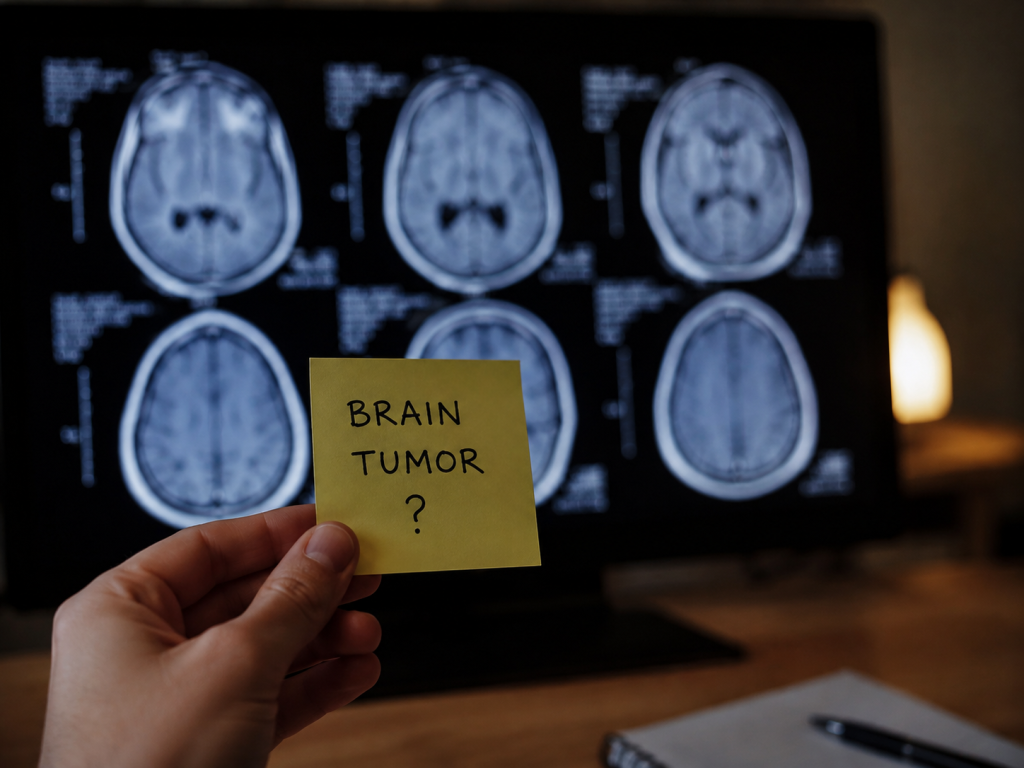
Why glioblastoma is so difficult to treat
Glioblastoma is an aggressive primary brain cancer in adults. One of its most challenging characteristics is the way tumor cells infiltrate surrounding brain tissue.
A surgeon may successfully remove the visible mass, yet microscopic cancer cells can remain beyond the margins of what can safely be removed. This is one reason treatment generally does not end with surgery.
Depending on the individual case, patients may receive surgery followed by radiation and chemotherapy, most commonly with temozolomide. Other approaches may also be considered according to the patient’s condition, tumor characteristics and previous treatment.
Even among people with apparently similar diagnoses, outcomes can be very different.
That variability becomes particularly important when interpreting stories about patients who live longer than initially expected.
The detail about MGMT in the viral discussion actually matters
One commenter describing his own glioblastoma specifically says that his tumor is “unmethylated.”
He is likely referring to the methylation status of the MGMT promoter, a genuine and clinically important biomarker in glioblastoma.
MGMT is involved in repairing damaged DNA. When the promoter of this gene is methylated, MGMT activity can be reduced in tumor cells. This can make those cells more vulnerable to DNA damage caused by alkylating chemotherapy such as temozolomide.
A landmark study published in The New England Journal of Medicine found that MGMT promoter methylation was associated with better outcomes and a greater benefit from temozolomide treatment. PubMed – MGMT gene silencing and benefit from temozolomide in glioblastoma
Patients whose tumors are MGMT-unmethylated generally have a less favorable response to temozolomide than those whose tumors are methylated.
That makes the comment medically interesting. It does not, however, establish nicotine as the explanation for the patient’s survival.
Surviving beyond a prognosis does not prove what caused it
Suppose someone is told that he may have six to twelve months to live but is still alive nineteen months later. That is unquestionably meaningful for the patient and his family.
Scientifically, however, it does not tell us why he survived longer.
Cancer survival estimates describe populations, not individual expiration dates. A median survival of a certain number of months does not mean every patient will live exactly that long.
Some people deteriorate much sooner, while others survive substantially longer.
In a large phase III trial involving patients with newly diagnosed glioblastoma, median overall survival differed considerably according to MGMT status, with outcomes generally poorer in the unmethylated group. But even within each group there was substantial variation between individual patients. PubMed – Phase III glioblastoma trial and MGMT outcomes
This is why exceeding an initial prognosis cannot establish that nicotine, a supplement, a particular diet or any other intervention was responsible.
To answer that question scientifically, researchers would need appropriately designed clinical studies comparing comparable groups of patients while accounting for other treatments and important characteristics of their disease.
Why would an oncologist allow a cancer patient to use nicotine?
This part of the viral discussion can easily be misunderstood.
A patient says his oncologist told him not to smoke but allowed products such as nicotine patches and Nicorette QuickMist.
There is nothing inherently contradictory about those instructions.
Smoking exposes the body to far more than nicotine. Burning tobacco produces a complex mixture containing numerous toxic and cancer-causing chemicals.
Nicotine replacement therapy takes a different approach. Patches, gums, lozenges and sprays can provide controlled amounts of nicotine without exposing someone to tobacco smoke. Their established medical purpose is to help people manage nicotine withdrawal while quitting smoking.
The U.S. National Cancer Institute explains that nicotine replacement products are substantially less harmful than smoking because they provide nicotine without the harmful chemicals found in cigarette smoke. National Cancer Institute – Nicotine replacement and quitting smoking
Consequently, an oncologist permitting nicotine replacement does not mean that the oncologist is prescribing nicotine to attack a tumor.
It may simply mean that continuing to smoke would be considerably more harmful.
Scientists have studied nicotine in glioblastoma cells
This is where the subject becomes more nuanced than either side of the social-media debate might suggest.
Nicotine interacts with nicotinic acetylcholine receptors, which are found in different tissues throughout the body. Researchers have therefore investigated whether these receptors and nicotine-related signaling pathways could influence cancer cells.
In one laboratory study involving human glioblastoma cells, researchers found nicotinic acetylcholine receptors on the cells and reported that nicotine and choline could increase cell proliferation under the experimental conditions studied. The effects involved specific nicotinic receptor subtypes and signaling pathways associated with cellular growth and survival. PubMed – Nicotine, choline and human glioblastoma cells
That finding certainly does not support the idea that nicotine has already been established as a glioblastoma treatment.
But there is another important caution.
Laboratory findings should not automatically be converted into predictions about what will happen inside a human brain.
Cancer cells growing in a dish exist in a dramatically different environment from a tumor inside a person. Concentrations, metabolism, interactions with other cells, the immune system and numerous other factors can change the biological response.
This distinction matters in both directions. A substance that destroys cancer cells in a laboratory may fail completely in patients. Likewise, a cellular experiment showing increased proliferation cannot by itself tell us exactly how a particular dose of nicotine will affect the course of a patient’s cancer.
Research can produce seemingly contradictory findings
Cancer biology rarely provides the simple answers that viral videos favor.
For example, another experimental study investigated nicotine together with lithium carbonate in glioblastoma cell models and reported inhibition of proliferation under particular experimental conditions. PubMed – Experimental nicotine and lithium study in glioblastoma cells
It would be inappropriate to take that experiment and announce that nicotine treats brain cancer.
Instead, results like these illustrate why promising or unusual laboratory observations have to pass through additional stages of research before becoming medical treatments. Researchers need to determine whether an effect can be reproduced, understand the mechanism, establish appropriate dosing and safety, and ultimately demonstrate meaningful benefit in people.
That final step is crucial.
A cancer treatment is not established because a molecule produced an interesting effect in cultured cells.
What would we need to know about the woman whose tumor allegedly disappeared?
The viral account raises many unanswered questions.
Was the original brain lesion confirmed to be malignant? Was there a biopsy and a precise pathological diagnosis? What type of tumor was it? Are the original and follow-up MRI scans available? Did the patient undergo surgery, radiation or chemotherapy? Were steroids or other medications being used? How much nicotine was taken, by what route and for how long? And what precisely does “the tumor disappeared” mean medically?
Those details are not minor technicalities.
Without them, it is impossible to determine whether nicotine had anything to do with the reported outcome.
A dramatic before-and-after story can generate a hypothesis worth investigating. It cannot establish causation by itself.
Personal testimonies can be genuine without proving a treatment works
This distinction is sometimes lost when medical claims are fact-checked.
A person saying, “I used this and then I improved,” may be describing events completely truthfully. The problem arises when the next conclusion becomes, “Therefore, this made me better.”
Imagine someone who undergoes brain surgery, radiation and chemotherapy, stops smoking, changes several aspects of his lifestyle and begins using nicotine patches during approximately the same period. If his disease remains stable longer than predicted, identifying which factor was responsible is extraordinarily difficult.
Perhaps established treatment controlled the disease. Perhaps the tumor had biological characteristics associated with a longer survival. Perhaps several factors mattered. Perhaps the nicotine had no relevant effect at all.
This is precisely why clinical research uses comparison groups and carefully defined outcomes.
The purpose is not to dismiss remarkable individual experiences. It is to distinguish correlation from causation.
Nicotine is not cigarette smoke — but that does not make it a cancer medicine
Two misconceptions can coexist in this debate.
The first is that nicotine replacement therapy must carry all the same risks as smoking. It does not. Cigarette smoke exposes people to a vast collection of harmful combustion products that are absent from medicinal nicotine replacement products.
The second misconception goes in the opposite direction: because nicotine replacement is substantially safer than smoking, nicotine itself must therefore be beneficial or capable of treating cancer.
That conclusion does not follow either.
A substance can be useful for one medical purpose without being effective for another. Nicotine replacement has an established role in smoking cessation. That does not turn nicotine patches or sprays into approved treatments for glioblastoma.
Why stories like this become so persuasive
There is a powerful psychological reason these claims attract attention.
Conventional cancer treatment is complicated. It involves pathology reports, molecular biomarkers, surgery, radiation schedules, chemotherapy, recurrence risk and probabilities that can be difficult even for specialists to communicate.
The alternative story is remarkably simple: someone tried an inexpensive substance and the tumor disappeared.
Simple explanations are memorable. Personal stories are emotionally powerful. And social-media algorithms reward content that surprises, frightens or gives people unexpected hope.
Scientific uncertainty is much harder to fit into a short video.
Yet uncertainty is exactly what responsible medical research has to acknowledge.
So, can nicotine cure glioblastoma?
Based on the evidence currently available, there is no clinical basis for saying that it can.
There are legitimate scientific studies examining nicotine, nicotinic receptors and glioblastoma biology. There are also cancer patients who use nicotine replacement therapy, particularly when attempting to stop smoking. And there are patients with glioblastoma who survive considerably longer than an initial prognosis might suggest.
None of those facts demonstrates that nicotine caused a brain tumor to disappear.
The viral story can therefore be interesting without being proof of a hidden cancer treatment.
Perhaps that is the most useful way to approach extraordinary medical testimonies online. We do not necessarily need to assume that the person telling the story is lying. Instead, we need to ask a more difficult question:
How do we know that the treatment being credited with the recovery is actually what caused it?
Until well-designed clinical studies can answer that question, nicotine should not be considered or promoted as a treatment for glioblastoma or other brain tumors.