
When a disturbing story begins circulating on social media, the most dramatic version often becomes the one people remember. In the case of Nicholas “Nick” Acker, viral posts reduced a complicated workplace tragedy to a chilling claim: a postal employee was trapped in machinery for hours while everyone around him simply kept working.
The real story is more nuanced. Some of the details circulating online are misleading or impossible to establish from the available evidence. Yet what has been confirmed is troubling enough on its own.
Acker was a 36-year-old maintenance mechanic working for the United States Postal Service in Michigan. On November 8, 2025, he died at the Detroit Network Distribution Center in Allen Park after becoming trapped in mail-processing equipment.
His body was not discovered immediately.
Months later, a federal workplace-safety investigation would result in citations and financial penalties for USPS. Reports would also reveal that safety concerns involving the equipment had been raised before the fatal incident.
Behind those findings was a young man whose life had been moving in an entirely different direction. Only days before his death, Acker had become engaged.
A Veteran Who Had Just Started Planning His Wedding
Nicholas John Acker, known as Nick to those close to him, lived in Trenton, Michigan. Before joining USPS, he had served for nine years in the U.S. Air Force. At the postal facility, he worked as a maintenance mechanic, a job that involved servicing the large industrial systems used to move and process enormous volumes of mail.
His personal life had recently reached an important milestone.
Acker and his partner, Stephanie Jaszcz, had become engaged roughly ten days before the accident. Instead of preparing for their future together, his family suddenly found themselves confronting his death.
That personal detail matters because workplace fatalities can quickly become reduced to case numbers, inspection reports and regulatory language. For Acker’s loved ones, this was not simply an industrial accident. Someone who had left for work never came home.
What Investigators Know About the Accident
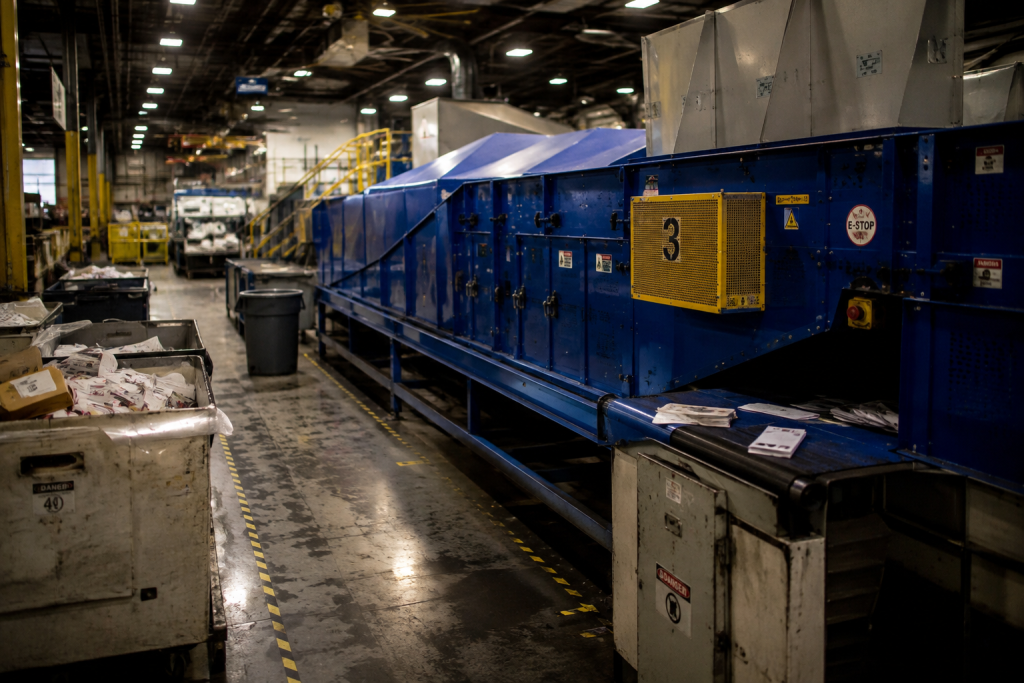
On November 8, emergency personnel were called to the USPS facility in Allen Park. Acker was discovered caught between a guardrail and the conveyor portion of a mail-processing machine.
The medical examiner ultimately classified his death as accidental. Toxicology testing reportedly found no drugs in his system.
One detail in particular later became central to the way the story was discussed online: firefighters indicated that Acker appeared to have been dead for approximately six to eight hours by the time emergency crews arrived.
That finding raises an obvious and disturbing question about how long he remained undiscovered inside an active workplace.
But it does not establish something frequently implied by viral posts.
There Is No Evidence He Was Alive and Trapped for Six to Eight Hours
Social-media versions of the story sometimes describe Acker as having been “trapped for six hours,” wording that can easily create the impression that he remained conscious or alive inside the machinery for that entire period.
The available evidence does not support that conclusion.
The six-to-eight-hour figure refers to an estimate concerning how long he had already been dead when emergency responders arrived. It should not be converted into a six-to-eight-hour period of conscious suffering unless evidence emerges establishing that timeline.
The distinction may seem small in a short viral video, but it is significant when reporting the death of a real person.
There is no need to make this case more horrifying than the established facts already make it.
Safety Concerns Had Reportedly Been Raised Before the Fatality
Another development made the circumstances surrounding Acker’s death even more concerning.
Local reporting found that a formal grievance involving safety concerns about the machine had been filed less than 90 days before his death.
That does not automatically prove that the earlier complaint identified the precise condition that later caused the fatal accident. Nor does the existence of a complaint, by itself, establish responsibility for Acker’s death.
It does, however, provide important context for the investigation that followed.
Federal workplace-safety authorities subsequently examined conditions at the facility, including procedures designed to protect employees who service industrial machinery.
OSHA’s Investigation Resulted in Citations
The Occupational Safety and Health Administration investigated the Allen Park facility following Acker’s death.
By May 2026, USPS had received five citations associated with the investigation, according to reporting based on OSHA records. Three carried monetary penalties, with proposed fines totaling $26,481.
Among the safety issues involved were requirements associated with controlling hazardous energy during maintenance work.
For people who do not work around industrial machinery, that language may sound abstract. In practice, it describes one of the most important safeguards available to maintenance workers.
Why Lockout/Tagout Procedures Matter
Switching off an industrial machine does not necessarily make it safe to enter or service.
Large equipment can contain multiple forms of hazardous energy. Electricity is only one of them. Mechanical movement, hydraulic or pneumatic pressure and stored energy within components can all create danger even when a machine appears to have stopped.
This is why workplaces use procedures generally known as lockout/tagout, or LOTO.
Before maintenance begins, hazardous energy sources are supposed to be isolated and controlled so the equipment cannot unexpectedly start, move or release stored energy while someone is working on it.
These procedures are not merely administrative paperwork. They are intended to create a physical barrier between a maintenance worker and a potentially fatal machine movement.
OSHA has long identified the control of hazardous energy as a critical component of industrial workplace safety. OSHA’s guidance on hazardous-energy control and lockout/tagout
In Acker’s case, federal inspectors cited USPS for workplace-safety deficiencies following their investigation.
Did Employees Really Keep Working After His Body Was Found?
This is perhaps the most emotionally charged element of the story circulating online.
There is evidence behind the claim, but the viral wording removes important context.
Matthew Stiffler, a maintenance mechanic and union representative, told local television station WDIV that employees were instructed to relocate to another part of the building and continue processing mail after Acker had been discovered. According to his account, Acker’s body was still inside the machine at that time.
That is substantially different from saying workers casually continued operating the machine containing their colleague or simply ignored what had happened.
The allegation is that postal operations continued elsewhere inside the facility while the aftermath of the fatal accident was still unfolding.
For employees who had just learned that a colleague had died at work, even that distinction did little to lessen the emotional impact.
USPS’s Response Also Drew Criticism From Acker’s Fiancée
USPS expressed condolences following Acker’s death, but part of its public response upset his fiancée.
Stephanie Jaszcz criticized language concerning the resumption of operations at the facility, describing it as insensitive in the immediate aftermath of her partner’s death.
Her reaction highlights something easily lost when workplace fatalities are discussed institutionally.
Companies and government agencies inevitably communicate through the language of investigations, operations, procedures and compliance. Families experience the same event in entirely different terms.
Acker was not simply a worker involved in an incident. He was a 36-year-old man who had recently asked someone to marry him and expected to have a future beyond his next shift.
The Viral Version Gets Part of the Story Wrong — but the Truth Is Still Disturbing
The internet rewards certainty and outrage. Complicated events therefore tend to emerge from social media stripped of qualifications.
Nicholas Acker’s death demonstrates why those qualifications matter.
There is no established evidence that he remained alive inside the machine for six or eight hours. What was reported was that he appeared to have been dead for approximately that long before emergency responders arrived.
There is also an important distinction between saying employees continued working and suggesting that people knowingly operated the equipment containing their dead colleague. The account provided by a union representative concerned workers being directed to continue processing mail in another area of the building.
At the same time, removing the exaggerations does not make the underlying event ordinary.
A 36-year-old maintenance mechanic died inside machinery at his workplace. His body remained undiscovered for hours. Safety concerns involving the equipment had reportedly been raised beforehand. A subsequent OSHA investigation resulted in citations and proposed financial penalties.
Those facts deserve attention without embellishment.
The Question That Remains After the Headlines Fade
Industrial accidents are rarely explained by one dramatic moment alone. Machines have safeguards, workplaces have procedures, maintenance teams have protocols, and investigators must determine which factors mattered in a particular death.
That process requires evidence rather than assumptions.
But Nicholas Acker’s case leaves behind a simpler human question as well.
He arrived at work as a mechanic, a veteran and a recently engaged 36-year-old with plans waiting outside that building. At some point during his shift, something went catastrophically wrong.
And hours passed before he was found.
Long after the viral videos disappear, perhaps that is the detail worth remembering — and the question worth asking whenever workplace safety is treated as routine: what systems should have been in place to make sure a missing worker was noticed before hours could pass?