
In 1981, Dodie Osteen was 48 years old when her life changed with a devastating medical diagnosis. She was seriously ill, losing weight, struggling with fever and pain, and becoming increasingly weak. Her skin had developed a yellowish appearance, and at one point she was reportedly so frail that after kneeling down, she could not get back up without help.
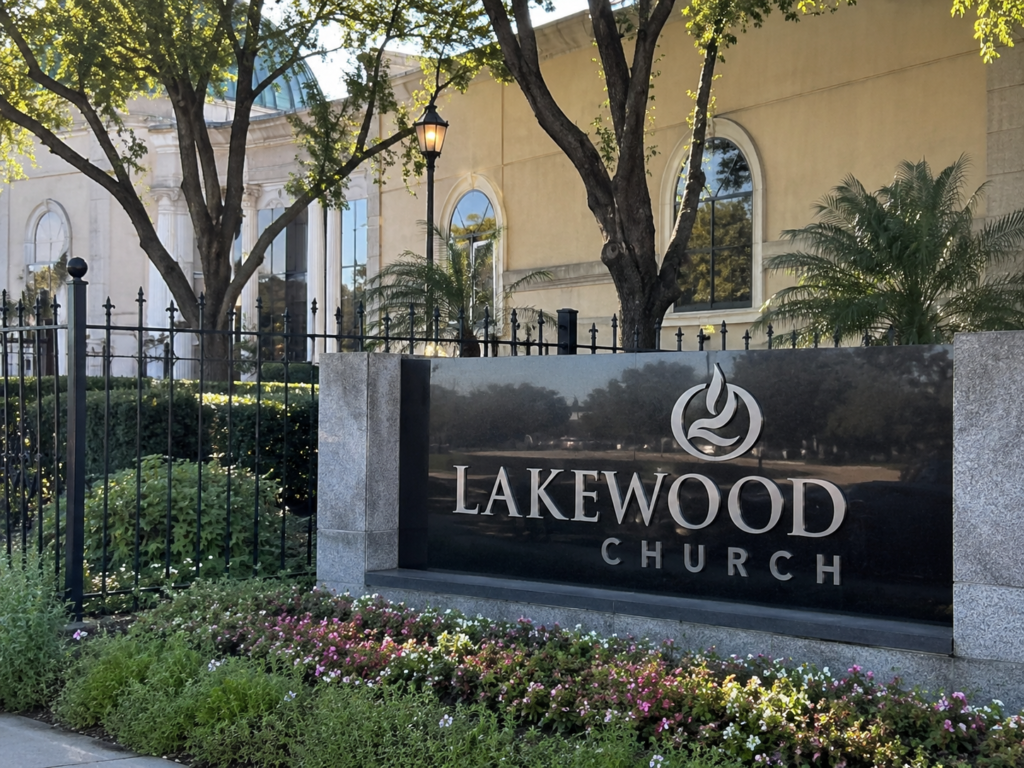
Dodie was the wife of pastor John Osteen. Together, they had founded Lakewood Church in Houston, Texas, and were raising five children. One of them was Joel Osteen, who would later become one of the best-known pastors in the United States.
What the family heard from doctors that year left little room for optimism.
Dodie had metastatic cancer involving her liver, and according to accounts later given by her and her family, her prognosis was measured not in years, but in weeks.
Yet Dodie Osteen did not die a few weeks later.
She lived for more than another 43 years.
The medical story was more complicated than the viral version
Dodie Osteen’s story has circulated online for years, often condensed into a few dramatic sentences: doctors said nothing could be done, she went home, prayed, and the cancer disappeared.
The documented story is more nuanced.
Accounts of her illness describe a metastatic adenocarcinoma involving the liver. This distinction matters because cancer found in the liver is not necessarily liver cancer. When a tumor originates somewhere else in the body and spreads to the liver, it remains classified according to its original site.
The National Cancer Institute explains that metastatic cancer retains the characteristics and name of the primary cancer. A breast cancer that spreads to the liver, for example, remains metastatic breast cancer rather than becoming primary liver cancer.
The complete medical record from Dodie’s treatment in 1981 is not publicly available for independent scientific review, so there are limits to what can responsibly be claimed about her diagnosis today.
What is clear from the available historical accounts is that her condition was considered extremely serious.
She had received medical treatment before returning home
Another important part of the story is sometimes omitted.
Dodie did not simply receive a diagnosis and leave the hospital without medical intervention. Published accounts indicate that she underwent a hysterectomy to remove a tumor.
Chemotherapy was also discussed.
According to later reporting about her case, the outlook presented to the family remained extremely poor, with little expectation that chemotherapy would substantially extend her life. Dodie ultimately declined chemotherapy.
That context makes her story quite different from the simplified claim that she rejected medicine in favor of prayer and was cured.
She had undergone medical investigation and surgery. What happened afterward, however, became the part of the experience that Dodie and her family would spend decades describing through the language of faith.
Dodie and John Osteen chose to pray
For the Osteens, faith was not something they turned to for the first time because of cancer. Christianity was already at the center of their lives.
After returning home, Dodie and John prayed together.
Dodie later described making a deliberate decision not to allow the prognosis to extinguish her hope. She began collecting Bible passages concerning healing and reading them repeatedly.
She read them during the day. She spoke them aloud. She returned to them whenever fear threatened to overwhelm her.
Her family remembered her walking around the house and outside while repeating Scripture.
There was no dramatic moment in which she suddenly appeared completely healthy.
Instead, according to the family’s account, improvement came gradually.
Her appetite began returning. She gained weight. Her strength slowly came back.
Days became weeks.
And the weeks kept coming.
The expected weeks became months, then years
Surviving beyond a medical prognosis does not by itself mean that a diagnosis was incorrect. A prognosis is an estimate based on what is known about a disease and how people with similar conditions have historically responded.
It cannot predict the exact future of an individual patient.
But Dodie’s case went far beyond surviving a little longer than expected.
A history of Lakewood Church published by the University of Houston’s Houston History Magazine recounts her serious cancer diagnosis and subsequent recovery. Later reporting about her life states that within roughly two years, the cancer was no longer detectable.
That terminology also requires some care.
When doctors can no longer detect signs of cancer, the National Cancer Institute may describe the situation as a complete remission or complete response, depending on the circumstances. It does not automatically establish that every malignant cell has permanently disappeared.
For Dodie, however, the most striking evidence of the durability of her recovery was time itself.
She didn’t survive for months. She survived for decades
Dodie Osteen continued living.
She returned to an active life and began sharing her experience with other people facing serious illnesses. In 1986, she published Healed of Cancer, a book recounting her illness and the role she believed faith and prayer had played in her recovery.
Five years passed.
Then ten.
Then twenty.
The woman whose family had once been preparing for the possibility that she had only weeks remaining grew older alongside her children and grandchildren.
She eventually reached her eighties and then her nineties.
On July 30, 2025, Dodie Osteen died peacefully at her home, according to her family.
She was 91 years old.
Her death was reported as being from natural causes.
More than 43 years had passed since the cancer diagnosis that had once carried such a devastating prognosis.
Was her recovery a medical miracle?
That question depends partly on what we mean by the word “miracle.”
Medicine can investigate tumors, pathology results, treatments, scans, survival statistics and biological mechanisms. It can document an unusually long survival and acknowledge when an individual patient’s course differs dramatically from what was originally expected.
Science, however, cannot establish through medical testing that a supernatural intervention occurred.
There are rare cases in medicine in which malignant disease regresses unexpectedly, sometimes described as spontaneous regression. There are also patients who survive far longer than population statistics would suggest.
Neither fact provides a simple explanation for Dodie’s particular experience.
Without access to her complete original pathology, imaging and medical records, it would be irresponsible to diagnose retrospectively exactly why her disease disappeared.
The available evidence allows us to say something more limited but still extraordinary: a woman diagnosed with advanced cancer and given an extremely poor prognosis went on to live for more than four additional decades.
Dodie herself never seemed uncertain about the explanation
For Dodie Osteen, there was no ambiguity about what had happened.
She believed God had healed her.
That conviction remained with her for the rest of her life. Her cancer experience became an important part of her Christian testimony, and she spent decades speaking to and praying with people who were ill.
Her family shared that interpretation.
But there is an important distinction between respecting a person’s testimony and turning that testimony into medical advice.
Dodie Osteen’s experience cannot establish that prayer will cure cancer, nor should her decision concerning chemotherapy be treated as a recommendation for other patients.
Cancer is not one disease. Different cancers have radically different treatments, biological behaviors and prognoses. A decision that one patient made in 1981 cannot determine what another patient should do today.
Most importantly, failure to recover from a serious illness should never be interpreted as evidence that someone did not pray hard enough or did not have enough faith.
Faith and medicine do not have to compete
Stories like Dodie’s are sometimes presented as though a person must choose between trusting God and trusting doctors.
That is a false choice for many believers.
A person can pray while undergoing chemotherapy. Someone can hope for a miracle while having surgery. A family can seek spiritual support while also asking oncologists difficult questions and following evidence-based treatment.
Doctors are also not issuing a final decree when they discuss life expectancy.
A prognosis is based on probabilities derived from people with similar diseases. The National Cancer Institute emphasizes that survival statistics describe groups of patients and cannot tell precisely what will happen to one particular person.
Sometimes people live less time than predicted.
Sometimes they live considerably longer.
And occasionally, a person’s course is so unusual that it becomes a story remembered decades later.
More than 43 years after she was told her time might be short
There are two ways of looking at the story of Dodie Osteen, and they do not necessarily have to cancel each other out.
Medicine can say that she experienced an extraordinarily favorable outcome following a very serious cancer diagnosis, while acknowledging that the complete historical medical record is not publicly available for independent analysis.
Faith can ask a different question about what that recovery meant.
Dodie had already answered that question for herself.
She entered the hospital in 1981 desperately ill. Her family was confronted with the possibility that she might have only weeks left. She returned home, prayed with her husband and held fiercely to the belief that her story was not finished.
Her health improved.
The cancer later became undetectable.
And instead of a few remaining weeks, Dodie Osteen lived for more than four additional decades.
Medicine can describe what happened.
Dodie spent the rest of her life explaining what she believed it meant.
To her, it was God’s healing.
Important medical note: This story is not evidence that cancer treatment should be refused or discontinued. Anyone diagnosed with cancer should discuss treatment and monitoring with qualified medical professionals. Prayer, faith and spiritual support may be deeply meaningful to patients and families, but they should not be presented as substitutes for appropriate medical care.
Sources
National Cancer Institute – medical information on metastatic cancer, prognosis, survival statistics and remission.
American Cancer Society – medical information concerning cancer metastasis and secondary tumors involving the liver.
Houston History Magazine, University of Houston – historical account of Lakewood Church and Dodie Osteen’s illness and recovery.
The Wall Street Journal – reporting on Dodie Osteen’s life, her 1981 cancer diagnosis, treatment history and long-term survival.
Dodie Osteen, Healed of Cancer – Dodie Osteen’s personal account of her illness, faith and recovery.