
Walk into almost any pharmacy or supermarket and you will find an entire section devoted to magnesium, iron, selenium, vitamin D, vitamin B12 and dozens of multivitamin combinations.
It is easy to come away with the impression that meeting our nutritional needs requires a collection of bottles.
Then you encounter claims that seem to suggest the opposite: pumpkin seeds can provide as much magnesium as some supplements. A single Brazil nut may contain an entire day’s worth of selenium. Blackstrap molasses contains iron. Fatty fish can deliver most of a day’s vitamin D in one serving.
Surprisingly, there is real nutritional science behind many of these claims.
But there is an equally important part that often disappears when nutrition advice reaches social media: getting enough of a nutrient and getting as much as possible are not the same thing.
Some foods are so concentrated in particular minerals that portion size matters. Others contain a nutrient that our bodies do not absorb particularly efficiently. And some vitamins remain relatively difficult to obtain from food alone.
So how much can an ordinary diet actually provide?
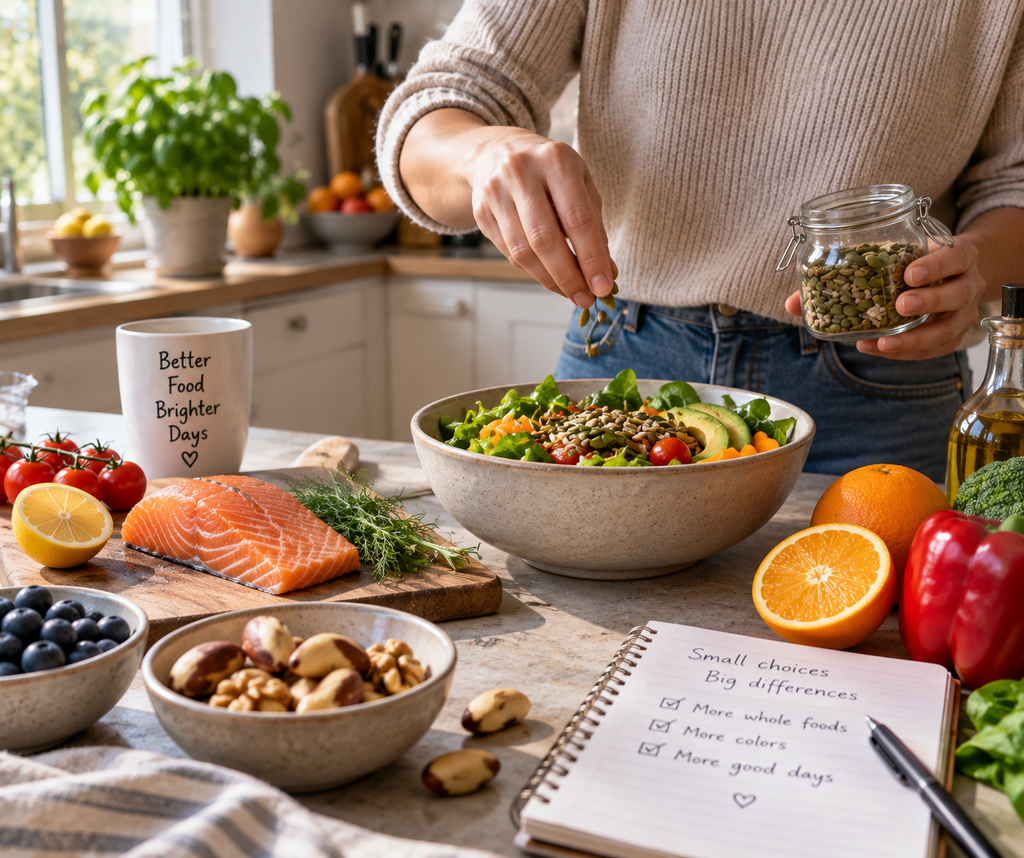
Pumpkin seeds are remarkably rich in magnesium
Magnesium does far more than most of us probably realize.
The mineral is involved in hundreds of biochemical reactions and is required for normal muscle and nerve function, blood glucose regulation, blood pressure regulation and bone health.
Pumpkin seeds happen to be an unusually concentrated source.
According to the U.S. National Institutes of Health (NIH), one ounce — approximately 28 grams — of roasted pumpkin seeds provides about 156 mg of magnesium.
Recommended daily intake for adults varies by age and sex, but generally falls around 310–320 mg per day for adult women and 400–420 mg for adult men.
Do the simple arithmetic and things become interesting.
Two ounces, or roughly 56 grams, could provide around 312 mg of magnesium based on the NIH figure.
That means the viral claim that a serving of pumpkin seeds can contain as much magnesium as some magnesium supplements isn’t particularly far-fetched.
It doesn’t mean everyone should start eating two ounces every day.
A smaller handful can make a substantial contribution, while the rest can come from foods such as beans, almonds, cashews, whole grains, leafy greens and other seeds.
There is another distinction worth knowing. The tolerable upper limit of 350 mg per day established for magnesium applies to magnesium obtained from supplements and medications, not magnesium naturally present in food.
Source: NIH Office of Dietary Supplements, Magnesium Fact Sheet.
Brazil nuts show why “more” isn’t always better
If pumpkin seeds are nutrient-dense, Brazil nuts take the concept to another level.
They contain extraordinarily high concentrations of selenium.
Selenium is required only in small amounts, but the body needs it for processes including thyroid hormone metabolism, DNA synthesis and protection from oxidative damage.
For most adults, the recommended intake is approximately 55 micrograms per day.
According to the NIH, a single Brazil nut can contain roughly 68–91 micrograms of selenium.
One nut can therefore provide more than an adult’s daily requirement.
That sounds ideal until we consider what happens when advice such as “eat two Brazil nuts every day” is interpreted as meaning that even more would be healthier.
Brazil nuts are not standardized supplements. Their selenium concentration can vary substantially depending partly on the soil in which the trees grow.
And selenium isn’t exclusive to Brazil nuts.
Fish, seafood, eggs, meat, poultry, dairy products and grains can all contribute to our intake.
Your body doesn’t require 55 micrograms to arrive neatly packaged inside one particular food.
Yes, you can get too much selenium
The fact that selenium comes from a natural food doesn’t make unlimited quantities harmless.
Chronically excessive selenium intake can lead to selenosis.
Possible signs include hair loss, brittle or abnormal nails, a metallic taste, gastrointestinal symptoms and fatigue. Very high exposures can cause more serious effects, including neurological problems.
Eating several Brazil nuts on one occasion is not synonymous with selenium poisoning. The greater concern is consistently consuming very high amounts.
This makes Brazil nuts a particularly useful lesson in nutrition.
A food can be extremely nutritious and still be something we shouldn’t eat without regard to quantity.
Source: NIH Office of Dietary Supplements, Selenium Fact Sheet.
What about blackstrap molasses for iron?
Another popular nutrition recommendation involves taking a spoonful of blackstrap molasses as a natural source of iron.
This claim isn’t invented either.
Blackstrap molasses can contain meaningful amounts of iron, although the amount varies considerably between products. Checking the nutrition label of the actual product is therefore more useful than assuming that every tablespoon contains the same amount.
But there is another complication.
Iron doesn’t exist in food in just one form.
Plant foods primarily provide nonheme iron, while meat and seafood can provide both heme and nonheme iron. Heme iron is generally absorbed more efficiently.
The absorption of nonheme iron is also strongly influenced by what accompanies it in the meal.
And this is where another familiar nutrient becomes particularly useful.
Vitamin C can help you absorb plant-based iron
Vitamin C is widely associated with immune function, but it also has several other important biological roles.
Among them is improving the absorption of nonheme iron.
That means combinations such as lentils with bell peppers, beans with tomatoes or other iron-containing plant foods alongside vitamin C-rich fruits and vegetables make nutritional sense.
Oranges, kiwi, strawberries, bell peppers and broccoli are all useful sources.
This illustrates something that gets lost when nutrition is reduced to numbers on a chart: nutrients don’t always operate independently.
What we eat together can affect what our bodies actually absorb.
It is equally important not to turn this information into a home treatment for iron deficiency.
Someone with diagnosed iron-deficiency anemia shouldn’t assume that molasses, spinach or lentils can automatically replace medically recommended iron therapy. Iron requirements also vary substantially according to age, sex and life stage.
Source: NIH Office of Dietary Supplements, Iron and Vitamin C Fact Sheets.
Fatty fish delivers several nutrients at once
One advantage whole foods have over single-nutrient supplements is that they rarely provide just one useful substance.
Salmon, trout, sardines, mackerel and other fish provide high-quality protein and a range of micronutrients. Fatty fish can also provide the long-chain omega-3 fatty acids EPA and DHA.
Some species have another valuable characteristic: they are among the relatively few foods naturally rich in vitamin D.
According to NIH data, approximately 3 ounces (85 grams) of cooked sockeye salmon provides around 14.2 micrograms of vitamin D, while the same amount of farmed rainbow trout provides approximately 16.2 micrograms.
For adults aged 19–70, the recommended daily amount is 15 micrograms, or 600 IU.
That makes certain fish remarkably nutrient-dense.
Vitamin D, however, also demonstrates why “just get everything from food” isn’t always realistic.
Relatively few foods naturally contain substantial quantities of vitamin D. Individual circumstances, fortified foods, sun exposure and, when appropriate, supplementation may therefore need to be considered.
Source: NIH Office of Dietary Supplements, Vitamin D Fact Sheet.
Eggs don’t dominate one category — and that’s part of their strength
An egg doesn’t necessarily win a competition for the highest concentration of a particular vitamin.
Instead, it delivers modest amounts of many useful nutrients alongside high-quality protein.
Eggs provide choline, selenium, vitamin B12 and smaller amounts of several other micronutrients.
One large cooked egg contains approximately 0.5 micrograms of vitamin B12, while the recommended daily amount for an adult is 2.4 micrograms.
Fish can provide considerably more. About 3 ounces of cooked salmon, for example, supplies approximately 2.6 micrograms of B12.
Vitamin B12 is required for healthy blood cells, DNA synthesis and normal development and function of the central nervous system.
It is naturally present in animal-derived foods such as fish, meat, eggs and dairy products. Unfortified plant foods do not naturally provide vitamin B12, which is why people following vegan diets need a reliable alternative source.
Source: NIH Office of Dietary Supplements, Vitamin B12 Fact Sheet.
What should we eat for tendons, ligaments and collagen?
Collagen supplements have become a major wellness industry, but our bodies are already capable of producing collagen.
They simply need the appropriate building blocks.
Adequate dietary protein supplies amino acids, while vitamin C is required for normal collagen synthesis.
Foods such as fish, eggs, dairy products, meat and legumes can contribute protein, while citrus fruits, kiwi, berries, broccoli and bell peppers provide vitamin C.
This doesn’t mean eating an orange will repair an injured ligament.
It means that normal tissue maintenance depends on adequate nutrition, and there is an important difference between providing the body with necessary nutrients and claiming that a particular food treats an injury.
Can certain foods improve sleep or mental health?
This is another area where good nutrition advice can quickly become exaggerated.
Magnesium is essential for normal nervous-system function, and omega-3 fatty acids have important structural and physiological roles throughout the body.
That makes foods rich in these nutrients valuable parts of a balanced diet.
It does not make pumpkin seeds a treatment for insomnia or salmon a treatment for depression.
Correcting an actual nutrient deficiency can matter enormously. But adding more of a nutrient when someone already gets enough isn’t automatically going to produce an additional benefit.
Nutrition supports normal physiology. Medical conditions require appropriate assessment and, when necessary, treatment.
Your diet doesn’t have to hit 100% with every individual food
This may be the most useful principle of all.
If a handful of pumpkin seeds supplies only part of your daily magnesium requirement, nothing has gone wrong.
You might also get magnesium from beans at lunch, whole grains at breakfast, vegetables at dinner and nuts as a snack.
The same applies to selenium.
There is no requirement for one Brazil nut to provide exactly 55 micrograms. An egg, a piece of fish, meat, dairy products or grains eaten during the same day may already have contributed selenium.
Nutrition works cumulatively.
Instead of asking whether one food contains 100% of a nutrient, it often makes more sense to look at the entire diet across days and weeks.
Does that mean supplements are unnecessary?
No.
“Everything should come from food” can be just as misleading as assuming that everyone needs a cabinet full of supplements.
Diagnosed deficiencies, pregnancy, restrictive diets, certain medical conditions, absorption problems, medications and different stages of life can all change nutritional requirements.
Vitamin D can be difficult to obtain in substantial amounts from an ordinary diet. Vitamin B12 requires particular attention in vegan diets. Diagnosed iron deficiency may require treatment rather than simply eating more spinach.
Supplements have an important role when there is a reason to use them.
The problem begins when every episode of fatigue, poor sleep or stress is automatically interpreted as evidence that we need another bottle of something.
Think of your plate as a nutritional puzzle
Perhaps the most useful discovery isn’t that pumpkin seeds contain an extraordinary amount of magnesium or that a Brazil nut can contain an entire day’s worth of selenium.
It’s that foods complement one another remarkably well.
Seeds and nuts contribute minerals and healthy fats. Legumes provide fiber, iron, magnesium and other nutrients. Fruits and vegetables supply vitamin C and numerous bioactive compounds. Fish can provide protein, vitamin B12, selenium and omega-3s, with certain species also contributing significant vitamin D. Eggs and dairy products fill in other pieces.
No single food needs to accomplish everything.
And that’s where many viral nutrition trends get things backwards. They turn a useful food into a remedy and an essential nutrient into something we feel compelled to maximize.
Human nutrition is more complicated than that, but fortunately it is also more forgiving.
We don’t need to find the perfect food. We need enough variety that no single food has to be perfect.