
I’m 29 and lately I’ve developed habits that make the people around me raise their eyebrows. Every time I leave the house, I feel this overwhelming need to check everything: the tap, the gas, the iron unplugged, the door locked.
It doesn’t happen once or twice — it’s multiple times in a row. I can check the door five times, pull the handle, and still, seconds later, I turn back again. With the iron it’s even worse: I unplug it, stare at the cable, walk away, feel my chest tighten, and run back to check again. And again.
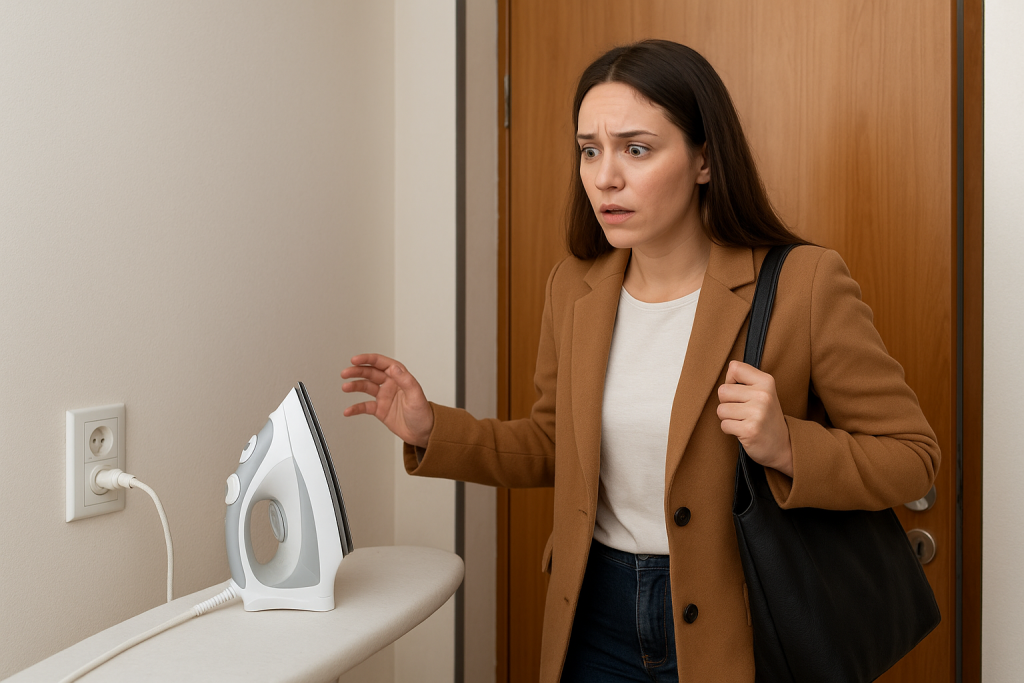
The hardest part is when I’ve already left home. I’m on the bus or walking to work and suddenly my mind screams: “What if you left the gas on? What if the house burns down?” I’ve even gotten off the bus and walked all the way back just to see everything was perfectly fine.
My family has started making jokes about it. My mom says I’m “acting like an old woman.” My dad says I’m becoming paranoid. A close friend laughed and said that if I keep this up, one day I won’t be able to leave the house at all. I get where they’re coming from, but it hurts, because for me it’s not a choice. It feels like the only way to calm myself down.
Once I even asked them, half-joking but half-serious: “Am I crazy?” My mom replied coldly: “You said it, not me.” That stung.
I don’t know if this is just a silly phase, a bad habit that will pass, or if it’s something more serious. I feel caught in a circle I can’t break: fear of making a mistake, and shame for being judged by everyone else.
AITA for making the people around me put up with my obsessive checking? Or am I really “crazy”?
What OP is experiencing closely resembles the classic mechanism of obsessive-compulsive disorder. It’s not “crazy” in the popular sense, but rather a form of anxiety that expresses itself through repetitive thoughts and compulsive checking. Her mind works like a faulty alarm system: even when reality shows everything is fine, her brain refuses to believe it and pushes her to regain control, again and again.
These behaviors don’t exist because someone is weak or irrational, but because underneath them lies a deep fear of responsibility and of consequences. OP isn’t just checking the gas or the door — she is, symbolically, checking the safety of her entire life. It’s her anxiety’s way of trying to create peace of mind, but the peace is always temporary, always followed by new doubts.
Her family’s reactions, mocking her or labeling her as paranoid, only add to the shame and isolation. Instead of understanding, OP receives judgment, which drives her deeper into the vicious cycle. The real issue isn’t her character, but the way anxiety and obsessive thoughts have hijacked her routines.
The truth is, no, she’s not crazy. These are recognizable, treatable symptoms, which respond well to therapy and sometimes medication. Rather than seeing herself as broken, OP could understand that what she’s facing is a common disorder that doesn’t define her. In fact, the very fact that she questions herself and notices what’s happening shows she has the self-awareness and strength to seek solutions.
In the end, what looks like a quirk to others is actually her mind’s desperate cry: “I need safety.” And the answer isn’t ridicule, but support and the right kind of help.