
I was at IKEA on a completely ordinary afternoon.
The kids were tired. I was tired. It was one of those days when the to-do list seems longer than the day itself.
And, as usually happens when you reach the end of the IKEA maze, the inevitable moment appeared: the food court.
The famous IKEA hot dog.
Cheap. Quick. Warm. Simple.
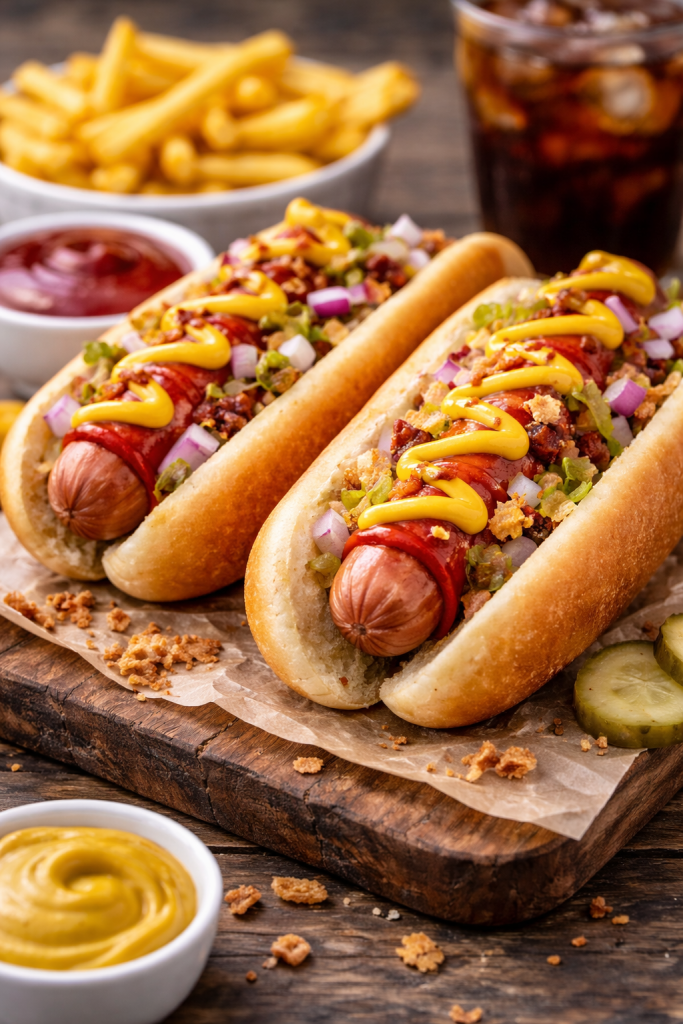
So I bought a few.
It wasn’t a memorable moment. It was the kind of decision you make in ten seconds: the kids are hungry, you’re out of energy, and the food is right there.
But at the register, the cashier muttered something.
Not loudly. Just loud enough for me to hear.
“You’d be better off buying some meat and cooking something for them at home.”
It wasn’t an argument.
It wasn’t even a direct criticism.
Just that quiet, passing judgment you sometimes feel hanging in the space between two generations.
I walked away holding the hot dogs and carrying a question in my head:
How often do people actually eat fast food?
Because if you scroll through the internet or TikTok, you’d think there are only two types of families:
- the ones whose children have never tasted fast food
- and the ones eating it four times a week
Reality, of course, is far more complicated.
Fast Food: Food, Guilt, and Lack of Time
In an online discussion with hundreds of comments about fast food, people were surprisingly honest.
One parent wrote:
“We have three kids and both of us work full time. Lately we’ve been getting fast food or takeout four or five times a week. I know it’s not ideal, but by the time we get home after 5:30 p.m., I just don’t have the energy to cook.”
Another responded:
“For us it’s pizza every two weeks and fast food once or twice a month. We have six kids—it’s too expensive to eat out often.”
Another parent said something many people probably recognize:
“Sometimes I plan everything perfectly. Grocery lists, weekly menus. And then life happens. The kids’ schedules change, we’re late leaving work, and suddenly we’re back in the drive-through.”
And that’s probably the truth we don’t say out loud very often:
Fast food is less about food and more about logistics.
It’s rarely an ideological choice.
It’s a moment-of-survival choice.
How Often Do People Eat Fast Food?
The answers vary more than you might expect.
Some say:
- “Once a week, like a small Friday tradition.”
- “Twice a month.”
- “Only on road trips or vacations.”
Others are more blunt:
- “Two or three times a week.”
- “Sometimes every day during a really busy stretch.”
One father put it in very practical terms:
“There are 21 meals in a week. If three of them are fast food, that doesn’t sound so terrible.”
Another wrote:
“Fast food is a comfort choice, not a necessity. But when you’re exhausted, comfort wins.”
And that might be the key.
Fast food is what we eat when we no longer have the energy to make decisions.
The Modern Paradox: Fast Food Isn’t Even Cheap Anymore
Many people said something interesting:
the reason they stopped eating fast food wasn’t health—it was price.
One comment read:
“I used to go to McDonald’s because it was cheap. Now that a meal is $10–$12, I’d rather go to a regular restaurant.”
Another person wrote:
“For the same price I can get grilled chicken, rice, and salad somewhere else.”
Someone else summarized it perfectly:
“Fast food used to be attractive because it was cheap. Now it isn’t.”
And that really changes the equation.
Fast food used to be:
- fast
- cheap
- predictable
Now it’s mostly just fast.
At What Age Do Kids Start Eating Fast Food?
This is where parents split into almost philosophical camps.
Some say:
“My kids have never had fast food.”
Others say:
“Once a week. It’s not a big deal.”
Some families turn it into a tradition:
“Every Friday night we grab fast food. The kids love it, and we get a night without cooking.”
Others see it as an emergency solution:
“When we have sports practice and get home late.”
And some parents say something very honest:
“Sometimes I’m choosing between my mental health and a perfectly cooked meal.”
And Then There’s the Guilt
Almost every parent who admits to eating fast food regularly adds a disclaimer:
- “I know it’s not ideal.”
- “We’re trying to cut back.”
- “Only during busy weeks.”
Food guilt has quietly become part of modern parenting.
But there are calmer voices too.
One parent wrote:
“It’s still food. It’s not completely devoid of nutrients. What matters is what you eat the rest of the time.”
Another said:
“If you forbid it completely, it just becomes something magical and forbidden.”
And somewhere in that middle ground is probably where most families live.
The Real Problem Isn’t One Fast Food Meal
The problem is when it becomes a daily routine.
One commenter put it simply:
“Occasionally it’s a treat. A diet based on it is the problem.”
There are legitimate concerns, of course.
Fast food is usually:
- high in salt
- high in fat
- calorie dense
- low in fiber
And the combination of salt, sugar, and fat is extremely rewarding for the brain.
One user wrote:
“It’s engineered to be irresistible. The less you eat it, the less you crave it.”
But There’s Something We Often Forget
Fast food isn’t always about nutrition.
Sometimes it’s about:
- a night without dishes
- a break after a long day
- a small family ritual
- a stop on a long road trip
One father shared a story about going to McDonald’s every Friday with his dad after school when he was a kid.
“I don’t remember the nuggets,” he wrote.
“I remember the time together.”
Back to the IKEA Hot Dog
I thought about that moment for a long time.
The cashier.
The hot dogs wrapped in napkins.
That quiet feeling that maybe I had done something wrong.
Modern parenting comes with an endless list of “right” choices:
- organic food
- no sugar
- limited screen time
- no fast food
But real life is full of compromises.
Some nights you cook vegetable soup.
Some nights you pull into the drive-through.
And most families are simply navigating somewhere between those two worlds.
Maybe the Real Question Isn’t “Do We Eat Fast Food?”
Maybe the real question is:
What kind of relationship do we have with food the rest of the time?
Because one fast food meal doesn’t define a family.
Just like an IKEA hot dog doesn’t define what kind of parent you are.