
Diabetes is one of the most common health conditions worldwide, yet it is also one of the most misunderstood. Many people believe it happens simply because of sugar consumption or poor diet. In reality, the causes are far more complex.
Diabetes is not a single disease, but a group of conditions that share one key feature: elevated levels of glucose (sugar) in the blood.
To understand why it develops, we first need to understand how the body normally works.
How the body is supposed to work
When you eat, carbohydrates are broken down into glucose, which enters the bloodstream and becomes the body’s main source of energy.
To allow this glucose to enter the cells, the body relies on a hormone called insulin, produced by the pancreas. Insulin acts like a key, helping glucose move from the bloodstream into the cells where it can be used for energy.
When this system works properly, blood sugar levels remain stable.
When it doesn’t, diabetes develops.
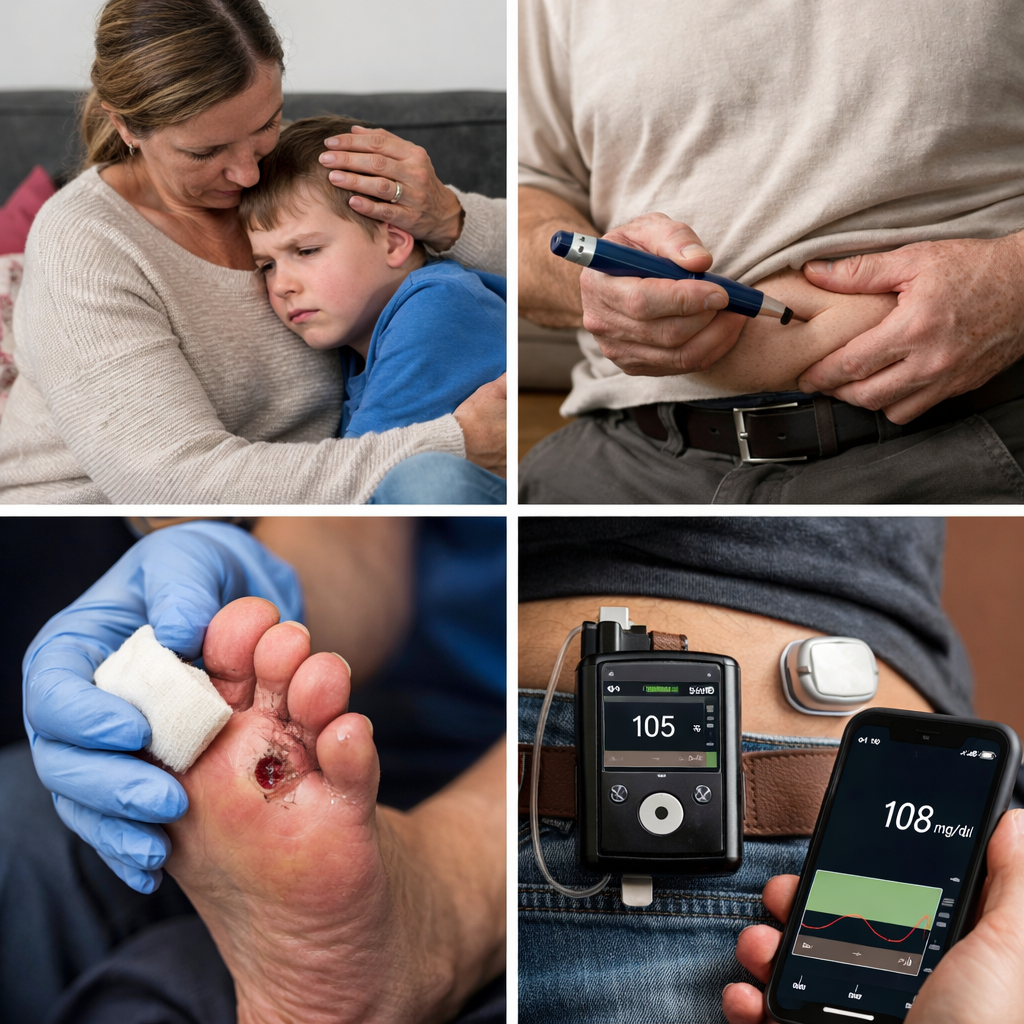
What happens in the body when diabetes develops
In diabetes, either the body does not produce enough insulin, or it cannot use it effectively.
As a result, glucose remains in the bloodstream instead of entering the cells.
Over time, high blood sugar levels can affect blood vessels, nerves, and organs throughout the body.
This is why diabetes is not just about “high sugar,” but a condition that can impact overall health if not properly managed.
The main types of diabetes
There are several forms, but the most important ones are:
Type 1 diabetes
An autoimmune condition where the immune system attacks the insulin-producing cells in the pancreas.
- often develops in children and young people
- cannot be prevented
- requires lifelong insulin
Type 2 diabetes
The most common form.
The body still produces insulin, but the cells become less responsive to it (insulin resistance).
- more common in adults, but increasingly seen in younger people
- influenced by lifestyle and genetics
- can often be prevented or delayed
Gestational diabetes
Occurs during pregnancy and usually resolves after birth, but increases the risk of developing type 2 diabetes later.
Can children be born with diabetes? Can it happen at any age?
This is one of the most common questions — and an important one.
In most cases, children are not born with diabetes.
However, there is a rare condition called neonatal diabetes, which appears in the first months of life and is caused by genetic mutations. This form is uncommon and different from the typical types of diabetes.
More commonly, diabetes can develop during childhood.
Type 1 diabetes frequently appears in children and adolescents and can develop at almost any age. It is not caused by sugar intake, but by an autoimmune process in which the body attacks the cells that produce insulin.
It often develops relatively quickly, and early signs may include excessive thirst, frequent urination, fatigue, and unexplained weight loss.
In recent years, doctors have also observed a growing number of cases of type 2 diabetes in children and teenagers, often linked to reduced physical activity, unbalanced diets, and genetic predisposition.
The key takeaway is clear:
diabetes can develop at any age — from rare cases in newborns to children, adults, and even during pregnancy.
Is diabetes reversible?
The answer depends on the type:
- Type 1 – not reversible
- Type 2 – in some cases, it can go into remission with sustained lifestyle changes
- Gestational – usually resolves after pregnancy
It’s important to understand that remission does not mean a complete cure, but rather very good control.
Who is at higher risk
Risk increases with:
- age
- excess body weight
- physical inactivity
- family history
- unbalanced diet
- chronic stress
These risk factors are now increasingly seen in younger populations as well.
How diabetes is managed today
Modern treatment allows many people with diabetes to live full and active lives.
Management typically includes:
- balanced nutrition
- regular physical activity
- blood glucose monitoring
- medication when needed
Modern technology: insulin pumps and glucose sensors
Medical technology has advanced significantly:
- insulin pumps that deliver precise doses
- continuous glucose monitoring systems (CGM)
- integrated systems sometimes referred to as an “artificial pancreas”
These tools help maintain more stable glucose levels and reduce risks.
What happens in the body if diabetes is not well controlled — real risks, not myths
Diabetes does not automatically lead to complications, but when blood sugar remains elevated over time, it can gradually affect the body.
Blood vessels and nerves are particularly vulnerable.
Circulation may become less efficient, and sensitivity — especially in the feet — can decrease.
Is it true that a small wound can become serious?
This is a topic often surrounded by fear, but there is some truth behind it.
Not every wound is dangerous.
However, problems can occur when several factors are present at the same time:
- reduced sensation (the injury may go unnoticed)
- poor circulation
- slower healing
- increased risk of infection
In these conditions, even a small wound can become more serious if left untreated.
This is what healthcare professionals refer to as diabetic foot complications.
In severe and untreated cases, complications can progress significantly. However, it is essential to understand that most of these situations are preventable with proper care and monitoring.
Other possible long-term complications
If diabetes is not well managed, it can affect:
- the eyes (vision)
- the kidneys
- the nerves
- the heart and blood vessels
These complications are not inevitable — they are strongly influenced by how well the condition is managed.
What makes the biggest difference in real life
Simple, consistent habits can have a major impact:
- regular blood sugar monitoring
- routine medical check-ups
- early attention to any wounds or changes
- a balanced lifestyle
One important thing to remember
Diabetes does not have a single cause and is not the result of a single choice.
It can develop at any age.
It can have different causes.
And it can evolve differently from one person to another.
In many cases, it can be prevented or delayed.
In others, it can be managed very effectively.
But in all situations, understanding it correctly makes a real difference.
Because diabetes, when ignored, can lead to complications.
But when managed properly, it does not have to define a person’s life.