
From a young age, we’re taught that we need oxygen to survive. We hear that without oxygen, life isn’t possible, and that every breath we take keeps us alive. But there’s an important detail that often gets overlooked: we don’t actually breathe pure oxygen.
Every breath you take is a mixture of gases, carefully balanced in a way your body depends on. Oxygen is only part of that mixture, and the rest is not there by accident. It plays a crucial role in keeping your body functioning safely.
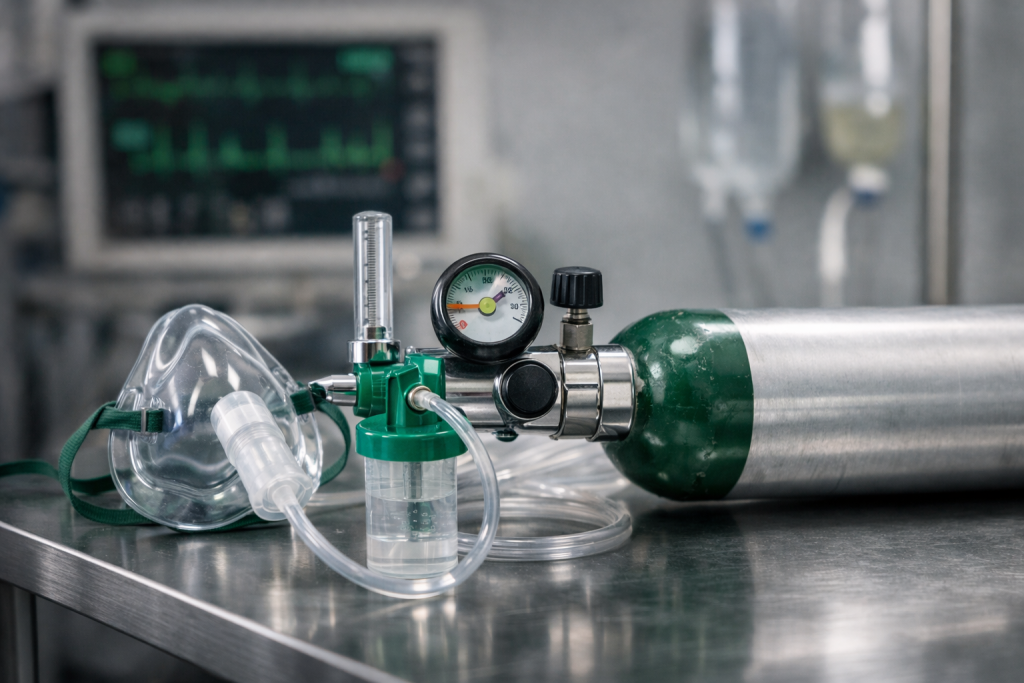
The air we breathe contains about 21% oxygen and roughly 78% nitrogen, along with small amounts of other gases like argon and carbon dioxide. Even though oxygen is essential, your body is designed to work best within this exact balance.
So a natural question comes up: if oxygen keeps us alive, wouldn’t breathing pure oxygen be even better?
How Your Body Uses Oxygen
When you inhale, air travels into your lungs, where oxygen passes through tiny air sacs called alveoli and enters your bloodstream. There, it binds to hemoglobin and is carried to every cell in your body.
Your cells use oxygen to produce energy through a process called cellular respiration. This is what allows your organs to function, your muscles to move, and your brain to stay active.
But this system depends not just on the presence of oxygen, but on having the right amount.
What Happens Short-Term If You Breathe Pure Oxygen
For short periods of time, breathing pure oxygen is not only safe but often beneficial. In medical settings, oxygen therapy is commonly used to help people with breathing difficulties or low oxygen levels in their blood.
In these cases, increasing oxygen concentration helps the body function more efficiently when the lungs are under stress.
So the idea that oxygen is immediately dangerous isn’t accurate. The real issue appears with prolonged exposure.
When Oxygen Becomes Too Much
Oxygen is a highly reactive molecule. Under normal conditions, your body has protective systems that keep its effects under control.
But when oxygen levels become too high for too long, these systems can become overwhelmed.
This leads to the formation of reactive oxygen species, often called free radicals. These unstable molecules can damage important structures in the body, including cell membranes, proteins, and even DNA.
This process is known as oxidative stress and is well documented in medical research.
Effects on the Lungs
The lungs are the first to be affected by prolonged exposure to pure oxygen.
Lung tissue is delicate, and excessive oxygen can cause irritation and inflammation. Over time, this may reduce the efficiency of gas exchange in the alveoli.
Paradoxically, even though more oxygen is available, the lungs may become less effective at delivering it to the body.
In more severe cases, prolonged exposure can lead to lung injury and breathing difficulties.
Effects on the Brain and Nervous System
In certain conditions, especially at higher pressures such as in diving or hyperbaric environments, excessive oxygen can also affect the nervous system.
Symptoms may include dizziness, visual disturbances, confusion, and in rare but serious cases, seizures.
These effects are well known in hyperbaric medicine and are the reason oxygen levels are carefully controlled in these environments.
The Hidden Role of Nitrogen
Nitrogen doesn’t directly fuel your body, but it plays an essential supporting role.
It helps dilute oxygen to safe levels and keeps the chemical balance stable. Without nitrogen, oxygen concentration would be too high, increasing the risk of harmful reactions in the body.
Nitrogen also contributes to maintaining proper pressure and structure within the lungs.
In other words, it’s not an “inactive” gas—it’s part of a finely tuned system.
Why We Don’t Live on Pure Oxygen
It may seem logical that more oxygen would be better, but the human body is adapted to Earth’s atmosphere as it is.
Going beyond this natural balance doesn’t improve function—it disrupts it.
Oxygen is essential for life, but in excess, it can become harmful.
The Bottom Line
We don’t breathe pure oxygen, and for good reason.
Life depends not just on oxygen, but on balance. The air around us is the result of a stable system that our bodies are perfectly adapted to.
Sometimes, what seems cleaner or “more pure” isn’t necessarily healthier.
When it comes to oxygen, it’s not about having more—it’s about having just enough.