
I’m 18, still in school, and I live with my parents. That’s not unusual. At this age, most people still do. College is just around the corner, and for now, home is still home.
My parents had me young, around 20. Now they’re in their late 30s, and one day they told me something I wasn’t expecting: they were having another baby.
It didn’t shock me. I didn’t get upset. I figured it was their life, their decision. If that’s what they wanted, then okay.
The baby was never the problem.
At first, it was just news. Doctor visits, preparations, conversations about names and cribs. Nothing in my life really changed.
Then the baby was born.
For a while, even then, things felt… normal. There was a baby in the house, sure, but it didn’t feel like it had anything to do with me.
My mom went back to work sooner than I expected. At first from home. She had meetings in the evenings because she worked with people in a different time zone. My dad worked long hours and wasn’t around much during the day.
At the beginning, it felt temporary. Just a phase.
Then things slowly started to shift.
“Can you just watch him for a bit?”
“You’re home anyway.”
“It’s your brother, not a stranger.”
At first, it didn’t seem like a big deal. Staying in one evening. Helping out for an hour. Canceling plans “just this once.” Nothing that felt serious enough to push back against.
But it didn’t stay small.
I started turning down plans more often. Not because I wanted to, but because it just didn’t work anymore. I adjusted my schedule. I came home right after classes. Not because anyone forced me to, but because I already knew they’d need me.
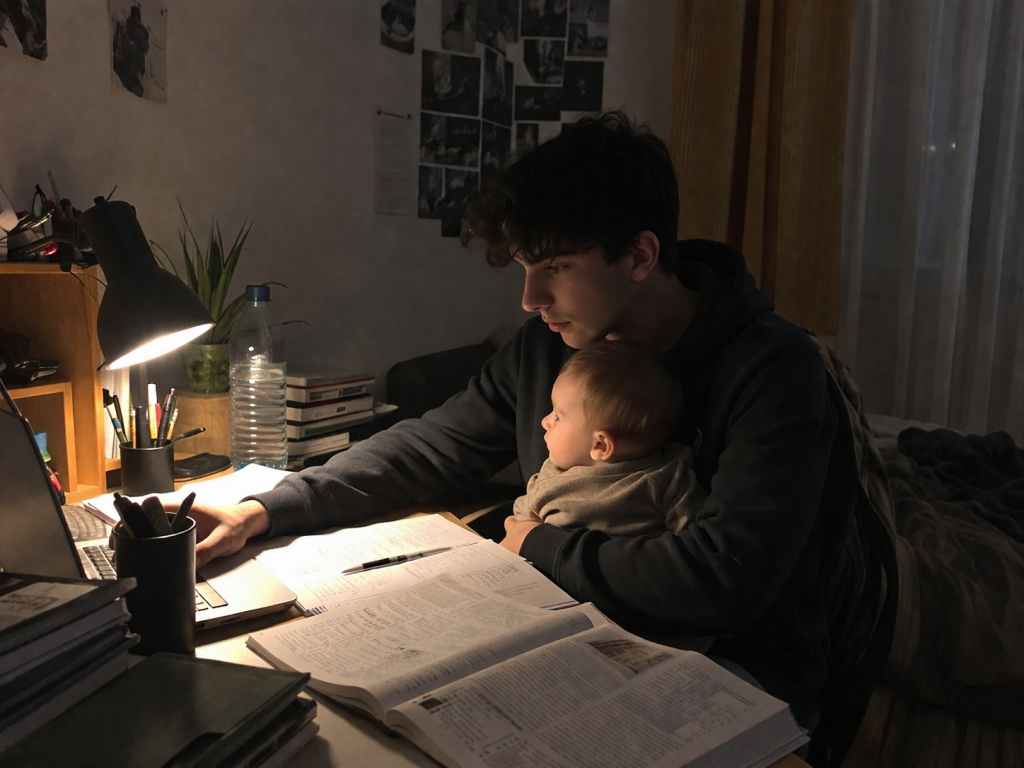
Without any real conversation, without anyone actually asking me, my life started to revolve around a child that isn’t mine.
When “just helping out” turns into something permanent
On the surface, it all sounds reasonable. You help your family. That’s what everyone says.
But there’s a difference between helping and becoming the default solution.
No one ever said, “You’re responsible for this.”
But no one asked me if I could be there, either.
It was just… expected.
And that’s the part that hits the hardest. It’s not a few hours here and there. It’s the feeling that your time, your energy, your life are always available… just because you’re there.
“I didn’t leave all at once. I just stopped being around.”
There wasn’t a big fight. I didn’t pack a bag and slam the door.
I just started disappearing, little by little.
Staying longer at school.
Saying I had work to do.
Spending more nights at a friend’s place.
Sometimes staying with my aunt, just to have some quiet.
Officially, I needed space to focus.
In reality, I was trying to get my life back.
When a child quietly becomes a parent
There’s actually a name for this: parentification.
It doesn’t look extreme from the outside. That’s what makes it easy to miss.
It’s when a child—yes, even at 18—starts taking on responsibilities that aren’t really theirs. Not because they want to, but because they’re the most convenient option.
And it almost always comes with guilt.
“After everything we’ve done for you…”
“So this is how you help your family?”
“It’s your brother.”
There’s no real agreement. No real conversation. Just pressure, and the idea that this is what’s normal.
Why this feels so familiar
Because it doesn’t look like abuse.
It doesn’t look dramatic. It doesn’t look wrong at first glance.
It just looks like family.
But there’s a line between helping and slowly putting your own life on hold… and it’s easier to cross than most people realize.
Sometimes, you don’t even notice when it happens. You just wake up one day and realize that the years you were supposed to build your own life… were spent adjusting to someone else’s.
And the real question isn’t whether you should help your family.
The question is: when does “helping” turn into putting your life on pause for choices that weren’t yours?