
There’s a moment most of us recognize without really thinking about it. You’re in the kitchen, something’s almost ready, and you tell yourself it could use just a little more time. Another minute. Maybe two. The bread deepens in color, the fries get crispier, and that rich, toasty smell fills the room.
It feels like you’re improving the food.
But sometimes, that small extra step is exactly where the chemistry shifts.
Acrylamide isn’t something you add, and it’s not something you’ll see on a label. It forms on its own, quietly, when certain everyday foods are cooked at high temperatures. We’re not talking about unusual dishes, but staples: potatoes, bread, cereals, baked goods.
The reaction that makes food delicious… and where it goes too far
What makes food taste and look “right” when cooked is largely due to the Maillard reaction—a natural process between sugars and amino acids that creates those golden colors and complex flavors we associate with well-prepared food.
But that same reaction has a tipping point.
When temperatures climb above roughly 120°C (around 250°F) and cooking continues longer than needed, compounds like acrylamide can begin to form, especially from interactions involving an amino acid called asparagine.
So the line between perfectly golden and slightly overdone isn’t just about taste. It’s also a chemical threshold.
Where it shows up more often than you’d expect
Acrylamide tends to appear in foods many people eat regularly, often without realizing it.
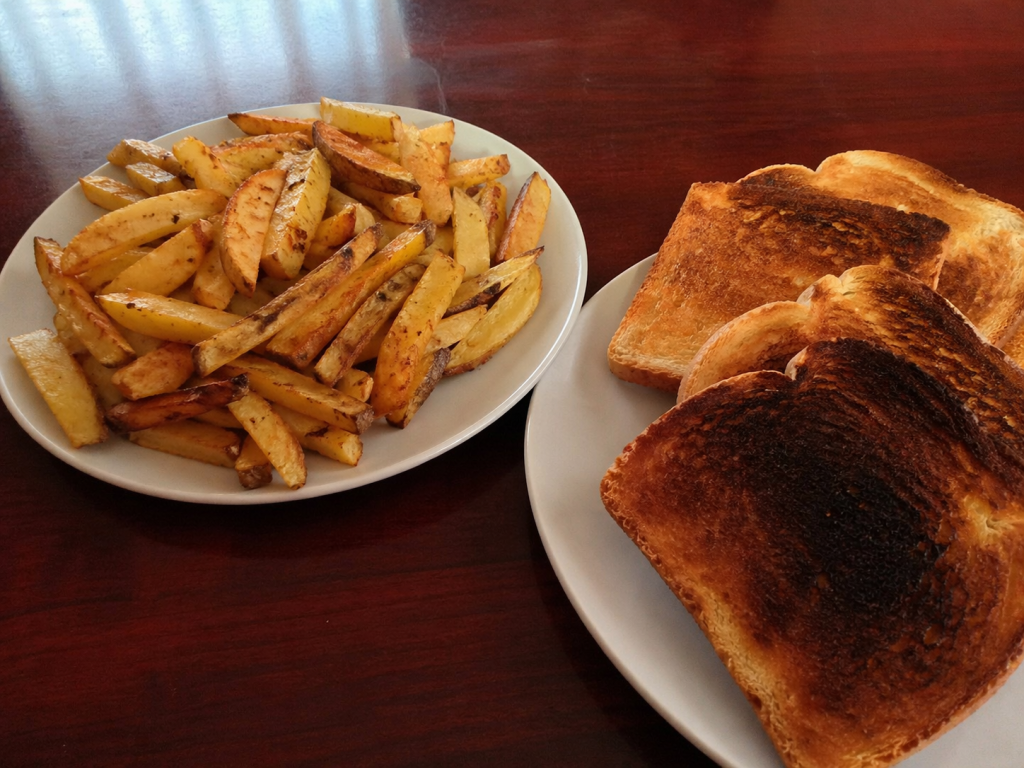
Fried potatoes and chips are among the most well-known examples. Toast that’s gone a bit too far, dark edges on baked goods, or very crisp biscuits fall into the same pattern. Even coffee contains acrylamide, formed during the roasting of the beans.
On the other hand, cooking methods like boiling or steaming don’t create the same conditions, since temperatures stay lower.
What research actually tells us
Interest in acrylamide grew significantly after 2002, when Swedish researchers first reported measurable levels in cooked foods. That discovery shifted how scientists and health authorities approached the topic.
Studies in animals have linked high exposure to increased cancer risk and effects on the nervous system. Because of this, organizations such as the World Health Organization and the European Food Safety Authority classify acrylamide as a potential carcinogen and recommend reducing exposure where possible.
In humans, the picture is more complex. Research hasn’t established a clear, direct link between typical dietary intake and cancer, but the general consensus remains cautious: even without definitive proof, limiting exposure is considered a sensible approach.
Small details that can quietly influence the outcome
Some of the factors that affect acrylamide formation aren’t immediately obvious. For instance, storing potatoes in the fridge can increase their sugar content, which in turn may lead to higher acrylamide levels when they’re cooked at high heat.
The type of food, how it’s processed, and even slight differences in cooking time can all play a role.
These are the kinds of details most people don’t think about—but over time, they add up.
What you can do without changing your diet completely
This isn’t about strict rules or cutting out familiar foods. You don’t have to give up fries or toast.
It’s more about subtle adjustments. Letting foods reach a light golden color rather than a deep brown. Avoiding that edge of “almost burnt.” Mixing in gentler cooking methods when you can.
And perhaps most importantly, noticing that moment when you think, “just a bit longer.”
The space between habit and choice
Acrylamide isn’t an immediate danger that changes everything overnight. It’s one of those quiet, cumulative factors—easy to overlook unless you start paying attention.
It doesn’t make food inherently bad, but it’s not something to ignore completely either. It sits in that middle ground where how you cook matters just as much as what you cook.
And sometimes, the difference between an everyday habit and a slightly better choice comes down to something as simple as when you decide to take the tray out of the oven.