
The idea sounds almost like folklore, but it’s rooted in a very real agricultural practice known as “forcing.” This method has been used for generations and is especially associated with Yorkshire in the United Kingdom, where growers perfected a system that turns rhubarb into a more delicate and sought-after product.
Under normal conditions, rhubarb grows outdoors, storing energy in its thick underground roots. After a period of cold weather, which naturally triggers dormancy, the roots are moved into dark, temperature-controlled sheds. In the absence of light, the plant can no longer rely on photosynthesis and instead begins to draw rapidly from its stored energy reserves. This results in faster growth and produces stalks that are noticeably more tender, less fibrous, and milder in flavor.
The claim that rhubarb can be “heard” growing comes from people who have worked in these quiet, enclosed spaces. In complete silence, some report faint sounds—subtle creaks or tiny pops. From a biological perspective, this isn’t entirely far-fetched. As plant cells absorb water and expand quickly, internal pressure builds within the tissues, which can create microscopic structural shifts. Still, this isn’t something most people will hear easily, and it’s far from a consistent or dramatic sound. It sits somewhere between science and sensory perception—real in theory, but rare in experience.
Is rhubarb toxic, or is it safe to eat?
Rhubarb often comes up in discussions about potentially toxic plants, but the reality is more specific than alarming. The edible part is the stalk, which has been used safely in cooking for centuries. The leaves, however, are a different story. They contain high levels of oxalic acid, a naturally occurring compound that, in large quantities, can interfere with mineral absorption and place stress on the kidneys.
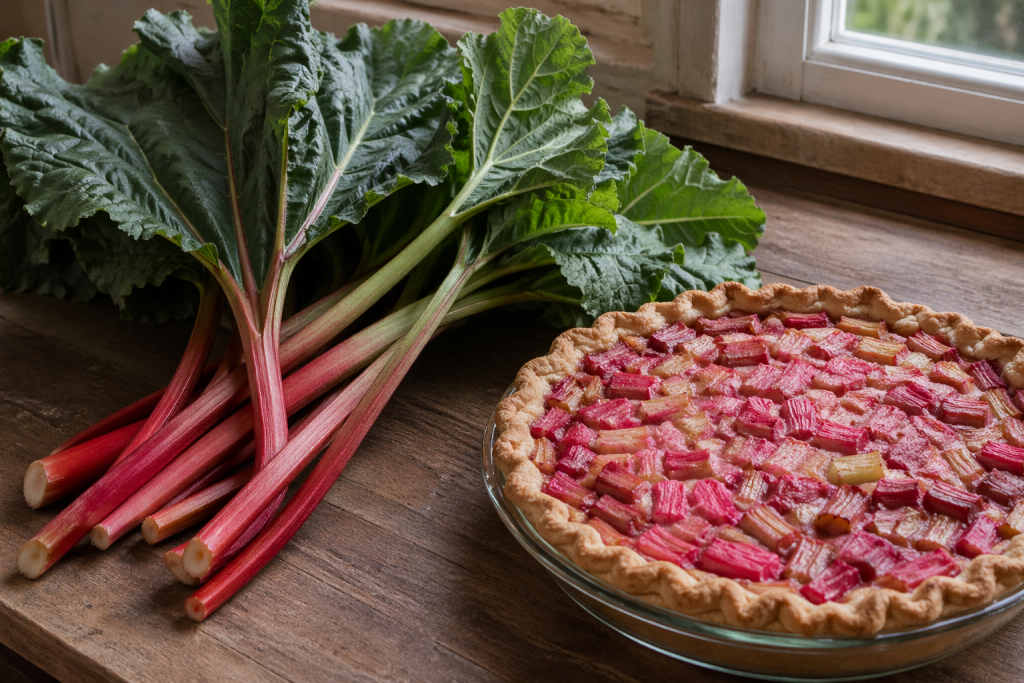
Consuming rhubarb leaves can lead to symptoms such as nausea, irritation of the digestive tract, and in extreme cases, more serious complications. While toxicology data suggests that a significant amount would need to be consumed to cause severe harm in a healthy adult, the guidance remains clear and consistent: the leaves are not considered safe for consumption and should be avoided entirely.
The stalks do contain oxalates as well, but at much lower levels that are generally regarded as safe within a normal diet. Cooking does not completely eliminate these compounds, but it can reduce their impact and improve digestibility. In most recipes, rhubarb is also combined with other ingredients, which further dilutes any potential concerns.
What science says about rhubarb’s nutritional profile
Beyond its distinctive taste, rhubarb offers a nutritional profile that is often overlooked. It is low in calories, typically around 20 to 25 per 100 grams, making it a light ingredient that can fit into a wide range of diets. It provides a meaningful amount of vitamin K, which plays a role in blood clotting and bone health, along with moderate levels of vitamin C.
Rhubarb also contains a range of plant compounds, including polyphenols and anthraquinones, which have been studied for their antioxidant properties. These compounds may help reduce oxidative stress at a cellular level, although their overall impact depends on broader dietary patterns and intake levels. The fiber content contributes to digestive health, offering mild support for gut function.
Historically, rhubarb root has been used in traditional medicine systems, particularly for its laxative effects, which are linked to anthraquinones. This use, however, is separate from the culinary use of the stalks and should not be confused with everyday consumption.
Why rhubarb works so well in desserts, especially pies and tarts
Rhubarb stands out because it isn’t naturally sweet, which makes it unusual among ingredients typically used in desserts. Its flavor is driven by acidity, primarily from organic acids like malic acid and oxalic acid. On its own, this sharpness can be overwhelming, but when balanced correctly, it becomes an advantage rather than a drawback.
This is why rhubarb is rarely eaten raw and is almost always paired with sugar or naturally sweet fruits. One of the most classic combinations is with strawberries, where the sweetness of the fruit complements rhubarb’s tangy edge. In pies and tarts, the cooking process softens the stalks, breaking down their structure and releasing juices that form a rich, slightly thickened filling.
What makes rhubarb desserts memorable is not just the flavor contrast, but also the texture. The soft, almost jam-like interior pairs with a crisp or flaky crust, creating a layered experience that feels both comforting and distinctive. This balance is a big reason why rhubarb has remained a staple in parts of European and North American cuisine, even as food trends continue to evolve.
What’s worth remembering beyond the curiosity factor
Rhubarb is one of those ingredients that sits at the intersection of science, tradition, and a bit of storytelling. The accelerated growth in darkness is a deliberate and well-understood technique, not a myth. The idea that it makes noise has a plausible explanation, even if it’s not something most people will ever experience firsthand. The toxicity of the leaves is real, but it doesn’t make the plant dangerous when used correctly.
What ultimately keeps rhubarb relevant is not just its history or its unusual growing methods, but the way it behaves in the kitchen. Its sharp, clean acidity, the way it transforms under heat, and the balance it brings when paired with sweetness make it more than just a niche ingredient. It’s a reminder that not everything in a dessert needs to be sweet to be satisfying, and that sometimes, contrast is exactly what makes something memorable.