
There’s a small moment most people recognize, even if they don’t think much about it. You reach for your phone and realize it’s not there. Maybe you left it at home, maybe the battery died at the worst possible time, or maybe there’s simply no signal. What follows isn’t quite panic, but it’s not calm either. It’s a subtle, growing discomfort that’s hard to explain. That feeling has a name: nomophobia.
The term comes from “no mobile phone phobia” and describes the unease or anxiety people experience when they lose access to their phone, their connection, or the information stored on it. It might sound like a modern exaggeration at first, but research over the past decade suggests it reflects a real psychological response, shaped by how deeply technology has become part of everyday life.
More than overuse — it’s about how we react to absence
Nomophobia is often confused with simple phone overuse, but the two aren’t the same. Overuse is about how much time you spend on your device. Nomophobia is about what happens when that access is suddenly taken away.
Studies published in journals like Computers in Human Behavior and Journal of Behavioral Addictions have found that a large proportion of people report some level of anxiety when separated from their phones. In younger groups, especially those heavily engaged with social media, this response can be quite common, although its intensity varies widely.
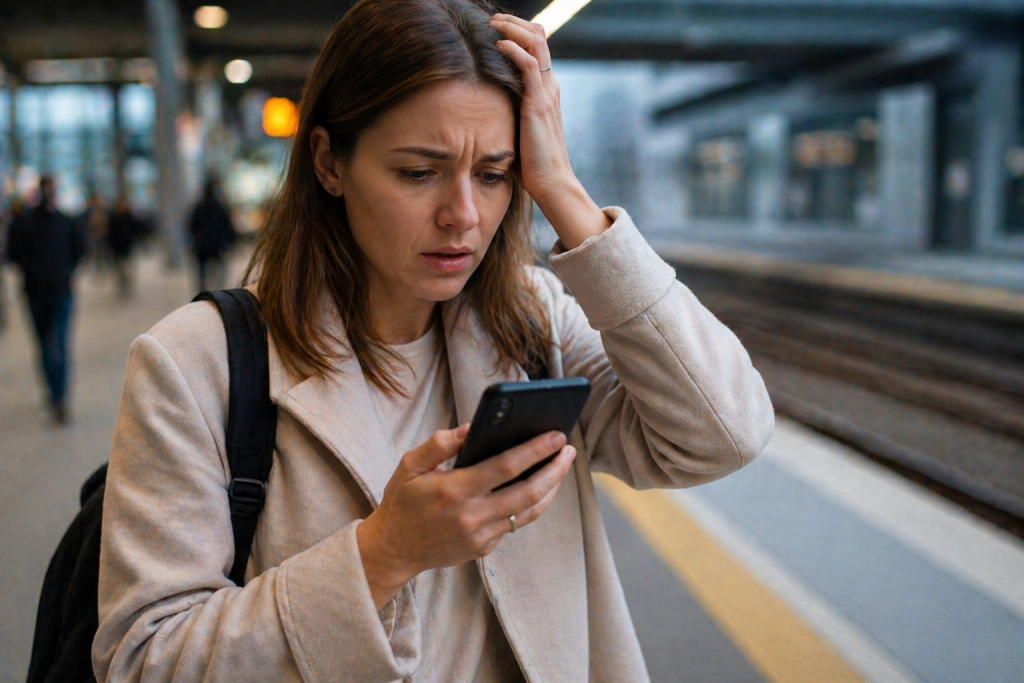
What’s happening in the brain
This reaction isn’t just in your head in a figurative sense — it has a biological basis. Areas involved in processing fear and reward, such as the amygdala, play a role, along with dopamine-driven circuits linked to anticipation and habit.
Phones constantly provide small, frequent rewards: notifications, messages, updates, social feedback. Each of these interactions can trigger a mild dopamine response, reinforcing the behavior. Over time, the brain begins to expect this steady stream of stimulation.
When that stream suddenly stops, the contrast can feel uncomfortable. The brain is essentially waiting for input that doesn’t arrive, which can lead to restlessness, irritability, or a vague sense that something is missing.
Why the feeling can be stronger than expected
Part of what makes this experience so intense is that a smartphone is no longer just a tool. It combines several basic human needs into one object.
It keeps us connected to other people, which taps into our social instincts. It gives us immediate access to information, which creates a sense of control and predictability. And it often holds personal data, memories, and daily routines, making it feel like an extension of ourselves rather than something external.
Because of this, being without a phone can feel less like losing a device and more like temporarily losing access to important parts of your life.
Who tends to feel it more
Research suggests that younger users and those who rely heavily on digital communication are more likely to experience nomophobia, but it isn’t limited to them. Anyone whose daily structure depends on their phone — for navigation, work, or staying in touch — can feel it under the right circumstances.
Context matters as well. The same person might feel fine without their phone at home, but uneasy in an unfamiliar place or during an important situation where they expect to rely on it.
Not an official disorder, but taken seriously
Nomophobia is not currently classified as a standalone condition in diagnostic manuals like DSM-5, but it is widely discussed as a form of technology-related anxiety. The fact that it doesn’t have a formal diagnostic category yet doesn’t make it insignificant. It simply reflects how new and evolving this area of study is.
In real life, the experience ranges from mild unease to more noticeable symptoms such as difficulty focusing, irritability, or avoidance of situations where phone access might be limited.
A reflection of how we live today
Perhaps the most interesting part isn’t the term itself, but what it reveals. In a relatively short time, mobile technology has become deeply embedded in how we communicate, organize our lives, and even think.
Nomophobia isn’t really about the phone. It’s about the role that constant connection now plays in our sense of stability. And those moments when the connection disappears, even briefly, can reveal just how much we’ve come to rely on it — often without noticing.