
A morning that looked like any other
On September 14, 2007, Andrew Gosden was 14 years old and living in Doncaster, South Yorkshire. By all accounts, he was a quiet, intelligent teenager who preferred staying in rather than going out, someone who followed routines and didn’t tend to act impulsively.
That morning, he left home as if he were heading to school. Nothing about his departure suggested anything unusual. But instead of continuing on his usual route, he stopped at an ATM and withdrew £200—close to the maximum he could take out at once.
He then did something that would later raise many questions. He went back home.
The detail that changed everything
After returning, Andrew placed his school uniform in the washing machine, left his blazer behind, and changed into casual clothes. He put on a black Slipknot T-shirt, jeans, and trainers, then packed a small bag with personal items, his wallet, keys, and his PSP.
He did not take a mobile phone. At the time, he didn’t have one with him.
From the outside, these actions suggest a level of intention, even if the reason behind it remains unclear.
The journey to London
Andrew made his way to Doncaster railway station and bought a one-way ticket to London. The ticket clerk reportedly mentioned that a return ticket would cost only slightly more, but Andrew declined.
That detail has often been highlighted, but it doesn’t provide a definitive explanation. He had relatives in London and could have planned to return differently, or perhaps hadn’t thought that far ahead.
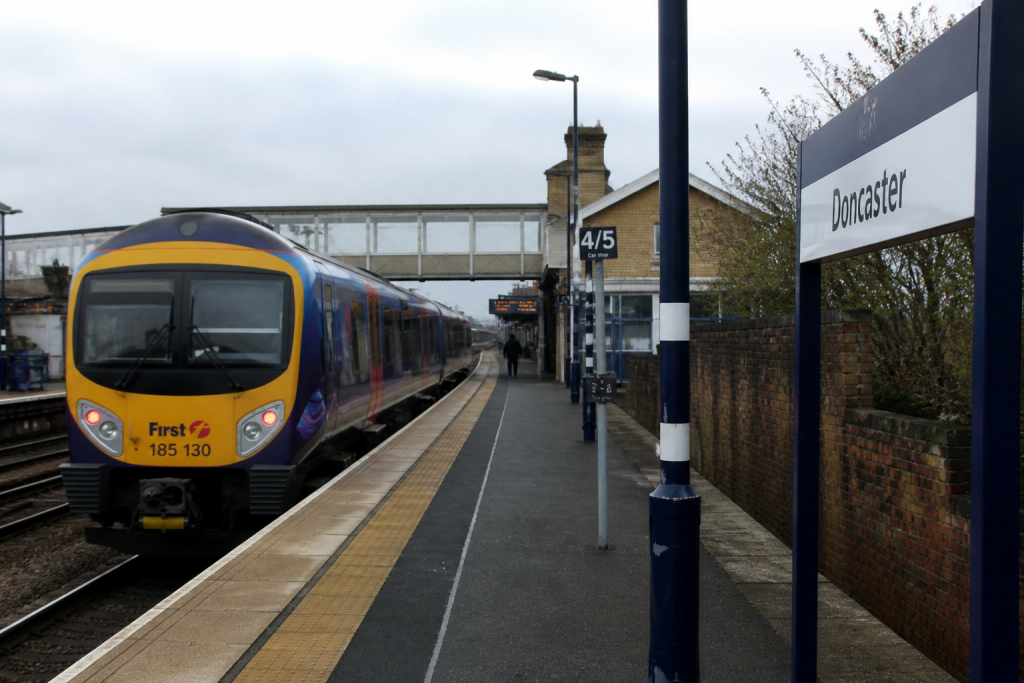
He boarded the train.
At around 11:20 a.m., he arrived at King’s Cross station in London. Minutes later, at approximately 11:25, CCTV footage captured him walking out of the station.
That is the last confirmed sighting of Andrew Gosden.
When his absence was finally noticed
Later that day, Andrew’s school attempted to notify his family that he hadn’t attended, but due to an administrative error, the message never reached them.
That delay mattered.
When evening came and the family gathered at home, they initially assumed Andrew was somewhere inside the house. It took time—and growing unease—before they realized he wasn’t there at all.
Phone calls were made. Friends were contacted. The situation became harder to dismiss.
By the time authorities were notified, the window of opportunity for immediate tracking had already narrowed.
The early investigation—and what was missed
Within a few days, police confirmed that Andrew had traveled to London. However, identifying him on CCTV footage at King’s Cross took longer than expected.
Later, concerns were raised about delays in reviewing surveillance footage more broadly. In a city like London, cameras can help reconstruct movements—but only if the footage is accessed quickly. Some potential recordings may have been overwritten before they could be analyzed.
As a result, Andrew’s confirmed trail ends at the station exit.
There is no verified record of where he went next.
The search for answers
Andrew’s family traveled to London themselves, distributing posters and checking locations he might have been interested in—museums, music venues, public spaces.
Over time, there were reported sightings, but none were confirmed.
Investigators explored multiple possibilities. One theory suggested he may have gone to attend a concert, given his interest in music. Another considered that he simply wanted a day away from routine. There was also the possibility that he encountered someone after arriving in London.
None of these scenarios have been proven.
Who Andrew was before that day
Andrew was described as academically strong, particularly in mathematics, and deeply interested in video games and music. He wasn’t known for taking risks or acting unpredictably.
He also had identifying features that were included in public appeals: he wore glasses, was deaf in one ear, and had a distinctive double ridge on his right ear.
These details have been used over the years in attempts to generate leads, alongside age-progression images.
Years later—still no clear answer
The case has remained open. It has been revisited multiple times, with renewed public appeals and investigative efforts.
In 2021, two men were arrested in connection with the case on suspicion of serious offenses, but in 2023 they were released without charges. The investigation continues.
For the family, each development has brought a mix of hope and uncertainty—moments where it feels like something might finally come into focus, followed by the return of unanswered questions.
Why this case still resonates
Andrew Gosden’s disappearance stands out because it doesn’t begin with a clear crisis. There is no known confrontation, no visible act of force, no single moment where everything changes.
Instead, there is a sequence of deliberate but unexplained decisions: returning home, changing clothes, taking money, boarding a train.
And then, after being seen in one of the busiest cities in the world—nothing.
From a broader perspective, the case also reflects a different moment in time. In 2007, constant digital tracking wasn’t the norm. Andrew didn’t have a mobile phone with him, and there were fewer ways to trace movement beyond physical evidence and surveillance.
A story that never found its ending
Today, Andrew Gosden’s case remains unresolved.
What we have is a clearly reconstructed beginning: a normal morning, a change of plan, a journey to London, a final image at King’s Cross.
After that, the story stops.
And perhaps that is what makes it so difficult to let go of—not just that he disappeared, but that he vanished after being seen so clearly, in a place where you would expect answers to exist.
Instead, there is only the moment before everything went quiet—and the question of what came next.