
Most people don’t think twice about potatoes.
They sit quietly in kitchen drawers, pantry baskets and grocery store shelves, so common and familiar that they almost become invisible. If one starts turning green or growing sprouts, many people simply cut away the strange-looking parts and continue cooking as if nothing happened.
For generations, that has been the normal reaction.
What many people never realize, however, is that the green color may be warning them about a natural chemical defense system developing inside the potato itself. A defense mechanism created by the plant to protect itself from insects, fungi, bacteria and predators.
And the part that surprises almost everyone?
The substance involved is not completely destroyed by normal cooking.
Over the years, there have been real documented cases of severe illness linked to heavily sprouted or improperly stored potatoes. These incidents are uncommon today, but the science behind them is very real and continues to fascinate researchers, food experts and curious readers alike.
Perhaps what makes the story so unsettling is the fact that potatoes are among the most consumed foods on Earth.
The Natural Toxin Most People Have Never Heard Of
At the center of this story is Solanine, a naturally occurring toxic compound belonging to a group called glycoalkaloids.
This is not an artificial pesticide or a modern chemical contaminant. Potatoes produce it themselves.
In nature, plants cannot run away from threats. Instead, many survive by creating chemical defense systems. Coffee plants produce caffeine, chili peppers create capsaicin, and potatoes develop glycoalkaloids like solanine to discourage insects and animals from eating them.
Under normal conditions, potatoes contain only small amounts of these compounds, levels considered safe for human consumption. Problems begin when the potato experiences stress.
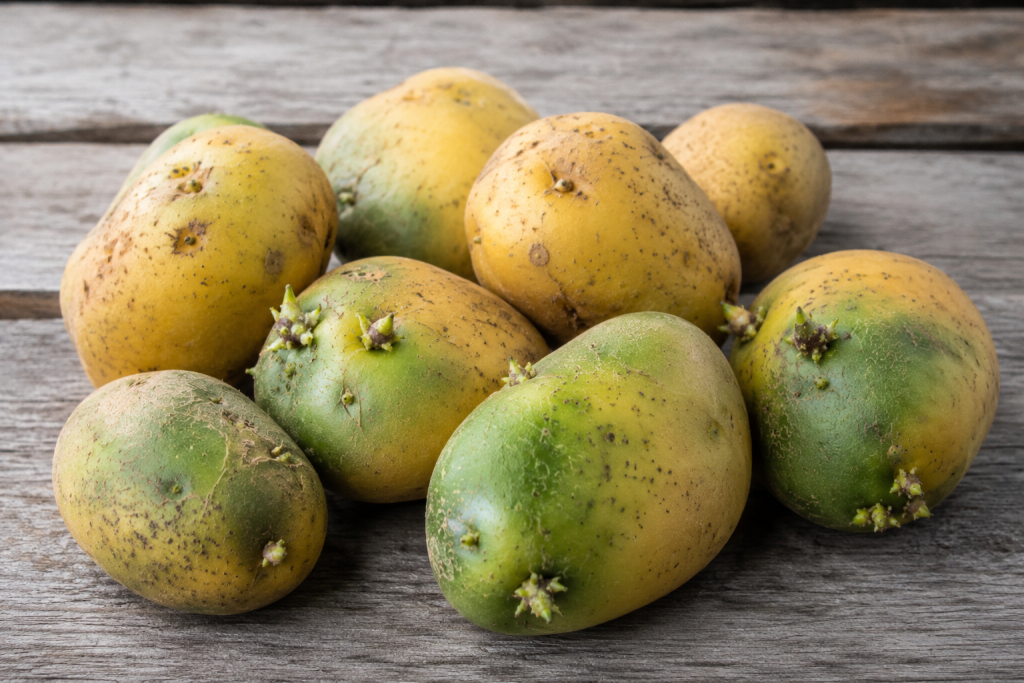
That stress can include:
- prolonged light exposure,
- warm storage conditions,
- physical damage,
- moisture,
- aging,
- or sprouting.
When this happens, glycoalkaloid levels may increase significantly.
Why Potatoes Turn Green
Many people assume the green color itself is toxic. In reality, the green pigment comes from chlorophyll, the same natural substance responsible for the color of leaves and many plants.
Chlorophyll itself is harmless.
What matters is that chlorophyll production often happens alongside increased glycoalkaloid production.
When potatoes are exposed to light for extended periods, biological changes begin inside the tuber. The potato reacts to its environment, producing more chlorophyll and often more solanine at the same time.
This is why potatoes stored:
- near windows,
- under bright kitchen lighting,
- in transparent bags,
- or in warm environments,
tend to develop green patches much faster.
Sprouting can intensify the process even further. Sprouts are not simply cosmetic signs of aging. They indicate that the potato is using its stored energy to attempt new growth, placing additional biological stress on the tuber.
Where Solanine Concentrates the Most
The highest concentrations are usually found:
- in the skin,
- just beneath the peel,
- around green areas,
- near sprouts,
- and in damaged or softened sections.
This explains why food safety specialists recommend cutting away affected areas generously instead of removing only the visibly green surface.
A bitter taste can also be an important warning sign. Elevated glycoalkaloid levels often alter the potato’s flavor, creating a sharp, unpleasant bitterness that many people notice immediately.
The Surprising Reason Cooking Does Not Fully Solve the Problem
One of the most widespread misconceptions is that boiling automatically makes everything safe.
That is true for many bacteria, but glycoalkaloids behave differently.
Solanine is relatively heat-stable at ordinary cooking temperatures. Boiling, frying or baking may reduce some of the compound, but they do not reliably eliminate it entirely when concentrations are high.
Because of this, experts generally recommend avoiding potatoes that are:
- deeply green,
- heavily sprouted,
- shriveled,
- unusually soft,
- or strongly bitter.
What Solanine Poisoning Can Actually Cause
In most situations, symptoms appear within a few hours after consumption and primarily affect the digestive system.
Reported symptoms include:
- nausea,
- vomiting,
- stomach cramps,
- diarrhea,
- headaches,
- dizziness,
- burning sensations in the mouth,
- and persistent bitterness.
More severe cases may involve neurological or respiratory complications, although these remain relatively rare and are usually associated with consuming large amounts of highly affected potatoes.
Children are considered especially vulnerable because smaller body size can make toxic doses easier to reach.
The Historical Cases That Alarmed Researchers
Historical medical reports contain several documented outbreaks connected to potatoes with elevated glycoalkaloid levels.
Some of the most well-known incidents occurred in Europe during the early twentieth century, particularly during periods of war, poverty and food shortages, when families were more likely to consume old or damaged potatoes rather than waste food.
In one widely referenced case, multiple members of a family became severely ill after eating improperly stored green potatoes. Some victims did not survive, and later investigations linked the illness to glycoalkaloid poisoning.
Cases like these helped scientists better understand potato toxins and eventually shaped modern food storage recommendations.
Today, severe poisonings are much rarer thanks to modern agricultural systems, commercial food standards and improved storage conditions. Yet the biological mechanism itself has never disappeared.
Why This Story Continues to Fascinate People
Part of the fascination comes from the contrast.
Potatoes feel ordinary, comforting and harmless. People do not expect a common kitchen ingredient to contain a built-in chemical defense system developed over millions of years of evolution.
And yet, that is exactly what makes the story memorable.
A forgotten green potato sitting quietly in a kitchen is not simply “going bad.” It is a living organism reacting to stress, changing its chemistry and attempting to protect itself from threats in the only way plants can.
Perhaps that is why so many people suddenly look at potatoes differently once they learn what is actually happening beneath the surface.