
Some stories never truly disappear. They evolve, absorb new rumors, merge with unrelated events, and eventually turn into something much larger than the original tragedy. The Dyatlov Pass incident is one of those stories. Every time it resurfaces online, the same questions appear again: why did experienced hikers flee their tent in the middle of the night without proper clothing, why were some of the injuries so severe, why was radiation detected on certain items, and why do so many people insist that “the same thing happened again” years later?
The truth is more complicated than most viral videos suggest. There was no officially confirmed series of identical incidents connected by some hidden force or classified phenomenon. What actually exists are several separate tragedies that occurred decades apart, each involving harsh wilderness conditions, extreme weather, confusion, exhaustion, and investigations that left behind enough unanswered questions for speculation to grow.
The original case was the 1959 Dyatlov Pass tragedy in the northern Ural Mountains of the former Soviet Union. The second event people commonly reference is the Khamar-Daban incident in 1993, another deadly hiking disaster in Siberia that became known online as “the second Dyatlov Pass.” A third case is often added later by internet storytellers, usually involving unrelated disappearances or mountain deaths that only share superficial similarities.
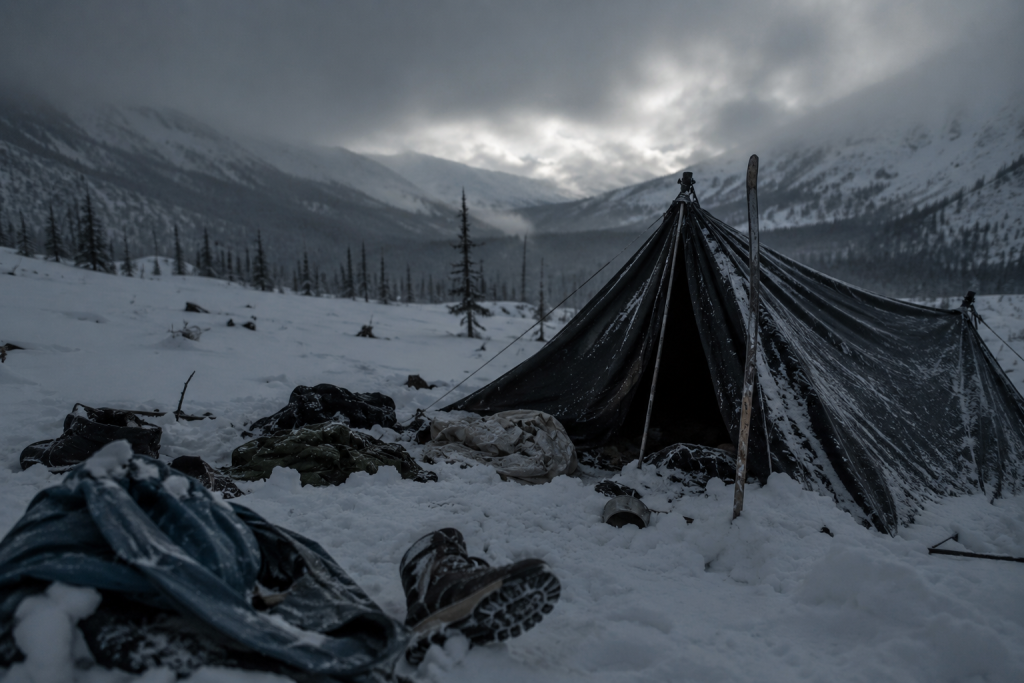
The 1959 Dyatlov Pass Tragedy
In January 1959, a group of young Soviet hikers set out on a difficult expedition across the Ural Mountains. The team was led by Igor Dyatlov, an experienced student and outdoor enthusiast. These were not casual tourists. The hikers were trained, physically capable, and familiar with harsh winter conditions. Multi-day skiing expeditions in remote terrain were considered serious endurance challenges during that era.
On February 1, the group established camp on the slope of Kholat Syakhl, a mountain whose name is often dramatically translated online as “Mountain of the Dead.” During the night, something caused all nine members of the expedition to abandon their tent. Instead of leaving normally, they cut their way out from inside the shelter and moved downhill toward a forest despite freezing temperatures and severe weather.
When rescue teams eventually located the campsite, the tent still contained boots, clothing, supplies, and personal belongings. Tracks in the snow suggested the hikers had left on foot rather than being violently thrown from the area. Some bodies were discovered near the tree line, others farther away, and several more remained buried under deep snow for weeks before recovery teams found them.
Most of the victims died from hypothermia. However, several of the bodies also showed serious internal injuries involving the chest and skull. One victim was missing her tongue and portions of soft facial tissue. Investigators also documented small traces of radioactive contamination on some clothing. Combined with the Soviet government’s vague final conclusion that the hikers died because of an “overwhelming natural force,” these details helped fuel decades of theories.
Over the years, people proposed everything from secret military weapons and classified Soviet experiments to paranormal forces, infrasound phenomena, cryptids, and extraterrestrials. The mystery became so famous partly because the original investigation felt incomplete and secretive, especially by modern standards.
Why the Avalanche Theory Remains Controversial
Many people reject the avalanche explanation because they imagine a massive wall of snow destroying the entire campsite. Dyatlov Pass did not initially appear to match that image. The slope did not seem steep enough to casual observers, the tent was still partially standing, and the area did not resemble the aftermath of a classic large-scale avalanche.
For decades, these inconsistencies kept the mystery alive. In recent years, however, researchers revisited the case using modern snow science, terrain analysis, and computer modeling. A 2021 study published in Communications Earth & Environment proposed that a compact slab avalanche or snow collapse could realistically explain the injuries and sudden evacuation. The researchers suggested that dense snow shifting onto the tent may have caused enough danger to convince the group they needed to escape immediately, even if the avalanche itself was relatively small compared to the dramatic avalanches people typically imagine.
From a scientific perspective, slab avalanches can behave differently from the enormous cinematic avalanches seen in documentaries and movies. Layers of snow build over time, and when a weak layer collapses beneath a denser slab, a sudden shift can occur. Even a limited amount of compacted snow can generate dangerous force, especially against people trapped inside a tent while lying down.
Researchers also examined the role of katabatic winds, powerful cold winds that descend mountain slopes and redistribute snow unevenly. Under severe nighttime conditions, the hikers may have feared that remaining inside the tent was more dangerous than attempting to retreat temporarily into the forest.
Once outside, however, the situation likely deteriorated rapidly. Hypothermia affects judgment, coordination, decision-making, and awareness. In darkness and brutal cold, even experienced hikers can become disoriented surprisingly quickly.
The Details That Fueled the Mystery
One reason the Dyatlov case became so legendary is that several details sound deeply unsettling when stripped of context.
The missing tongue is real, but forensic experts have long pointed out that soft tissues are among the first parts of the body affected by decomposition, water exposure, scavenging animals, and freeze-thaw cycles. The bodies recovered later had spent weeks beneath snow and near running water.
The clothing situation also sounds strange at first. Some victims wore mismatched garments or clothing belonging to other members of the group. In survival situations involving severe cold, this behavior is not unusual. Survivors may remove clothing from deceased companions in desperate attempts to preserve body heat.
Another frequently misunderstood detail is “paradoxical undressing,” a documented phenomenon associated with advanced hypothermia. As body temperature drops dangerously low, victims can experience confusion and false sensations of warmth, causing them to remove clothing despite freezing conditions.
Radiation traces became another major source of speculation. While contamination was detected on some clothing items, the levels were not consistent with the catastrophic secret-weapons theories often repeated online. Several members of the group had backgrounds connected to industries or environments where low-level contamination exposure was possible during that era.
None of these explanations erase the tragedy or fully eliminate every unanswered question. They simply place the evidence back into a realistic environmental and forensic context.
Why Soviet Secrecy Made Everything Worse
The Soviet Union’s culture of secrecy played a huge role in transforming Dyatlov Pass into a global mystery. Information was tightly controlled, investigations were not transparent, and authorities often released vague or incomplete explanations to the public.
When an investigation closes without clear answers, speculation naturally grows. That does not automatically mean officials were hiding evidence of something supernatural or impossible. Sometimes governments conceal information simply to avoid embarrassment, limit public panic, protect institutions, or maintain control over the narrative.
In the Dyatlov case, the lack of clarity created the perfect environment for myths to spread across generations.
The Khamar-Daban Incident of 1993
When people online claim that “it happened again,” they are usually referring to the Khamar-Daban incident in Siberia during the summer of 1993.
The hiking group was led by Lyudmila Korovina, an experienced outdoor instructor. Out of seven members, only one survived. The survivor later described terrifying events in which members of the group suddenly became weak, collapsed, panicked, and died one after another under severe weather conditions.
As the story spread online over the years, many details became exaggerated. Some versions describe bleeding from the eyes and ears, violent seizures, or mysterious poisoning. However, reliable public documentation is far more limited than in the Dyatlov case, and many dramatic retellings rely on translations, secondhand accounts, and internet embellishment.
The most widely accepted explanations involve extreme weather exposure, exhaustion, hypothermia, and physiological collapse under harsh mountain conditions. Cold environments place enormous stress on the body. Severe hypothermia can impair the nervous system, disrupt heart rhythm, reduce oxygen delivery, and produce bizarre or irrational behavior.
Unlike Dyatlov Pass, the Khamar-Daban tragedy did not involve a tent sliced open from inside, unexplained radiation patterns, or the same kind of physical evidence. The connection between the two cases exists mostly because both involve experienced hikers dying unexpectedly in isolated mountains under frightening circumstances.
The “Third Incident” Internet Myth
This is where online storytelling often begins to distort reality. Some people refer to the Yuba County Five case from California in 1978 as a “third Dyatlov-style incident.” Others attach entirely unrelated disappearances or mountain tragedies to the narrative simply because they involve confusion, wilderness, or strange decisions.
The Yuba County Five case involved five men who disappeared after attending a basketball game. Their car was later found abandoned on a remote mountain road far from their expected route. Four bodies were eventually discovered, while the fifth man was never located. The case remains disturbing and mysterious, but it is not a repeat of Dyatlov Pass.
Human psychology naturally searches for patterns. Once people hear multiple stories involving wilderness deaths, cold weather, missing clothing, and incomplete investigations, the brain begins connecting them into a larger narrative. That tendency becomes even stronger online, where dramatic storytelling spreads faster than nuanced explanations.
What Science Says About “Irrational” Behavior in Extreme Cold
Many conspiracy theories begin with the assumption that the victims would never have behaved the way they did unless something extraordinary occurred. But this assumption usually comes from healthy people imagining survival decisions while sitting safely indoors.
Extreme cold fundamentally changes how the human body and brain function.
Hypothermia begins with shivering and loss of coordination, but as body temperature continues dropping, confusion, slowed thinking, impaired judgment, exhaustion, and irrational behavior become increasingly severe. Decision-making deteriorates rapidly. Even experienced hikers can become disoriented, fixated on poor survival choices, or physically unable to think clearly.
Exhaustion worsens everything. Long exposure to cold, poor nutrition, dehydration, lack of sleep, and psychological stress all reduce the brain’s ability to process danger effectively. Under those conditions, a single mistake can become fatal within hours.
This is one reason mountain survival experts emphasize that wilderness tragedies do not always require a mysterious trigger. Nature alone can overwhelm highly capable people under the wrong circumstances.
Why the Mystery Still Fascinates People
The Dyatlov Pass story remains compelling because it sits in the uncomfortable space between explanation and uncertainty. Modern science has provided more realistic answers than existed decades ago, yet the case still contains emotional and psychological power.
The combination of darkness, snow, isolation, incomplete evidence, and human fear creates a narrative that feels larger than a normal accident. Internet culture amplifies that feeling by removing context and focusing only on the most disturbing details.
In reality, there is no verified evidence that three identical incidents occurred because of some hidden phenomenon. What exists are separate tragedies shaped by harsh environments, human vulnerability, incomplete investigations, and decades of retelling.
And perhaps that is what makes these stories so unsettling in the first place. They do not necessarily require monsters, secret experiments, or supernatural explanations. Sometimes extreme weather, exhaustion, panic, and the unforgiving nature of remote wilderness are enough to create mysteries that continue haunting people generations later.