
Non-alcoholic beer has become increasingly common over the last decade. Some people choose it because they are driving, others because they want the taste of beer without the effects of alcohol, while many simply see it as a lighter alternative during the week. Despite its growing popularity, one question keeps appearing in conversations about food safety and fermentation:
What actually happens if non-alcoholic beer is left in poor conditions for too long? Can it begin turning alcoholic again?
At first glance, the idea sounds strange, but it is not completely irrational. Beer is originally created through fermentation, a biological process in which yeast consumes sugars and produces alcohol and carbon dioxide. Because of that, many people assume that if a “non-alcoholic” beer is exposed to heat or stored improperly, fermentation might restart inside the bottle or can.
The reality is more complex, and the answer depends heavily on how the beverage was produced, whether live microorganisms remain inside it, and how it has been stored after packaging.
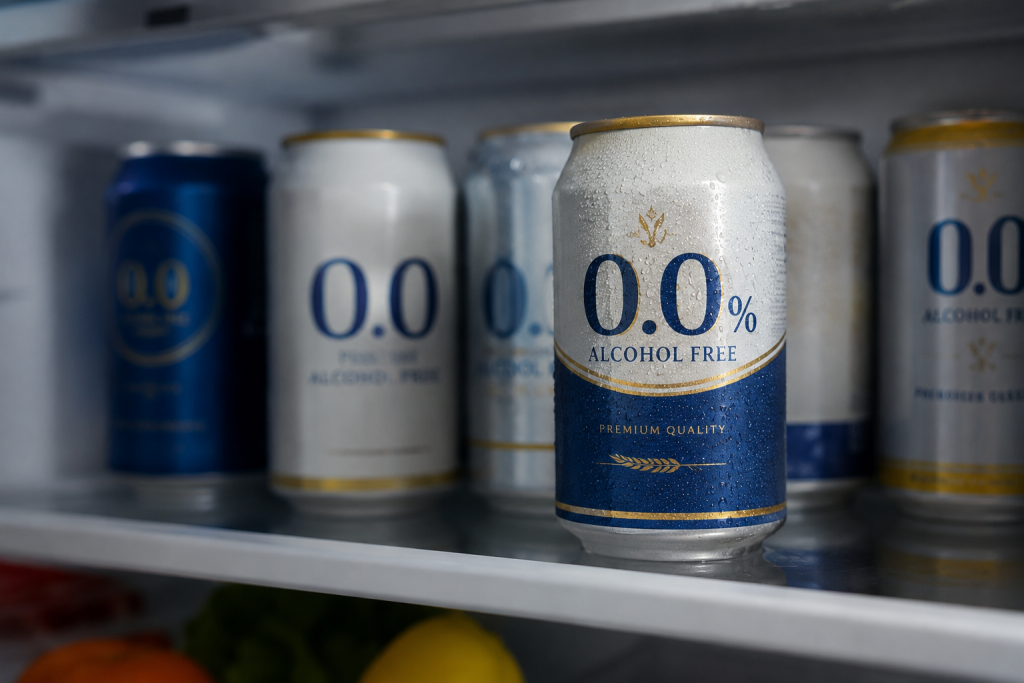
What “Non-Alcoholic Beer” Really Means
One of the most misunderstood details is that many non-alcoholic beers are not entirely alcohol-free in the absolute sense.
In many countries, beverages labeled as “non-alcoholic” may still legally contain a very small amount of alcohol, often up to 0.5% ABV. Products labeled “0.0%” are typically manufactured using additional processes intended to remove nearly all detectable alcohol.
That distinction matters because non-alcoholic beer is still made using many of the same ingredients and steps as regular beer:
- water;
- malted grains;
- hops;
- yeast;
- and controlled fermentation.
The difference is that the fermentation process is either stopped early, tightly limited, or followed by alcohol-removal technologies such as vacuum evaporation or membrane filtration.
In other words, most non-alcoholic beer still begins as a fermented product. The alcohol content is simply reduced to extremely low levels before it reaches store shelves.
How Alcohol Is Created During Fermentation
To understand whether non-alcoholic beer can develop more alcohol later, it helps to understand how fermentation works.
Yeast feeds on sugars extracted from grains and converts them into:
- ethanol (alcohol);
- carbon dioxide;
- and various flavor compounds.
This process is responsible for both the carbonation and the alcohol found in traditional beer.
For fermentation to continue after packaging, several conditions would generally need to exist at the same time:
- active yeast cells;
- remaining fermentable sugars;
- suitable temperatures;
- enough time;
- and insufficient microbial stabilization.
Commercial beverage manufacturers spend considerable effort preventing these conditions from occurring inside sealed containers.
Why Most Non-Alcoholic Beer Does Not “Turn Alcoholic”
Modern commercial non-alcoholic beer is usually:
- filtered;
- pasteurized;
- microbiologically stabilized;
- and sealed under controlled conditions.
Pasteurization is especially important because it reduces or eliminates microorganisms capable of restarting fermentation. In many cases, most of the yeast has already been removed before bottling.
Because of this, improper storage typically causes spoilage long before it causes meaningful alcohol production.
In practical terms, a neglected can of non-alcoholic beer is far more likely to taste unpleasant than to suddenly become a regular alcoholic beer.
What Heat Actually Does to the Beverage
High temperatures can damage beer in several ways.
First, heat accelerates oxidation, a chemical process that alters aroma and flavor. Beer exposed to prolonged warmth may begin tasting:
- stale;
- sour;
- metallic;
- flat;
- or oddly cardboard-like.
Second, warmth may encourage limited microbial activity if contamination occurred or if residual yeast survived processing.
Under certain circumstances, minor secondary fermentation could theoretically happen. However, in properly manufactured commercial beverages, the increase in alcohol content is usually very small. The larger issue becomes deterioration in taste, stability, and overall safety.
Situations Where Fermentation Might Continue
There are still some scenarios where additional fermentation is more possible.
This is more likely with:
- craft or unpasteurized products;
- opened containers;
- damaged packaging;
- contaminated beverages;
- or products stored for long periods in excessive heat.
In those situations, microorganisms may continue consuming leftover sugars and generate:
- additional carbon dioxide;
- acidic compounds;
- and small amounts of alcohol.
The process resembles what sometimes happens with naturally fermented juices, kombucha, or sweet beverages left unrefrigerated for too long.
Warning Signs That the Beer Has Gone Bad
Spoiled fermented beverages often show visible or sensory warning signs.
Common indicators include:
- swollen cans;
- excessive pressure when opened;
- unusually aggressive foaming;
- strong sour odors;
- yeast-like smells;
- cloudy appearance;
- or unexpected sediment buildup.
These signs do not necessarily mean the drink has become highly alcoholic, but they may indicate unwanted microbial or chemical activity inside the container.
If those changes appear, the beverage is generally better discarded.
Why Some “Alcohol-Free” Drinks Already Contain Trace Alcohol
Many consumers are surprised to learn that trace alcohol can naturally exist in products marketed as alcohol-free.
Completely removing every measurable trace of alcohol while preserving the flavor profile of beer is technologically difficult. Because of that, extremely small amounts may remain even in products considered non-alcoholic by regulatory standards.
Interestingly, trace alcohol can also be found naturally in everyday foods such as:
- ripe bananas;
- bread;
- kefir;
- fruit juices undergoing natural fermentation;
- and certain baked goods.
In most cases, the quantities are extremely low and not considered intoxicating.
Proper Storage Still Matters
Manufacturers generally recommend storing non-alcoholic beer:
- in cool conditions;
- away from direct sunlight;
- and within its recommended shelf-life period.
Light and heat accelerate flavor degradation and can affect the stability of compounds derived from hops and grains. Even when no dangerous fermentation occurs, poor storage can dramatically change the drinking experience.
That is why a can forgotten inside a hot car for several days may taste completely different from the original product.
The Bottom Line
Scientifically speaking, non-alcoholic beer can undergo limited additional fermentation under certain unusual conditions, especially if microbial stability has been compromised.
In reality, though, commercially produced non-alcoholic beer is far more likely to spoil than to transform into a significantly alcoholic beverage.
For most consumers, improper storage mainly affects freshness, flavor, and quality rather than causing substantial alcohol formation inside the container.