
Success stories usually follow a familiar path. A company grows, profits rise, recognition follows, and the people behind the business spend years building larger careers, larger networks, and often larger fortunes. That is precisely why the story of Scott-Vincent Borba captured so much attention across the United States in 2026.
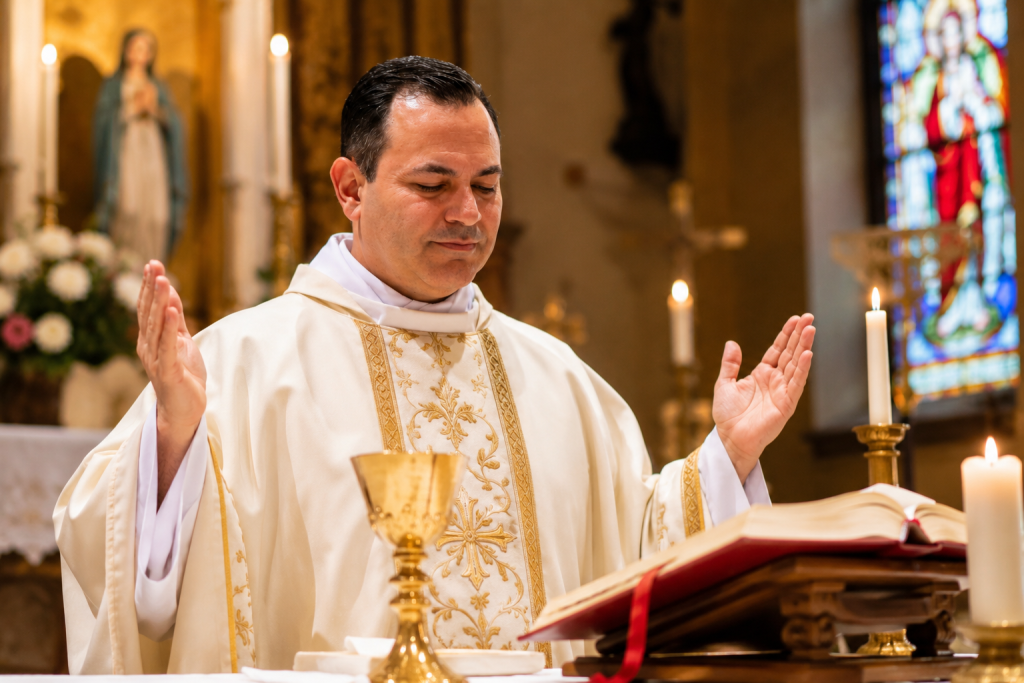
After spending decades in the business world and helping build successful brands in the beauty industry, Borba chose a direction few would have predicted. Rather than pursuing another venture or expanding his influence in the corporate world, he entered seminary formation and prepared for a life of Catholic ministry.
The contrast between those two worlds quickly turned his story into a viral headline. Yet behind the social media posts and dramatic captions lies a far more nuanced and fascinating journey—one that raises important questions about success, purpose, and what people ultimately seek from life.
From Entrepreneurship to the Beauty Industry
Scott-Vincent Borba built his reputation as an entrepreneur, brand developer, and business strategist within the highly competitive cosmetics and wellness sectors.
His name has long been associated with the early development of e.l.f. Cosmetics, a company that would eventually become one of the most recognizable beauty brands in the United States. Launched in 2004, e.l.f.—short for “Eyes, Lips, Face”—entered the market with a business model that challenged many industry assumptions at the time.
While numerous cosmetic companies focused heavily on premium pricing and luxury branding, e.l.f. targeted consumers looking for affordable products without sacrificing style or accessibility. The approach proved remarkably successful. As online retail expanded and social media transformed consumer behavior, the brand experienced rapid growth and eventually reached a multibillion-dollar market valuation.
Over time, this success contributed to a common misconception repeated in many viral posts. Because e.l.f. became worth billions of dollars, some social media users assumed that Borba personally possessed an equivalent fortune. In reality, corporate valuations and personal wealth are very different things, particularly after years of investment rounds, ownership changes, stock offerings, and business restructuring.
Nevertheless, there is little doubt that Borba enjoyed a highly successful career and spent years operating in a world defined by entrepreneurship, financial achievement, and public recognition.
When Success Stops Feeling Like Enough
One of the most intriguing aspects of Borba’s story is that it reflects a phenomenon psychologists have studied for decades.
Many people assume that happiness rises in direct proportion to income, status, and material comfort. Research suggests the relationship is far more complicated. While financial security can significantly improve quality of life, long-term fulfillment often depends on factors that cannot be purchased.
Scientists refer to this phenomenon as hedonic adaptation. Human beings have a remarkable ability to adjust to improved circumstances. What once felt extraordinary gradually becomes normal, and achievements that initially produce excitement eventually fade into the background of everyday life.
This does not mean success is meaningless. Rather, it suggests that external accomplishments alone rarely provide lasting satisfaction.
Researchers studying well-being consistently find that purpose, relationships, community involvement, spirituality, and a sense of meaning play major roles in long-term life satisfaction. Individuals who achieve significant financial success sometimes discover that the goals they spent years pursuing no longer answer deeper personal questions.
Borba has spoken publicly about his growing interest in faith and his desire to focus on serving others. Over time, those interests became more central to his life than business itself.
A Gradual Spiritual Transformation
Stories shared online often create the impression that dramatic life changes happen overnight. The reality is usually much slower.
Available public accounts suggest that Borba’s journey toward the priesthood unfolded over several years. Rather than a sudden decision, it appears to have emerged through reflection, spiritual growth, charitable work, and a gradual reassessment of personal priorities.
As his involvement in faith-based activities increased, the corporate world that had once defined much of his identity began to lose its central place in his life.
This kind of transformation is not unusual from a psychological perspective. Studies of major life transitions show that people frequently experience shifts in values as they age. Goals centered on achievement and accumulation often evolve into goals focused on contribution, legacy, relationships, or spirituality.
For some individuals, this shift leads to volunteer work or philanthropy. For others, it inspires major career changes. In Borba’s case, it eventually led him toward the Catholic priesthood.
What Seminary Formation Actually Involves
Many people outside religious communities are surprised to learn how demanding priestly formation can be.
Becoming a Catholic priest is not simply a matter of expressing a desire to serve. Candidates typically undergo years of preparation that include academic study, spiritual formation, pastoral training, and extensive personal evaluation.
Seminarians study theology, philosophy, ethics, Church history, Sacred Scripture, and pastoral care. They also participate in supervised ministry experiences designed to prepare them for serving diverse communities.
Modern seminary programs frequently include psychological assessments and ongoing mentoring. The process is intended to help candidates develop emotional maturity, spiritual stability, and the practical skills required for ministry.
For someone coming from a fast-paced entrepreneurial environment, the transition can be profound. Seminary life emphasizes discipline, prayer, reflection, community living, and service rather than financial performance or professional advancement.
That contrast is one reason Borba’s story has resonated so strongly with the public.
Did He Really Give Away Everything?
Perhaps the most widely shared claims about Borba involve his finances.
Numerous viral posts state that he donated an enormous fortune or walked away from billions of dollars. These statements often blend verified facts with assumptions and exaggerations.
What is publicly documented is that Borba embraced a much simpler lifestyle, became involved in charitable work, and left behind a career that had brought considerable success. Reports also indicate that he donated assets and redirected much of his focus toward service and ministry.
However, there is no publicly verified evidence supporting many of the extreme financial figures that circulate online. Much of the confusion stems from the tendency to equate the value of a major corporation with the personal net worth of every individual associated with it.
Separating documented facts from viral embellishments is important, particularly when discussing stories that attract significant public attention.
Why Stories Like This Continue to Fascinate People
The public reaction to Borba’s journey reveals something interesting about modern society.
We are surrounded by messages that define success through wealth, influence, and visibility. When someone who has already achieved those things voluntarily chooses a radically different path, people naturally become curious.
Sociologists often describe this as a challenge to cultural expectations. The decision forces observers to reconsider assumptions about what constitutes a successful life.
Some see Borba’s choice as evidence that money cannot buy happiness. Others view it as a personal spiritual calling. Still others interpret it as an example of a broader trend in which people seek greater meaning after achieving professional success.
Whatever perspective one adopts, the story resonates because it touches on universal questions. What makes life meaningful? How much is enough? And what happens when someone discovers that the destination they spent years pursuing is not the destination they ultimately need?
Beyond the Viral Headlines
The internet tends to favor simple narratives: billionaire becomes priest, millionaire gives away everything, entrepreneur abandons luxury for faith.
Reality is rarely that straightforward.
What makes Scott-Vincent Borba’s story compelling is not the dramatic headlines but the deeper human journey beneath them. His path reflects questions that countless people wrestle with throughout their lives—questions about identity, purpose, fulfillment, and the search for something beyond material success.
Whether viewed through a religious, psychological, or sociological lens, his transformation offers a reminder that human ambition does not always move in a single direction. Sometimes the most unexpected journeys begin not with the pursuit of more, but with the decision to seek something entirely different.