
Over the past few years, images of a Brazilian woman with severe facial disfigurement have circulated widely across social media. The photographs often appear alongside dramatic headlines and brief explanations, leaving many people wondering whether the story is real or simply another internet hoax.
The truth is that the case is real, although many viral posts omit important details. Behind the shocking images is a woman named Juliana Oliveira, known online as “Juju do Pix,” whose experience has become one of the most frequently cited examples of the dangers associated with unregulated cosmetic procedures.
Her story is not only about a failed aesthetic treatment. It is also about the risks of underground beauty clinics, the growing pressure created by social media beauty standards, and the long-term consequences that can follow when unsafe substances are injected into the human body.
A Procedure That Would Change Her Life
According to publicly reported accounts from Brazilian media, Juliana underwent an unauthorized cosmetic procedure in 2017. At the time, facial enhancement treatments were becoming increasingly popular throughout Brazil, a country that ranks among the global leaders in cosmetic surgery and aesthetic procedures.
Reports indicate that she received injections containing mineral oil and other non-approved substances intended to alter the shape and volume of her face. While many online posts repeat claims that a specific number of syringes were used, those details have not been independently verified through publicly available medical records.
What is well documented is that the procedure was not performed under properly regulated medical conditions and involved materials that were never intended for cosmetic facial injections.
Initially, there may have been little indication of the severe complications that would eventually follow. This delayed onset is one reason why dangerous cosmetic practices continue to attract clients despite the risks involved.
Why Mineral Oil Can Cause Serious Medical Complications
Unlike approved dermal fillers that are specifically designed for cosmetic use, mineral oil is not intended to be injected into facial tissues. Once introduced beneath the skin, the body often recognizes the material as foreign and begins mounting a defensive response.
Rather than removing the substance efficiently, the immune system may trigger a chronic inflammatory reaction that continues for years. Over time, this process can lead to extensive tissue damage and structural changes.
Medical literature has documented a range of complications associated with the injection of non-medical oils and similar substances, including:
- chronic inflammation;
- fibrosis;
- foreign-body granulomas;
- migration of injected material;
- tissue destruction;
- severe facial deformity.
Fibrosis is particularly problematic because it causes the body to replace normal tissue with dense scar-like tissue. As this process progresses, the affected areas can become enlarged, hardened, and increasingly difficult to treat surgically.
In some cases, the injected material may even migrate beyond the original injection site, creating additional complications months or years later.
The Gradual Development of Facial Disfigurement
One of the most challenging aspects of these cases is that the most serious consequences are often not immediate. Patients may initially believe the procedure was successful, only to develop complications long afterward.
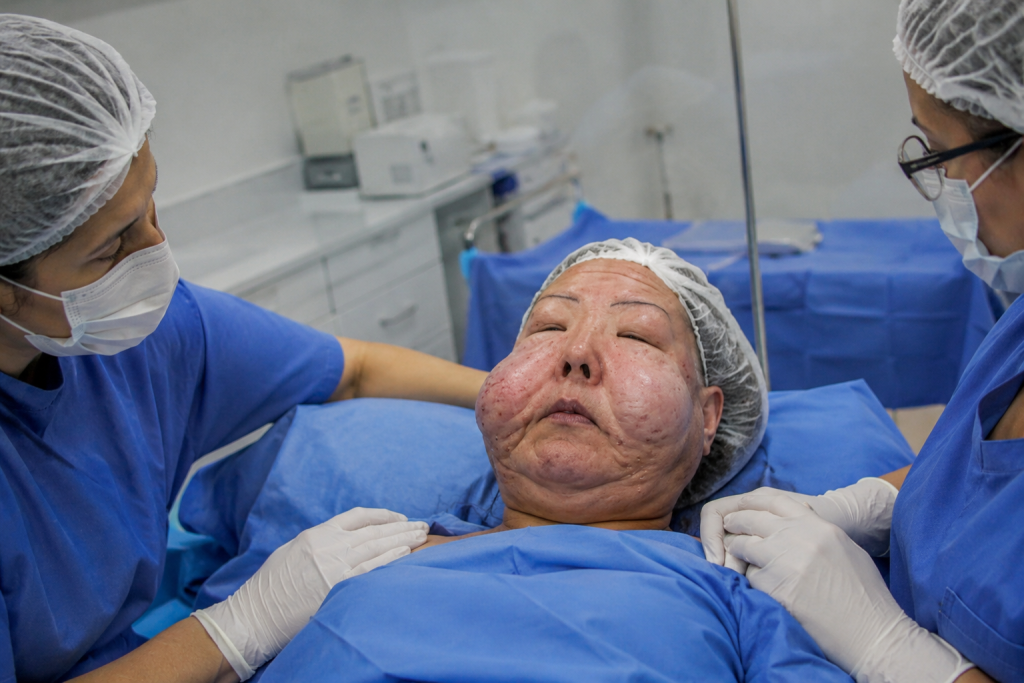
Over time, Juliana’s facial appearance changed dramatically. Publicly available photographs show extensive swelling and distortion affecting large portions of her face. The transformation became so severe that it eventually attracted widespread attention online.
Beyond the physical consequences, the emotional impact appears to have been substantial. In interviews and social media posts, Juliana has described difficulties finding employment, dealing with public reactions, and coping with the constant attention generated by her appearance.
Experts in psychology frequently note that facial disfigurement can have profound effects on mental health because facial identity plays a central role in social interaction and self-perception. Individuals experiencing major facial changes often face increased risks of anxiety, depression, social withdrawal, and reduced self-confidence.
The Broader Issue of Unregulated Cosmetic Treatments
Juliana’s experience highlights a larger problem that extends far beyond a single individual.
Brazil has one of the world’s largest cosmetic industries, attracting both domestic and international patients seeking aesthetic procedures. Alongside legitimate medical practices, however, underground providers continue to operate outside established safety standards.
These operators often advertise significantly lower prices than licensed clinics, making them attractive to individuals seeking affordable cosmetic enhancements.
Investigations in multiple countries have uncovered cases involving the injection of substances such as:
- industrial silicone;
- mineral oil;
- paraffin-based compounds;
- veterinary products;
- unapproved injectable mixtures purchased online.
The consequences can range from chronic disfigurement to life-threatening infections, embolisms, and organ damage.
Because many of these substances are inexpensive and easy to obtain, medical authorities around the world continue to warn consumers about the importance of verifying both the qualifications of practitioners and the legitimacy of the products being used.
A Long and Complex Road to Reconstruction
Years after the original procedure, Juliana eventually began receiving specialized medical treatment aimed at addressing some of the damage.
Public reports indicate that she underwent a complex surgical procedure in São Paulo in 2025 as part of an effort to remove portions of the injected material and affected tissue. Surgeons involved in similar cases often explain that complete removal is rarely possible because the substances become intertwined with surrounding tissues over time.
The body’s inflammatory response further complicates treatment by creating dense fibrotic tissue that can be difficult to separate from healthy structures.
As a result, reconstruction frequently requires multiple operations spread across months or even years. Patients may also need ongoing medical care, dermatological treatment, and psychological support throughout the recovery process.
Why Cases Like This Spread So Quickly Online
The internet has a long history of amplifying stories that provoke strong emotional reactions, and severe physical transformations often attract enormous attention.
Yet the viral nature of these images can sometimes overshadow the broader lessons they represent. Behind every shocking photograph is a complex medical, psychological, and social story that extends far beyond a single moment captured on camera.
Cases like Juliana’s illustrate the intersection of several modern pressures: the pursuit of idealized beauty standards, the influence of social media, the availability of unregulated cosmetic services, and widespread misconceptions about the safety of aesthetic procedures.
While cosmetic medicine has advanced significantly over recent decades, experts continue to emphasize that any procedure involving injections carries risks. Those risks increase dramatically when treatments are performed by unqualified individuals using substances that were never approved for human cosmetic use.
More Than a Viral Image
Today, Juliana Oliveira’s story serves as a cautionary example cited by medical professionals and public health advocates alike.
Although her photographs are often shared for shock value, the deeper significance of the case lies in what it reveals about the dangers of unregulated cosmetic interventions. The consequences were not limited to appearance alone. They affected her health, emotional well-being, social life, and future opportunities.
Her experience is a reminder that cosmetic procedures should never be viewed as risk-free, particularly when performed outside regulated medical environments. What may initially appear to be a quick and inexpensive solution can sometimes result in consequences that last a lifetime.
For many observers, the images are unforgettable. For Juliana, however, the reality behind those images has involved years of medical challenges, repeated surgeries, and an ongoing effort to rebuild her life.