
The Everyday Object No One Expected to Matter
In 2016, a family living in Devon, England, found themselves worrying about something most people would barely notice.
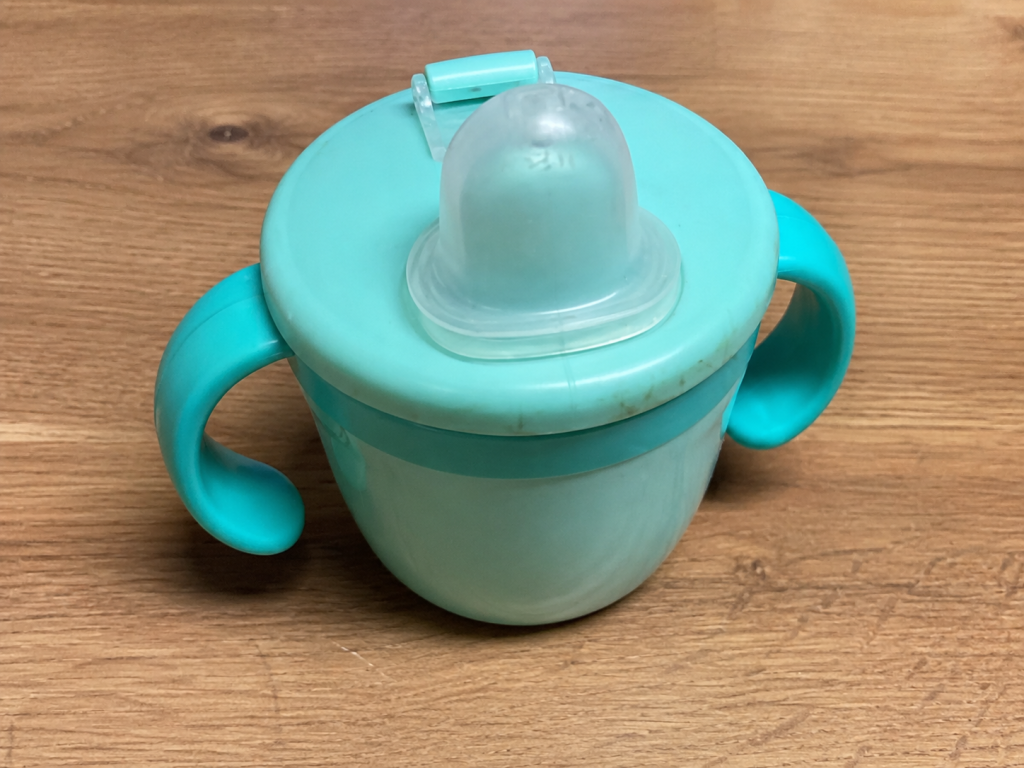
It was a small blue plastic cup designed for toddlers.
It was not rare. It was not expensive. It was not a treasured family heirloom. Like countless children’s products, it had quietly disappeared from store shelves years earlier as newer designs replaced it.
For one teenager, however, that cup meant far more than anyone outside his family could have imagined.
Its gradual deterioration created a challenge that would eventually attract international attention, inspire thousands of strangers to help, and lead a manufacturer to revive a product long thought forgotten.
What began as a family’s private concern soon became an unexpected lesson about autism, sensory processing, and the importance of understanding experiences that may seem unusual to others.
A Familiar Object in an Unpredictable World
Ben Carter, a teenager from southwest England, lived with severe autism and significant communication challenges.
Like many people on the autism spectrum, he relied heavily on familiarity and routine.
Over the years, one particular blue cup became an essential part of his daily life.
To an outside observer, there was nothing remarkable about it. Yet for Ben, it represented consistency. The shape, the texture, the weight, and the way it felt in his hands were all familiar.
His family had tried introducing alternatives.
None were accepted.
Even cups that appeared nearly identical to other people felt different to him.
As time passed, the original product became increasingly difficult to replace because it had been discontinued decades earlier.
Why Small Changes Can Feel Like Big Changes
One reason Ben’s story resonated with so many people is that it highlighted a reality often misunderstood by those unfamiliar with autism.
Research has shown that many autistic individuals experience the world differently on a sensory level.
Sounds, lights, textures, tastes, and physical sensations may be processed more intensely or differently than they are by the general population.
Scientists also describe a phenomenon known as cognitive rigidity, which refers to the difficulty some individuals experience when adapting to unexpected changes.
This does not reflect stubbornness or a refusal to cooperate.
Rather, it is linked to how the brain processes information and manages uncertainty.
For some autistic people, familiar objects can provide a sense of security and predictability in situations that might otherwise feel overwhelming.
What seems like a minor substitution to one person may feel like a significant disruption to another.
When the Situation Became Serious
For Ben’s family, the issue went beyond preference.
According to public reports from the time, he strongly resisted drinking from other cups.
His father, Marc Carter, explained that alternative options simply were not accepted.
The family became increasingly concerned as their remaining cups showed signs of wear.
Reports indicated that Ben had previously experienced dehydration-related hospital visits after refusing to drink from unfamiliar containers.
As the last usable cups aged, the family faced a difficult reality.
Soon, there might be none left.
A Simple Request for Help
In November 2016, Marc Carter decided to reach out publicly.
He shared a photograph of the blue cup online and explained why finding additional copies mattered so much.
The request was straightforward.
If anyone happened to have the same discontinued cup stored away in a cupboard, attic, or garage, the family would be grateful to hear from them.
There was no reason to expect the message would travel very far.
Instead, it spread rapidly.
Thousands of people shared the story.
Parents searched through boxes containing old baby items.
Grandparents checked storage rooms and closets.
People who had never met Ben became determined to help.
An Extraordinary Response From Strangers
Within days, the appeal had reached audiences far beyond Devon.
Messages arrived from across the United Kingdom and from other countries as well.
Some people discovered matching cups tucked away among forgotten household items.
Others offered encouragement or shared stories of their own experiences with autism.
What made the response remarkable was not the value of the object itself.
It was the willingness of strangers to invest time and effort in helping a family solve a problem that many had only just learned existed.
The story revealed how a seemingly insignificant object could carry immense importance for someone whose experience of the world differed from their own.
The Search for a Long-Lost Manufacturing Tool
As media coverage grew, the story eventually reached Tommee Tippee, the company that had originally produced the cup.
Company representatives decided to investigate whether there was any possibility of making the product again.
The challenge was considerable.
The cup had been discontinued roughly twenty years earlier.
In manufacturing, production molds are often retired, modified, recycled, or discarded once a product reaches the end of its commercial life.
No one knew whether the original mold still existed.
Yet the company began searching.
Records were reviewed.
Facilities were contacted.
Old production information was examined.
What happened next surprised everyone involved.
An Unexpected Discovery
The original mold was eventually located at a manufacturing facility in China.
Even more remarkably, it remained usable.
That discovery transformed the situation.
Instead of simply providing a few replacements, the company decided to restart production.
Approximately 500 identical blue cups were manufactured specifically for Ben.
From a business perspective, the project offered little commercial benefit.
From a human perspective, it meant everything.
More Than Just a Cup
When the family learned that hundreds of replacement cups would be produced, the relief was immense.
Years of uncertainty suddenly disappeared.
What had once seemed like an impossible problem finally had a solution.
Yet the reason this story continues to be remembered is not because a company made more plastic cups.
It is because the story helped people understand something larger.
It demonstrated that autism is not a single experience and that challenges are often invisible to those who do not live with them.
The object itself was never the real story.
The story was about trust, familiarity, and the comfort that predictable routines can provide.
A Lasting Lesson in Empathy
Today, Ben Carter’s story remains one of the most widely shared examples of how small acts of understanding can have a profound impact.
Thousands of people searched their homes for an item they no longer needed.
A manufacturer revived a discontinued product.
A family found relief after months of uncertainty.
What began with a worn blue cup became a reminder that empathy often starts with recognizing that other people may experience the world in ways very different from our own.
Somewhere in England, hundreds of identical blue cups were eventually created for one teenager.
To most people, they were simply pieces of molded plastic.
To Ben, they represented something far more valuable: stability, familiarity, and a sense of security in a world that can sometimes feel unpredictable.
And perhaps that is why this story continues to resonate years later—not because of the cup itself, but because it revealed how much a seemingly ordinary object can mean when viewed through someone else’s eyes.