
Waiting Outside the Gates
In October 2016, dozens of families gathered outside a detention facility in western Venezuela, hoping for news about loved ones trapped inside after weeks of unrest.
Some had been waiting for days. Others had traveled long distances after hearing that a major prison uprising had finally come to an end.
Among them was Juan Carlos Herrera Sr.
His 25-year-old son, Juan Carlos Herrera Jr., had been serving a sentence at the detention center in Táchira State. For nearly a month, the family had received little reliable information about what was happening inside the prison walls. Rumors spread constantly, official statements were scarce, and uncertainty became part of daily life.
When authorities eventually regained control of the facility, Herrera went there with one goal: to find out whether his son had survived.
The answers he received would later draw international attention and turn a local tragedy into a story discussed around the world.
A Prison System Under Pressure
To understand why the events in Táchira became so significant, it is important to look at the broader situation in Venezuela at the time.
The country was experiencing a severe economic and social crisis. Inflation was soaring, shortages of essential goods had become common, and public institutions were struggling under enormous strain.
The prison system reflected many of those same challenges.
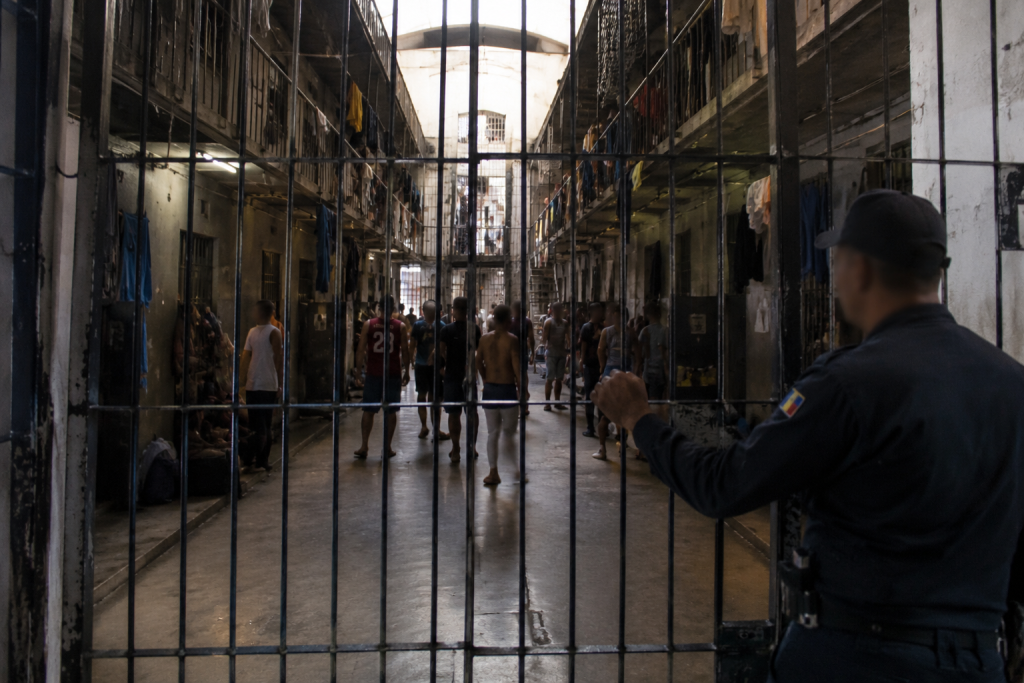
Human rights organizations had spent years warning about overcrowding, limited resources, understaffing, and growing levels of violence inside detention facilities. Many prisons were housing far more inmates than they had originally been designed to accommodate.
Experts in criminology have long identified overcrowding as one of the strongest predictors of instability in correctional facilities. When large numbers of people are confined to spaces intended for far fewer occupants, tensions rise, conflicts become more frequent, and maintaining order becomes increasingly difficult.
The detention center in Táchira was a striking example of that problem.
A Facility Far Beyond Capacity
According to reports published during the crisis, the center was built to hold approximately 120 inmates.
At the time of the uprising, however, around 350 prisoners were reportedly being held there.
That meant the facility was operating at nearly three times its intended capacity.
In environments like these, even routine operations become more complicated. Access to healthcare, sanitation, supervision, and basic services can be affected by the sheer number of people sharing limited space.
Researchers studying correctional systems have repeatedly found links between severe overcrowding and increased stress, deteriorating mental health, and a greater risk of violence among inmates.
Those conditions formed the backdrop to everything that happened in September and October of 2016.
The Man at the Center of the Story
Publicly available information about Juan Carlos Herrera Jr. is limited.
Reports indicate that he had been imprisoned for robbery and had been in custody since 2015.
Outside of his family and those who knew him personally, he was largely unknown. He was not a public figure, a gang leader, or someone who had attracted media attention before the uprising.
Yet his name would soon become known far beyond Venezuela.
The Uprising Begins
On September 8, 2016, tensions inside the detention center escalated dramatically.
Reports from the time described a situation involving hostages and a prolonged standoff. Visitors and members of the prison staff were reportedly caught up in the crisis as authorities struggled to regain control.
What might have been expected to last days stretched into weeks.
Families waited anxiously for information.
Phone calls stopped.
Reliable updates became difficult to obtain.
As uncertainty grew, relatives increasingly relied on secondhand accounts and rumors from people claiming to have knowledge of events inside the prison.
For many, the lack of information became almost as painful as the fear itself.
A Name That Returned to the Headlines
As stories began emerging after the uprising, one name repeatedly appeared in media coverage.
Dorángel Vargas.
For many Venezuelans, the name was already familiar.
Years earlier, Vargas had become one of the country’s most infamous criminal figures after a series of crimes that shocked the public and generated widespread media attention. Psychiatric evaluations conducted during that period reportedly concluded that he suffered from severe paranoid schizophrenia.
His case remained deeply embedded in public memory long after his conviction.
As a result, any mention of his involvement in later prison events immediately attracted attention from journalists and the public alike.
A Father’s Search for Answers
After order was eventually restored, Juan Carlos Herrera Sr. sought information about his son.
According to statements he later made to reporters, individuals who claimed to have witnessed events inside the prison told him that his son had not survived the uprising.
Those accounts quickly spread through local media and were soon picked up internationally.
Images of Herrera speaking to journalists circulated widely, transforming a father’s personal search for answers into a story followed across multiple countries.
Separating Facts From Allegations
One reason the case continues to generate discussion today is the challenge of distinguishing between confirmed facts and unverified claims.
Several aspects of the story are well documented.
A major prison uprising took place.
There were casualties.
Several inmates were reported dead or missing in connection with the events.
Authorities investigated what had occurred inside the detention center.
At the same time, some of the details that later became widely associated with the case originated from witness accounts and statements that were repeated through media coverage.
Because not every claim was publicly supported by definitive official findings, journalists and researchers continue to emphasize the importance of distinguishing between documented facts and allegations that were never conclusively verified.
That distinction is essential when examining any historical event, especially one surrounded by confusion and limited access to information.
Why Cases Like This Endure
There is a reason certain stories remain part of public conversation long after the headlines fade.
Psychologists have identified a concept known as the need for cognitive closure. People naturally seek complete explanations for disturbing events. When crucial questions remain unanswered, curiosity often persists for years.
The Táchira case contains many of the elements that tend to fuel long-term public interest: uncertainty, conflicting accounts, unanswered questions, and a search for truth by those directly affected.
As a result, the story continues to appear in documentaries, podcasts, articles, and true-crime discussions nearly a decade later.
Beyond the Headlines
Many retellings focus on the most sensational aspects of the case.
Yet those elements are only part of a much larger story.
At its core, this is a story about a prison system under immense strain, a prolonged crisis that left families desperate for information, and the challenges of uncovering the full truth after a chaotic and violent event.
Most of all, it is the story of a father searching for answers.
The Questions That Remain
Nearly ten years later, many questions surrounding the uprising still linger.
Some concern institutional accountability.
Others relate to the handling of information during the crisis.
And some stem from a more fundamental human need to understand what happened to people whose lives were caught in extraordinary circumstances.
For the public, the case became one of the most talked-about prison stories in modern Venezuelan history.
For Juan Carlos Herrera Sr., however, it was never a headline.
It was the loss of a son.
And perhaps that is the detail most worth remembering.
Behind every major news story are real people whose lives continue long after the cameras leave, carrying questions that may never be fully answered.